Outdoor Work Boot Matchup
Rubber Utility Boots vs. Leather Hiking Boots
Field Gear Decision Guide
Rubber Boots vs. Leather Hiking Boots: Which One Do You Really Need for Outdoor Work?
A practical head-to-head comparison for rural property work, fence building, livestock chores, muddy fields, rocky terrain, and long outdoor shifts.
Rubber Wins
Water, mud, manure
Leather Wins
Dry miles, rocky terrain
Main Risk
Wrong boot, long shift
Best Answer
Choose by jobsite
Whether you are managing a rural property, building fence lines, tending to livestock, or conducting long hours of field research, your workday is entirely dependent on your footwear.
Walk into any farm supply store or outdoor outfitter, and you will face a classic dilemma: do you lace up a pair of traditional leather hiking boots, or do you pull on a pair of tall rubber utility boots?
Both styles are outdoor workhorses, but they are built for entirely different environments. Choosing the wrong pair means spending your entire shift dealing with soggy socks, bruised arches, or caked-on mud.
Quick Verdict
Rubber boots are for wet, messy, corrosive work. Leather hiking boots are for dry mileage, climbing, and rugged terrain.
If your day involves water, mud, manure, slurry, washdowns, or wet grass, rubber boots are usually the smarter choice. If your day involves steep trails, rocky ground, dry mileage, and maximum ankle control, leather hiking boots still have the edge.
Round 01
Waterproofing & Moisture Defense
Head-to-Head
Standing Water vs. Breathable Water Resistance
Rubber Boots
The Winner for Standing Water
Rubber boots offer complete waterproof protection up to the shaft. Whether you are stepping through standing water in a flooded pasture, hosing down concrete wash pads, or wading through morning marsh dew, rubber creates a physical barrier that water cannot easily pass through.
Leather Hiking Boots
The Breathable Shield
High-end leather boots treated with water-resistant membranes or conditioners can do an excellent job repelling rain, light puddles, and morning frost. But they have a breaking point: once water rises above the tongue gusset or you stand in wet muck for hours, leather can become saturated and slow to dry.
Round Winner
Rubber Boots — best for standing water, mud, washdowns, and deep wet grass.
Round 02
Comfort, Arch Support & Foot Fatigue
Head-to-Head
Long-Distance Mobility vs. Modern Rubber Support
Leather Hiking Boots
The Winner for Long-Distance Hiking
Leather hikers are built for mobility. They usually feature structured lacing systems, padded ankle collars, and EVA or polyurethane midsoles designed to support your foot through miles of trekking over steep, rocky terrain. If your job involves long hikes and climbing, leather hikers excel.
Rubber Boots
The Historical Compromise — Now Improved
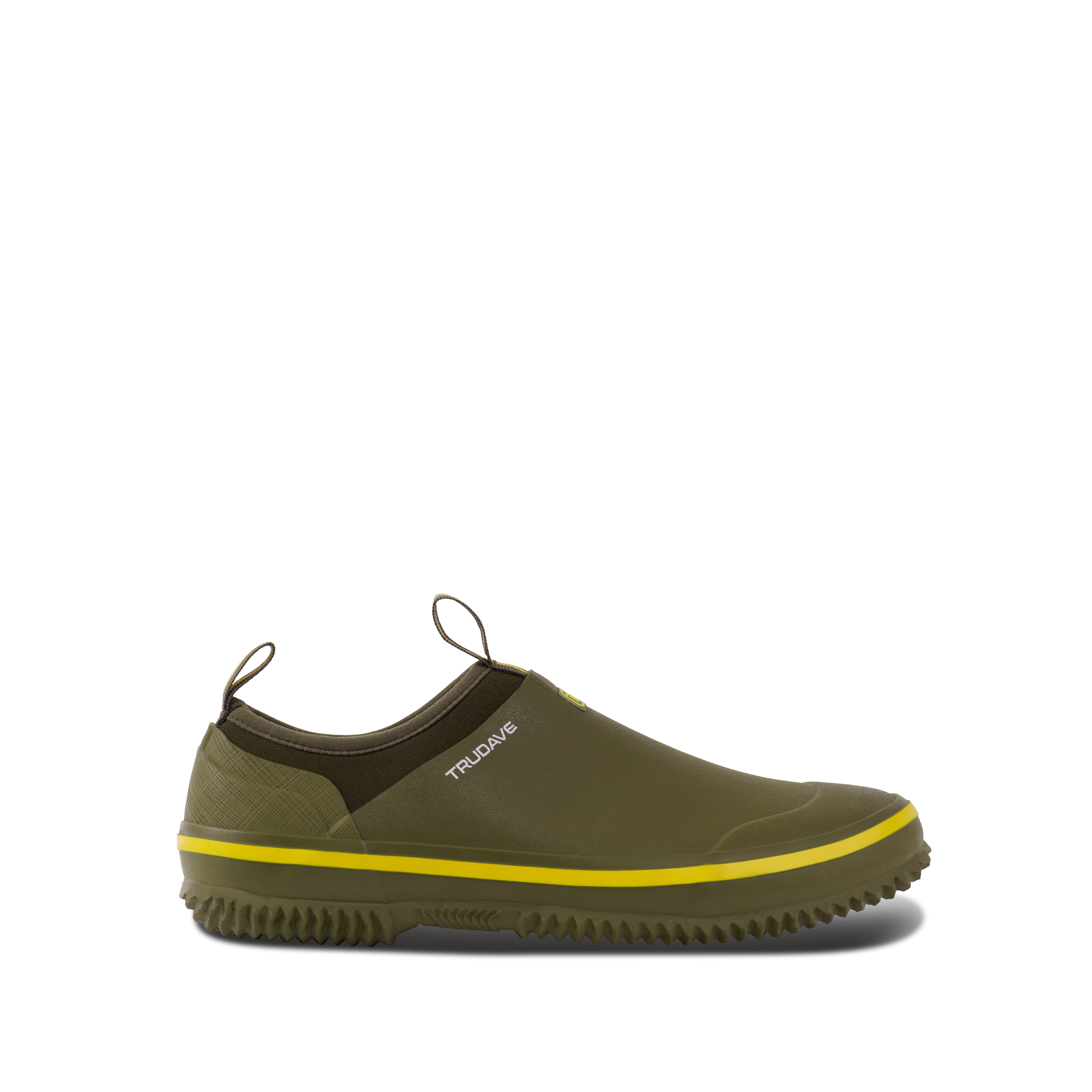
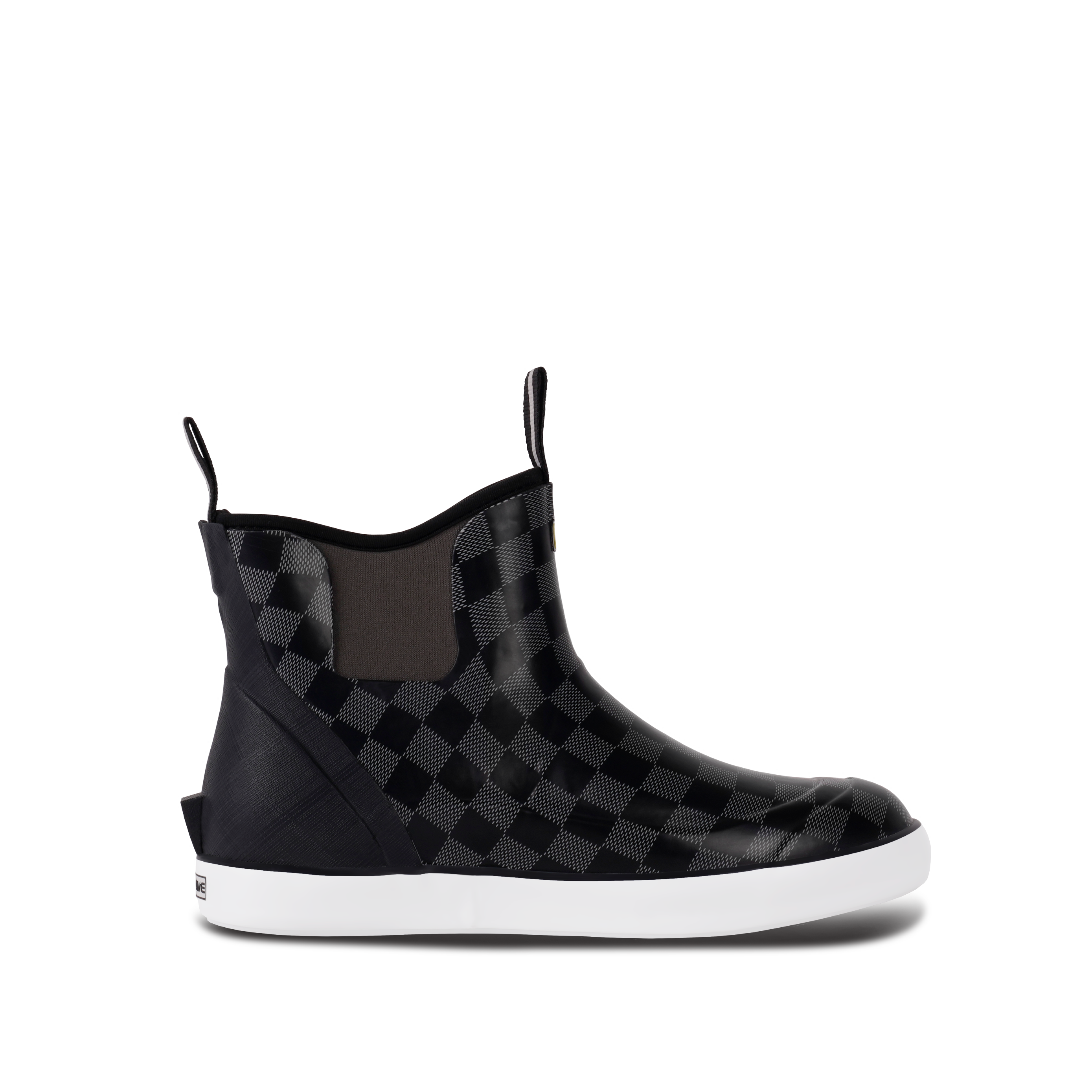
Traditional flat rubber boots had a reputation for fatigue because they lacked structured arch support. Modern commercial-grade options, including utility models in the Trudavegear Work & Farm Collection, are designed to bring more cushioning, support, and shock absorption into waterproof rubber footwear.
Round Winner
Leather Hiking Boots for long dry miles; supportive rubber boots for wet work and long standing shifts.
Round 03
Durability, Chemical Resistance & Maintenance
Head-to-Head
Messy Work Cleanup vs. Abrasion Armor
Rubber Boots
The Winner for Messy, Corrosive Environments
Manure, fertilizers, chemical sprays, concrete slurry, and organic acids can rapidly degrade leather, dry it out, or damage stitching. Rubber and neoprene are far easier to rinse clean. At the end of a messy shift, you can hose off rubber boots in seconds.
Leather Hiking Boots
The Winner for Abrasion & Ankle Armor
Leather offers strong protection against rocks, briars, trail abrasion, and structural impacts. It also breathes better than rubber, which helps reduce sweat during hot summer work. However, leather needs routine cleaning, drying, conditioning, and waterproofing to prevent cracking.
Round Winner
Rubber Boots for manure, slurry, chemicals, and quick cleanup; leather boots for dry abrasion and rocky ground.
Performance Scoreboard
Direct Comparison: Rubber Boots vs. Leather Hiking Boots
Waterproof Protection
Rubber Utility Boots
Waterproof protection up to the shaft, often around 15–16 inches depending on model.
Leather Hiking Boots
Water-resistant or waterproof membrane protection, but vulnerable above the tongue and during long saturation.
Winner
Rubber Boots
Ankle Flexibility & Fit
Rubber Utility Boots
Slip-on convenience with flexible neoprene shafts in many modern models.
Leather Hiking Boots
Laced fit allows more customized ankle lock and heel control.
Winner
Leather Hiking Boots
Cleanup & Maintenance
Rubber Utility Boots
Hose off quickly after mud, manure, slurry, or concrete work.
Leather Hiking Boots
Requires cleaning, drying, conditioning, and waterproofing upkeep.
Winner
Rubber Boots
Chemical & Manure Resistance
Rubber Utility Boots
Better suited for agricultural waste, slurry, wet barn floors, and washdown environments.
Leather Hiking Boots
Animal waste and acids can damage leather and stitching over time.
Winner
Rubber Boots
Long-Distance Walking Agility
Rubber Utility Boots
Best for standing, pivoting, short walks, mud, wet fields, and practical work zones.
Leather Hiking Boots
Engineered for long miles, steep inclines, rocky trails, and sustained hiking.
Winner
Leather Hiking Boots
Choose Your Work Boot
Which One Do You Really Need?
Choose Rubber Boots If
Your daily work involves wet, messy, or corrosive environments.
- Your work involves mud, manure, standing water, wet grass, or washdowns.
- You work around fertilizers, slurry, concrete paste, or materials that can destroy leather stitching.
- You want the convenience of slipping boots on and off instantly at the truck, barn door, or back porch.
Tip:
If you need all-day comfort without sacrificing your lower back, choose a supportive, commercial-grade option like the Trudavegear Work & Farm Collection, which bridges rubber protection with ergonomic comfort.
Choose Leather Hiking Boots If
Your workday is mostly dry, steep, rocky, or mileage-heavy.
- Your job requires hiking multiple miles up hills, rocky trails, or dry rugged terrain.
- You work mostly in dry or mildly damp conditions where breathability and lighter movement matter most.
- You prefer a customized lace-to-toe fit that locks your heel securely in place during high-mobility tasks.
The Bottom Line
There is no universal “best” boot — only the right tool for the job.
If your day is defined by water, mud, slurry, wet grass, and long hours on concrete, a high-performance rubber boot is an absolute necessity.
If your day is built around long dry miles, steep inclines, rocky ground, and technical hiking movement, leather hiking boots remain the better tool.
For messy outdoor work, keep a reliable pair of rubber boots by the door, and your feet will stay dry, protected, and comfortable no matter how wet the job gets.
Built for Wet Fields, Mud, Barn Chores & Outdoor Utility
Need Rubber Boots for Real Outdoor Work?
Trudavegear Work & Farm boots are built for people who need waterproof protection, practical traction, and supportive comfort through wet, messy, all-day jobs.
Shop Trudavegear Work & Farm Boots