Editor's Note: This article is curated by Trudave. With years of expertise in waterproof apparel, we provide professional advice on selecting gear. Visit our official website: trudavegear.com.
By Gear Review Team • Field Tested • 5 Min Read
We’ve all been there. It’s 6:00 AM, the coffee hasn't even kicked in yet, and you step out into the field. Five minutes later, you feel it—that slow, creeping dampness soaking through the toe box of your boots. By the time you get back to the truck, your socks feel like cold, wet sponges.
Nothing ruins a morning faster than soggy feet. Whether you are setting up decoys in a marsh, pushing through a CRP field for late-season deer, heading down to the fishing pier, or simply knocking out Saturday morning yard work, wet grass is a relentless enemy.
The "Wet Grass" Phenomenon: Why It Destroys Boots
You might think, "Hey, my boots survive rain puddles just fine, why do they fail in tall grass?"
Here’s the dirty secret: walking through wet, knee-high grass is actually much harder on your footwear than standing in a creek. When you stand in water, it's static pressure. But when you walk through dew-soaked grass, every single blade acts like a tiny, wet paintbrush, constantly wiping and forcing moisture against the seams, laces, and leather of your boots. It physically pushes the water through the microscopic pores of "water-resistant" fabrics.
To beat it, you need absolute waterproofing. Here are the distinct styles of boots that actually get the job done.
1. The Quick-Strike Option: Fishing Deck Boots
Don't let the name fool you. While they were born on the slippery decks of offshore fishing boats, low-cut deck boots are the unsung heroes of wet-grass chores.
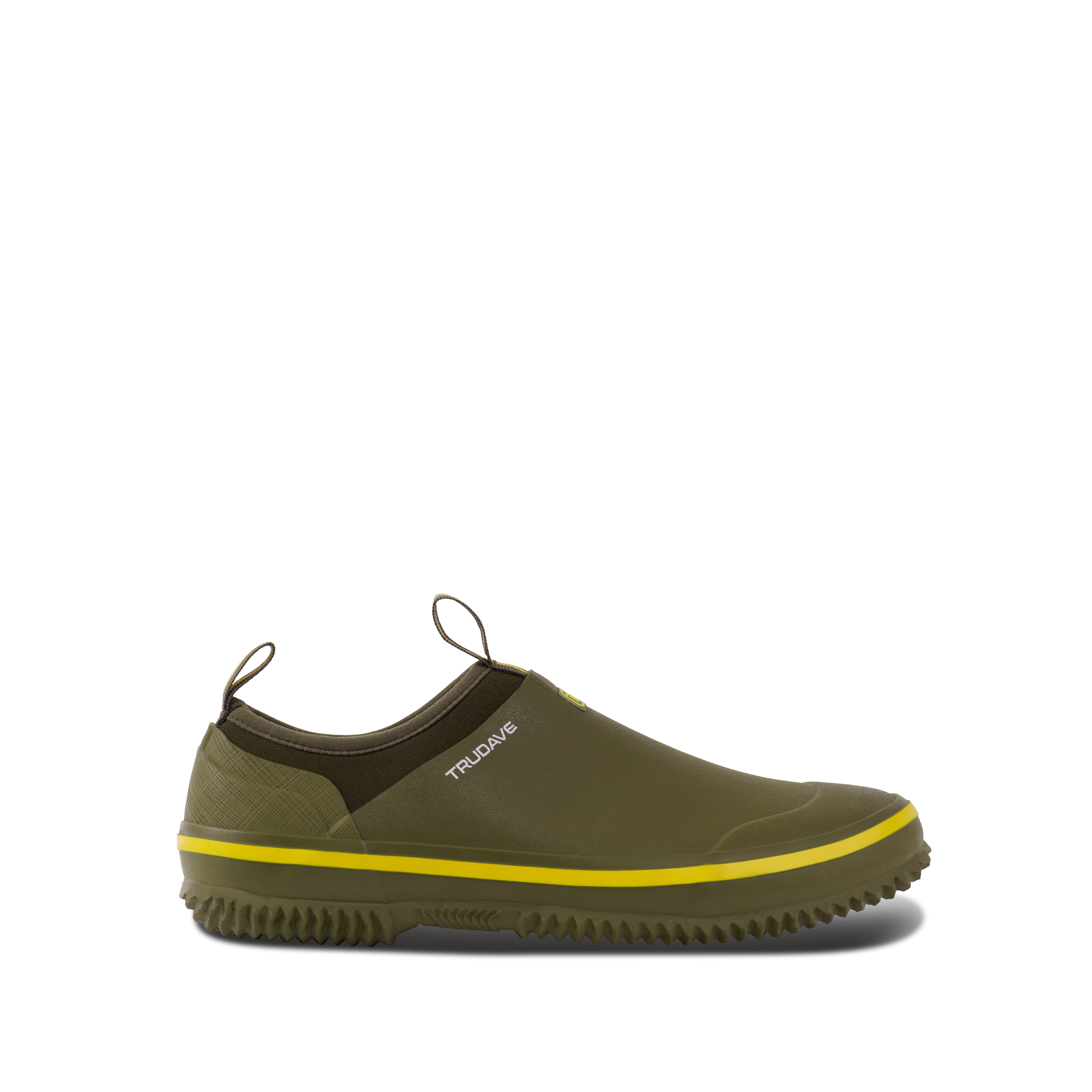
If you don't need intense ankle support, premium deck boots (like the incredibly tough lineups from TrudaveGear) offer a game-changing solution. Their WaveLock Series features 100% waterproof rubber, easy slip-on convenience at the back door, and outsoles specifically designed to grip wet fiberglass—which translates perfectly to slick, wet turf. Once you're done, just hose them off. No laces, no fuss.
2. The Heavy-Duty Haulers: Classic GORE-TEX Leathers
If your path takes you from the wet grass into rugged timber or rocky creek beds, rubber pull-ons won't give you the ankle support you need. This is where heavy-duty leather laced boots come in.
Look to the legendary workhorses from brands like Danner and Rocky Boots. The key here is an internal GORE-TEX (or proprietary waterproof) bootie combined with a high-quality leather exterior. The leather protects against briars and sharp rocks, while the internal membrane ensures that even when the leather eventually wets out from the dew, your feet stay bone dry.
Pro Tip: Leather Care
Wet grass strips the natural oils out of leather incredibly fast. If you run leather hunting or work boots, you must treat them with mink oil, beeswax, or a quality DWR (Durable Water Repellent) spray once a month. Water should bead up and roll off. If the leather is turning dark and soaking up water, it's time to re-treat.
3. The All-Day Trekkers: Modern Synthetic Hybrids
Sometimes you need the absolute maximum arch support for covering serious miles, but you still have to cross three miles of soaked mountain meadows to get to your glassing spot.
This is where modern, injected-polyurethane boots shine. Brands like LOWA Boots have mastered this category. They wrap a waterproof membrane inside a highly breathable, lightweight synthetic/split-leather shell. They breathe better than full rubber boots (saving you from sweating out your socks from the inside) while keeping the morning dew completely at bay.
The Bottom Line
Stop settling for "water-resistant" when the morning dew is involved. Treat your feet right, invest in genuine waterproofing, and get a Peet boot dryer for your mudroom.
Quick Buying Checklist
-
For Yard Work & Quick Trips: Slip-on rubber deck boots (Easy to clean, no laces to soak).
-
For Rugged Hunting: Full-grain leather with a GORE-TEX liner (Superior ankle support and puncture resistance).
-
For Covering Miles: Lightweight synthetic/leather hybrids (Better breathability to prevent sweat).
Dry feet mean more time outside. Gear up appropriately and outlast the elements.
Outdoor Education & Conservation Resources
Want to learn more about trail safety, gear maintenance, and preserving the outdoors? Check out these excellent educational resources:
-
Leave No Trace: lnt.org – Learn the principles of minimizing your impact when hiking through sensitive wet meadows and muddy trails.
-
American Hiking Society: americanhiking.org – Comprehensive guides on trail foot care, preventing blisters, and choosing the right footwear.
-
National Park Service (NPS): nps.gov – Official guidelines on preparing for unpredictable weather and navigating wet outdoor conditions safely.
-
Ducks Unlimited: ducks.org – Insights into wetland conservation and navigating marshy, waterlogged environments.