Technical Fit Guide
A proper deck boot fit should feel secure, stable, and ready for wet decks — not cramped, not sloppy, and never guessed.
Ask any seasoned angler or deckhand what their most important piece of gear is, and they probably won't say their rod or their reel. They’ll tell you it’s their footwear.
When you’re pulling a 12-hour shift offshore, standing on a wet fiberglass deck that’s pitching in a heavy swell, your feet are your foundation. A good pair of waterproof deck boots is non-negotiable. But when you pull them out of the box, a massive question always pops up:
Should deck boots fit tight or loose?
The short answer? Neither.
You are looking for the Goldilocks fit — snug, but not constricting. If you want to keep your feet dry, warm, stable, and blister-free, here is exactly how your deck boots should feel on your feet.
Snug But Not Tight
A deck boot should hold your foot securely without crushing your toes, pinching your instep, or cutting off circulation. Think controlled lock-in — not pressure, not looseness.
The “Snug But Not Tight” Rule
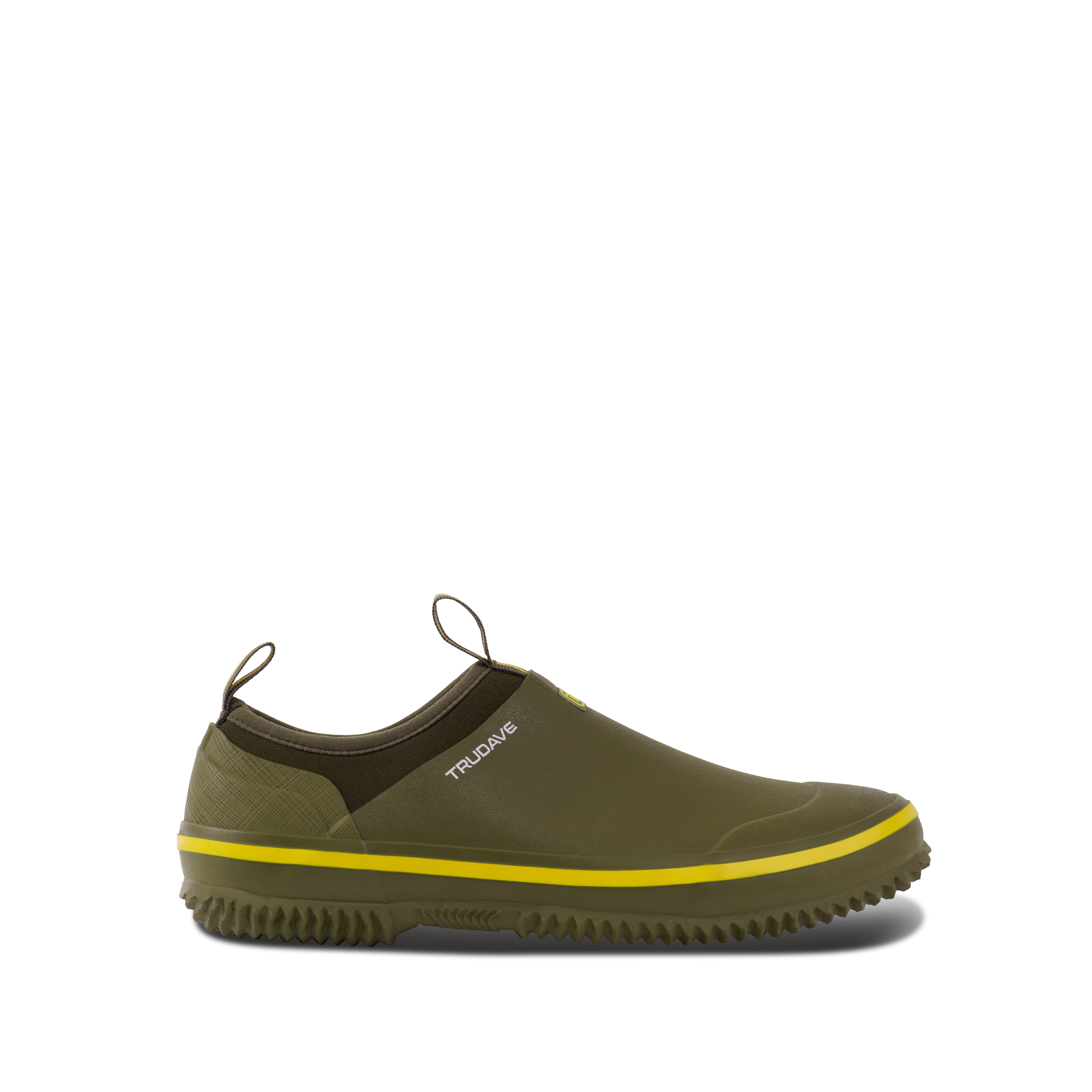
Deck boots are typically slip-ons, meaning you don't have laces to crank down when you need extra ankle support. Because of this design, the fit needs to be dialed in properly right out of the box.
When you slide your foot into a deck boot, here is what you should feel:
Fit Zone 01
The Heel
You actually want a tiny bit of heel slip when the boots are brand new — roughly a quarter-inch to a half-inch. As the rubber softens and flexes with your stride, that movement usually settles down.
Fit Zone 02
The Midfoot
The boot should feel secure across the top of your foot, also called the instep. This is where a laceless boot gets much of its hold, so the midfoot should feel stable without creating pressure points.
Fit Zone 03
The Toe Box
Your toes should never slam into the front of the boot. You need enough room to wiggle them freely, especially if you plan to wear thicker outdoor socks in cold or wet conditions.
What Happens When You Get It Wrong?
Guessing your size and hoping for the best is a fast track to a miserable day on the water. Here is what happens when you lean too far in either direction.
Problem Fit
Too Tight
A boot that is too tight can cut off circulation, make your feet feel colder, create painful pressure points on the instep, and cause severe heel or toe irritation during long wear.
Problem Fit
Too Loose
A boot that is too loose lets your foot slide around on the footbed, increases friction, raises blister risk, reduces stability, and causes fatigue from clenching your toes to keep the boot on.
The goal is balance. You want the boot secure enough to stay with your foot, but roomy enough to allow natural movement, sock thickness, and long-day swelling.
The Half-Size Dilemma
Here is the frustrating reality of the outdoor footwear industry: many heavy-duty deck boots only come in whole sizes. If you are a size 10.5, you are left staring at a size 10 and a size 11, wondering which one to pick.
Pro Fit Rule
If You Are Between Sizes, Size Up
You can make a slightly large boot fit better, but you cannot stretch a tight rubber boot into a comfortable one. If the smaller size pinches, jams your toes, or feels restrictive, it is not the right choice.
If sizing up leaves the boot feeling a little too roomy, there is a simple industry fix: swap the factory footbed for a structured, pro-grade insole.
A better insole can take up extra internal volume, improve arch support, help stabilize the heel, and turn a slightly loose fit into something closer to custom.
Fit Adjustment
Use Insoles to Fine-Tune the Fit
If your heel lifts too much or the boot feels sloppy after sizing up, try a supportive insole before giving up on the size. It can reduce internal space, support the arch, and improve underfoot comfort during long days standing on deck.
Don’t Forget the Socks
Before you make your final judgment on how a boot fits, make sure you are trying them on with the right socks.
Never test the fit barefoot or with thin dress socks. Throw on the exact moisture-wicking merino wool or heavy technical outdoor socks you actually plan to wear on the boat. A thick pair of socks can easily eat up a half-size of volume inside a rubber boot.
- Try boots on with the socks you actually plan to wear.
- Check that your toes can wiggle freely.
- Walk around and make sure the heel slip is minor, not sloppy.
- Make sure the instep feels secure without pinching.
- Test them later in the day if possible, when your feet may be slightly more swollen.
The Bottom Line
Secure Enough to Move. Roomy Enough to Last.
Your deck boots should feel secure enough that you could break into a light jog without them flying off, but roomy enough that your toes are not slammed against the front.
Take the time to get the fit right, and your feet will thank you when you're standing, casting, hauling, or fighting fish all day long.
Built for Wet Decks and Long Days Outside
Find Your Fit in TruDave Deck Boots
Waterproof protection, steady traction, and all-day comfort start with a boot that fits right from the first step.
Shop TruDave Deck Boots
Authoritative Sources
Helpful Resources on Footwear Fit, Support, and Blister Prevention
Proper boot fit matters for comfort, support, stability, and blister prevention. These resources provide additional guidance on footwear fit, inserts, friction blisters, and slip-resistant shoes.
American Podiatric Medical Association — Winter Foot Care
APMA explains that boots should allow toe movement while keeping the heel, instep, and ball of the foot properly supported.
Read APMA boot fit guidance
American Podiatric Medical Association — Shoe Inserts
APMA provides guidance on insoles, arch supports, heel liners, and how inserts can add cushioning or support inside footwear.
View APMA shoe insert guidance
Cleveland Clinic — Blisters
Cleveland Clinic notes that friction blisters can come from repeated rubbing, and properly fitting shoes can help reduce rubbing and irritation.
Read Cleveland Clinic blister information