Summer Scouting Field Notes
When spring mud turns into summer concrete, good trackers stop looking for perfect prints — and start reading the subtle signs.
Let’s be honest: tracking in the spring or after a fresh snow is almost too easy. The ground is soft, the impressions are deep, and you can practically see the exact tread of a buck’s hooves. But by mid-summer, the game changes. That soft spring mud has baked in the sun and turned into absolute concrete.
Trying to read animal signs on hardpan dirt can feel like trying to read a blank sheet of paper. However, putting your boots on the ground right now is exactly how you pattern animals and prepare to punch your tag when the early September season finally opens.
If you want to master the art of summer scouting, you have to stop looking for perfect footprints and start reading the subtle clues the dirt leaves behind. Here is how to track game when the ground is tough as nails.
Field Principle
Hard Ground Doesn’t Hide Sign. It Changes the Language.
In dry summer conditions, tracks may not look like deep hoofprints. They may show up as shadows, dust displacement, cracked edges, disturbed pebbles, or faint color changes on the surface.
Track Reading 01
Hunt the Shadows
When the ground is hard, footprints are incredibly shallow — sometimes only a fraction of an inch deep. If you are out scouting at high noon, the harsh, direct sunlight can wash out the ground, making those shallow indentations nearly invisible.
The Fix
Track during the golden hours — early morning or late evening. When the sun is low on the horizon, it casts long shadows across the ground. Those shadows pool inside tiny depressions, making faint tracks stand out against flat dirt.
If you have to track mid-day, carry a small, high-lumen flashlight and shine it at a low angle across the dirt to artificially recreate those shadows.
Track Reading 02
Read the Dust, Not the Depth
In baked summer mud, a heavy animal like a whitetail deer or a wild hog is not going to sink in the way it would during spring. Instead of hunting for a deep impression, study the surface layer.
Over the summer, hard mud gathers a thin layer of fine dust, loose dirt, and pollen. When an animal walks across it, their hooves or paws brush that dust away, exposing the slightly darker, undisturbed hardpan underneath.
What You’re Actually Looking For
- A faint oval or hoof-shaped clean spot in the dust
- A darker patch of exposed hardpan under loose powder
- A brushed or swept surface where a hoof dragged slightly
- A repeated pattern that lines up like a walking trail
You are not always looking for a 3D mold of a hoof. In summer, you are often looking for a two-dimensional color change on the surface.
Track Reading 03
Look for Pressure Releases
When an animal steps on dried, cracked mud, the ground does not absorb the step. It breaks. Trackers often look for these tiny disturbances because they reveal movement even when the footprint itself is weak.
Instead of looking only for toe pads or perfect hoof edges, look for:
Crushed Edges
Did a piece of dried mud on the edge of a rut suddenly crumble into smaller pieces? Freshly broken edges often look sharper and lighter than older weathered cracks.
Displaced Pebbles
Look for small stones that were recently kicked, rolled, or pressed into the dirt. A pebble with a tiny crater behind it can tell you something heavy moved through.
Hairline Cracks
A heavy animal stepping on an air pocket in dried mud can create fresh spiderweb cracks radiating from the point of impact.
Track Reading 04
Connect the Dots Around Water Sources
Summer tracking is a game of dehydration. As the heat rises, animals become more predictable. They are not wandering aimlessly; they are traveling the path of least resistance between deep bedding cover and their water source.
If you are struggling to find tracks in the hard woods, head to the edges of shrinking creeks, ponds, or wallows. The mud here holds moisture longer, giving you a clearer read on what is in the area.
Scouting Method
Start at Water. Then Work Backward.
Once you find fresh tracks at the water, walk backward along the game trail. Watch how those obvious wet-mud signs fade into subtle dust marks, cracks, and disturbed edges as the ground gets harder and drier.
That transition teaches you what the same animal’s sign looks like across different ground conditions — which is exactly the skill that pays off during early season scouting.
The Bottom Line
Summer Tracking Rewards Patience
Tracking in dry, baked mud requires patience, a sharp eye, and a lot of dirt time. It forces you to slow down and really observe the environment.
Lace up a rugged, comfortable pair of boots, hit the trails early, and start getting your reps in now. The work you put in during the dog days of summer will pay off when the fall temperatures finally drop.
Built for Mud, Dust, Brush, and Long Miles
Scout Harder with Gear That Holds Up
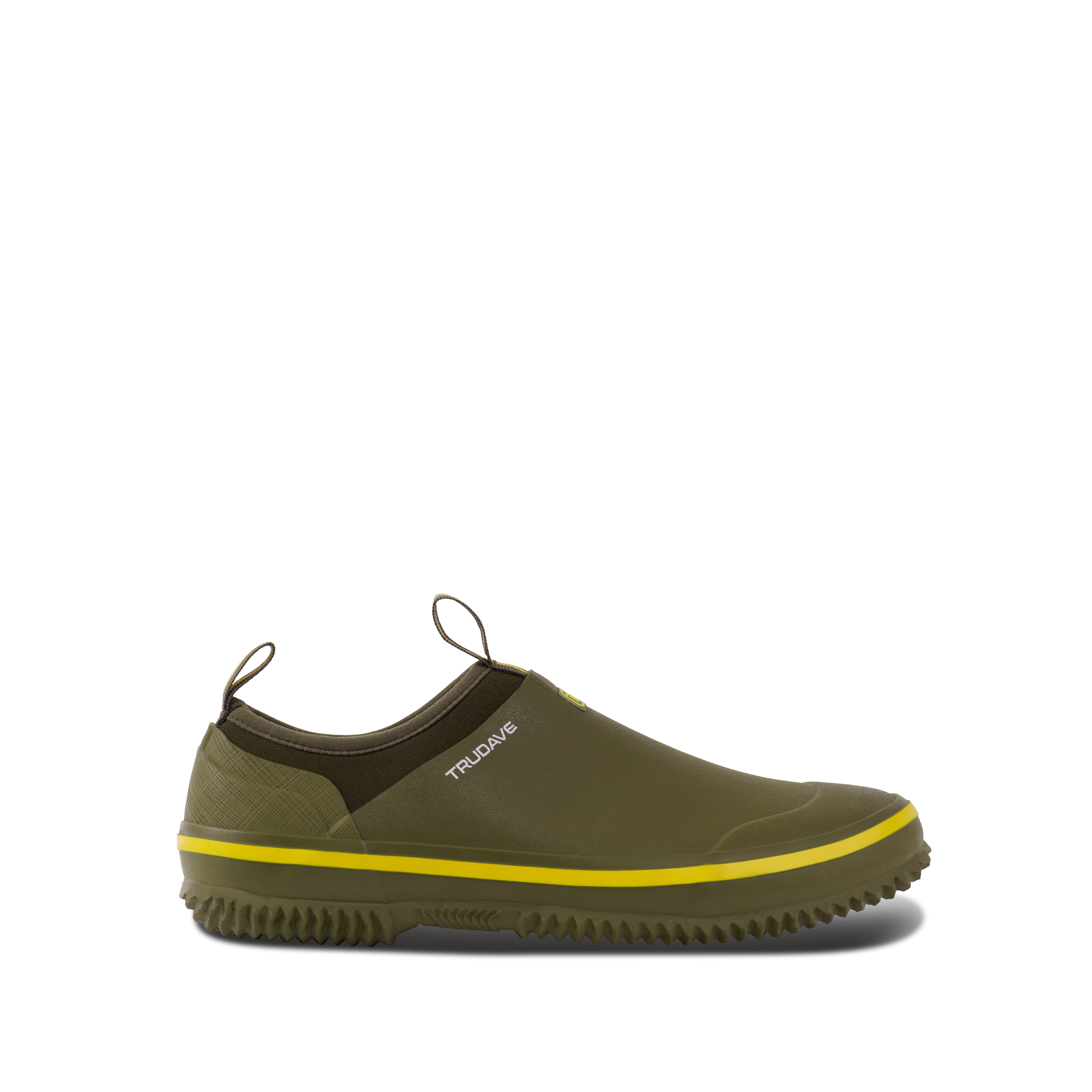
TruDave boots are built for wet creek edges, dry summer trails, muddy banks, and the long scouting days that separate guesswork from real patterning.
Shop TruDave Boots
Authoritative Sources
Helpful Resources on Tracks, Sign, and Summer Scouting
Reading tracks is easier when you understand track shape, surrounding sign, surface conditions, and where animals are likely to travel. These resources provide additional guidance on wildlife tracks, deer sign, and how to interpret animal movement in the field.
Missouri Department of Conservation — Mammal Tracks
A state wildlife resource on recognizing common mammals by tracks and other signs, including recommended field gear such as a tape measure, field guide, notebook, and camera.
Read MDC mammal track guidance
Texas Parks & Wildlife — Making Tracks
TPWD explains that lower-angle sunlight can help reveal shadows in prints and that track details can be recorded by photographing or casting the impression.
View TPWD track photography guidance
Missouri Department of Conservation — White-Tailed Deer
Official species information describing white-tailed deer tracks, including their heart-shaped form, split hooves, pointed tips, and dewclaw marks in certain conditions.
Read MDC white-tailed deer track details
Texas Parks & Wildlife Hunter Education — Looking for Sign
A hunter education resource explaining that identifying game sign, such as tracks and droppings, can help hunters locate areas animals frequently use.
Read TPWD guidance on looking for sign