Cart
0
How to Choose Between Neoprene and Breathable Waders for Winter Fishing
The best winter wader is not simply the thickest one. Choose according to water temperature, how much you move, how long you stand still, and how effectively your clothing system manages perspiration.
Standing waist-deep in a 38°F tailwater or coastal marsh during winter exposes a fundamental truth about cold-weather angling: your wader system strongly influences how long you can remain comfortable and focused.
When shopping for winter fishing waders, every angler eventually reaches the same fork in the road: thick neoprene waders versus multi-layer breathable waders.
Neoprene has long been a traditional cold-water option, while modern breathable waders combined with technical base layers and insulating mid-layers offer a much more adaptable system for active winter fishing.
Choosing the right setup is not about picking whichever fabric sounds warmer on a product tag. It comes down to water temperature, physical exertion, immersion depth, exposure time, and moisture management.
The Simplest Winter-Wader Rule
Deep cold water + long periods of standing still generally favor more built-in insulation. Long hikes + rowing + frequent movement generally favor breathable waders with an adjustable layering system.
1. The Physics of Winter Wading: Conduction vs. Moisture
In winter fishing, your lower body faces two competing thermal problems: heat leaving your body toward colder surrounding water, and moisture accumulating inside your clothing system as you move and sweat.
External Problem
Conductive Heat Loss
Cold water removes body heat much faster than equally cold air. The deeper and longer you stand in cold water, the more important insulating loft becomes between your body and the exterior wader shell.
Internal Problem
Sweat & Condensation
Hiking riverbanks, climbing over deadfall, rowing a drift boat, and carrying fishing gear all produce heat. If perspiration remains trapped in your base layers, that moisture can make you feel cold as soon as your activity level drops.
Cold-Water Safety Context
The National Weather Service recommends dressing for water temperature rather than air temperature. Cold-water immersion can quickly affect breathing, muscle control, and judgment, so winter wader choice should never be based on warmth alone.
Which Thermal Problem Dominates Your Day?
High Immersion
+ Low Movement
Long periods standing in deep,
very cold water make conductive heat loss
the dominant problem.
Greater built-in insulation becomes more valuable.
VS.
High Movement
+ Variable Water Time
Hiking, rowing,
climbing banks, and moving between runs
make perspiration management
increasingly important.
Static Warmth Priority
Neoprene Waders
Why Neoprene Feels Warm
Neoprene is a closed-cell synthetic rubber foam. Gas-filled cells inside the foam help reduce heat transfer, giving neoprene meaningful built-in insulation compared with a thin breathable shell.
Where Neoprene Wins
- Long periods standing relatively still in very cold water.
- Winter surf, cold marshes, deep slow-moving pools, and other low-mobility fishing.
- Anglers who want built-in thermal protection without depending entirely on thick under-layers.
The Trade-Offs
Neoprene has very low breathability compared with purpose-built breathable wader fabrics. Long approaches and high-output movement can therefore create more internal moisture.
It is also generally heavier and bulkier, which matters during long bank walks, repeated climbing, or highly mobile fishing.
Mobility & Moisture Priority
Breathable Waders
What Breathable Fabric Actually Does
Breathable waders use waterproof membrane systems laminated to textile face fabrics. These systems are designed to keep liquid water outside while allowing some internal water vapor to migrate outward.
Where Breathables Win
- Long riverbank walks and active winter fishing.
- Shallow riffles, drift-boat fishing, and repeated transitions between shore and water.
- Anglers who want one wader that can be adapted to several seasons through changes in under-layer insulation.
The Trade-Offs
Breathable shells provide relatively little built-in thermal insulation. Your warmth comes primarily from the air trapped inside properly selected base layers and insulating garments underneath the wader.
In very cold, deep water, you therefore need a much more deliberate layering system than you would with thick neoprene.
Winter Layering Reference
Patagonia's winter fishing guide recommends building a system around a moisture-managing base layer, an insulating mid-layer, and weather protection, while Orvis similarly notes that breathable waders can be used in winter when combined with suitable thermal layers. Both emphasize managing perspiration rather than simply adding as much insulation as possible. See Patagonia's Winter Fly Fishing Layering Guide and Orvis Wader Selection Guide .
Neoprene vs. Breathable Winter Wader Comparison
Neither material wins every category. Match the system to the dominant thermal problem of your fishing style.
| Performance Factor |
Neoprene Waders
3.5mm–5mm |
Breathable Waders
Multi-Layer Shell |
Best Fit by Condition |
|---|---|---|---|
| Built-In Warmth | Higher built-in insulation from closed-cell foam | Low built-in insulation; relies on under-layers | Neoprene for long, stationary cold-water exposure |
| Moisture Management | Low breathability; perspiration can accumulate | Designed to move some water vapor outward | Breathable for hiking, rowing, and active wading |
| Mobility & Weight | Generally heavier and bulkier | Generally lighter and easier to move in | Breathable for long bank walks |
| Layering Flexibility | Built-in warmth limits warm-weather flexibility | Can be adjusted through base and mid-layers | Breathable for multi-season versatility |
| Brush / Abrasion Performance | Thick foam provides cushioning, but can still puncture | Depends heavily on face-fabric denier, reinforcement, and construction | Construction matters more than material name alone |
Winter Footwear Discipline
Layering & Footwear: Protecting Your Feet in Cold Water
No matter which wader material you choose, cold feet can become the weak link in a winter fishing system.
- Avoid cotton: wool and synthetic layers are better suited to moisture management beneath waders.
- Do not compress your feet: extra-thick socks are not helpful if they make your wading boots so tight that circulation and insulating air space are reduced.
- Build your layers around activity: anglers hiking hard into a run need less insulation during the approach than anglers standing motionless for several hours.
- Separate transit from actual wading: boat ramps, docks, wet decks, and muddy banks may call for waterproof footwear without requiring full chest waders.
Wader Layering Guidance
Simms recommends wool, polyester, and other synthetic materials beneath waders because they help move moisture away from the body. Simms also advises avoiding cotton and abrasive clothing such as jeans beneath breathable waders. See the Simms Wader Care & Layering Guide .
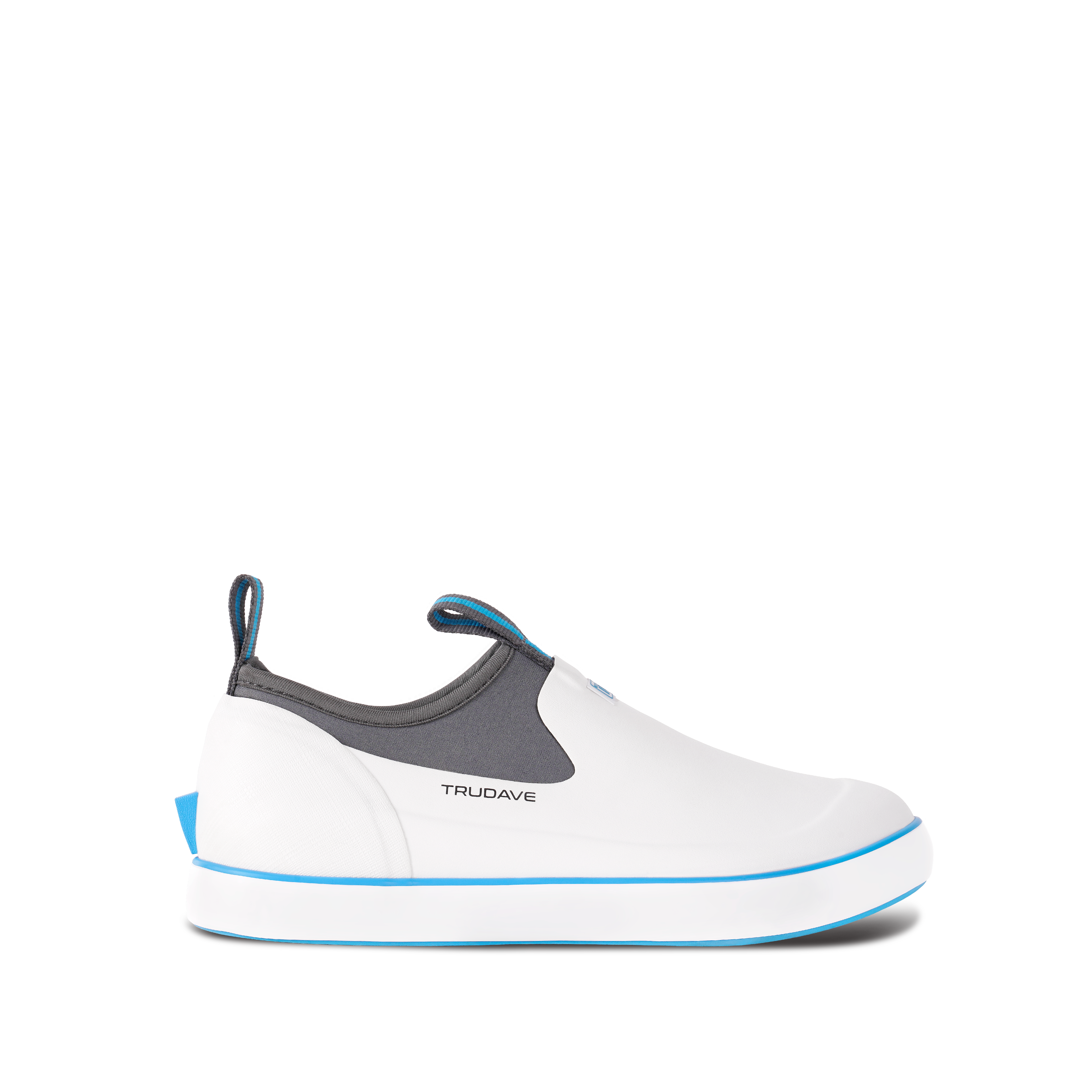
Trudave Waterproof Deck Boots
Explore WaveLock,
Ocean Breeze,
Seafarer Lite,
DeckFlow,
and other waterproof deck footwear
for boat decks, ramps,
docks, and shoreline transit.
Explore Deck Boots →
Trudave Tall Waterproof Rubber Boots
Explore tall rubber
and neoprene footwear
for muddy shorelines,
shallow marsh access,
wet grass,
creek edges,
and outdoor work.
Explore Tall Waterproof Boots →
Choose by Movement First, Then Build the Warmth Around It
If your winter fishing means standing nearly motionless in very cold, deep water for long periods, thick neoprene remains a practical choice because the material itself contributes significant insulation.
If your day includes long hikes, rowing, scrambling along banks, moving frequently between fishing spots, or fishing across a broad range of temperatures, breathable waders offer greater mobility and more adjustable thermal control.
The key is not deciding which material is universally “warmer.” Match your wader material to how hard you move, how deep you stand, how cold the water is, and how effectively your layering system manages moisture.
Winter Wading & Layering Resources
Use these resources to plan winter layering, understand cold-water hazards, and care for breathable wader systems.
National Weather Service
Cold Water Hazards & Safety
Simms Fishing
Wader Care & What to Wear Under Waders
Trudave Gear
Waterproof Deck Boots Collection
Edited by Trudave.
Winter comfort depends on more than wader material.
Water temperature, air temperature,
immersion depth, current,
wind, physical activity,
metabolism, fit,
sock system, and under-wader insulation
all influence thermal performance.
Cold-water wading also carries immersion and drowning risk,
so always evaluate current,
footing, weather,
and water temperature before entering.