We've sent you an email with a link to update your password.
Reset your password
We will send you an email to reset your password.
Why 40°F Rain Can Feel Worse Than 30°F Snow
TrudaveGear
Wet-Cold Weather Brief / Field Safety
Why 40°F Rain Can Feel Worse Than
30°F Snow
A cold rain just above freezing can become one of the most
uncomfortable—and potentially dangerous—weather patterns outdoors.
The reason is not simply the temperature. Wet clothing, wind,
evaporative cooling and prolonged exposure can increase heat loss even
when the thermometer remains above 32°F.
A dry 30°F day can sometimes be easier to manage than a windy 40°F rain
because outdoor comfort depends on much more than air temperature.
Clothing insulation works best when it stays dry and maintains loft.
Once clothing becomes saturated, water replaces some of the insulating
air within the system while wind and evaporation can accelerate cooling.
That does not mean all snow is harmless or all rain is automatically more
dangerous. Wet snow, freezing rain, high wind and long exposure can all
create serious cold-weather risk.
The useful lesson is simpler:
wetness changes the thermal equation.
FIELD REALITY
Hypothermia Does Not Require Sub-Freezing Air
The CDC and National Weather Service both warn that hypothermia can
occur at cool temperatures above 40°F when a person becomes chilled by
rain, sweat or cold-water exposure. Temperature alone does not determine
risk—the condition of your clothing, wind, exposure time and activity
level matter too.
Weather Case Files
Why Wet Cold and Dry Cold Behave Differently
Case A / 40°F Rain
The Wet-Cold Problem
Rain can wet the face fabric of clothing, enter through openings or
compromised seams, and soak poorly protected insulation. Sweat from
walking, paddling or hauling gear can add moisture from the inside.
Liquid moisture reaches clothing and skin more easily
Wet insulation can lose loft and effectiveness
Wind increases convective heat loss
Evaporation removes additional heat
Long exposure can become dangerous above freezing
Case B / 30°F Snow
The Dry-Cold Advantage—When It Stays Dry
In genuinely cold, drier conditions, snow may remain frozen on the
outside of a shell rather than immediately becoming liquid water.
Proper layers can preserve more insulating air.
Dry insulation can maintain more loft
Frozen precipitation may brush off the outer shell
Wind protection remains important
Wet snow can still saturate clothing
Sub-freezing exposure carries its own serious hazards
Thermal Loss / Three Pathways
Wet-Cold Weather Attacks the Heat Balance From More Than One Direction
Outdoor cooling is not controlled by one mechanism. Wet weather can
combine conduction, convection and evaporation at the same time.
Pathway 01
Conduction
Contact with cold water, soaked materials or cold surfaces can move
heat away from the body. Water immersion is especially efficient at
removing heat.
Pathway 02
Convection
Moving air carries away warmed air near the body. When wind reaches
damp clothing, the overall cooling problem can become more severe.
Pathway 03
Evaporation
Converting liquid water into vapor requires energy. Moisture from rain
or sweat can therefore contribute to evaporative cooling.
Wet-Cold Chain
How a Rainy Hunt Turns Into a Thermal Problem
Stage 01
Rain Reaches the Shell
Continuous precipitation wets the exterior and tests seams, cuffs,
hood openings and closures.
Stage 02
Moisture Builds
External rain or internal sweat increases moisture within the clothing
system.
Stage 03
Insulation Performance Drops
Wet or compressed insulating layers may retain less trapped air and
become less effective.
Stage 04
Cooling Accelerates
Wind, wet clothing and continued exposure increase the challenge of
maintaining body heat.
Feet & Hands / Wet-Cold Exposure
Why Extremities Often Feel the Cold First
In cold conditions, the body can reduce blood flow toward the skin and
extremities as part of its effort to conserve heat for the core.
Wet feet add another problem. Saturated socks, standing water, cold mud
and prolonged exposure can rapidly make feet uncomfortable and impair
dexterity and sensation.
This does not mean toes always become numb within a fixed number of
minutes. Exposure time, temperature, circulation, footwear, activity
level and individual physiology all affect the response.
The practical objective is to keep the entire foot system dry:
waterproof outer protection, moisture-managing socks and enough room
inside the boot for normal fit and insulation.
Wet-Cold Planning Matrix
Match the Protection System to the Weather
Conditions
Main Exposure
Primary Clothing Goal
Practical Gear Direction
Cold Rain / Drizzle
35°F–45°F
Rain, wind, damp clothing and long exposure
Keep insulation dry while managing sweat
Waterproof shell with sealed seams, moisture-managing layers and
waterproof footwear
Below-Freezing Snow
20°F–30°F
Low air temperature, wind and prolonged cold
Preserve insulation loft and block wind
Appropriate insulating layers plus wind-resistant outer
protection
Marsh / Flooded Timber
35°F–50°F
Standing water, wet vegetation, mud and cold water
Keep lower body and feet isolated from liquid water
Waterproof hunting waders matched to temperature and activity
Boat / Shoreline
Cool & Windy
Spray, rain, wind and cold surfaces
Block weather while maintaining secure footing and dry layers
Waterproof rainwear plus weather-appropriate waterproof footwear
The Dry-Line Strategy
Build the System From the Skin Out
The goal is not to create the thickest clothing system possible. It is to
manage sweat, preserve insulation and keep external rain from reaching the
layers underneath.
Layer 01
Moisture-Managing Base
Use merino wool or performance synthetic materials that move moisture
away from the skin more effectively than ordinary cotton.
Layer 02
Adjustable Insulation
Add fleece or other appropriate insulation according to temperature,
activity level and how long you expect to remain stationary.
Layer 03
Weather Barrier
Use a waterproof outer shell with protected seams, hood and adjustable
openings to reduce rain intrusion.
Field Habit
Vent Before You Sweat
During hard movement, reduce insulation or use available ventilation
before internal moisture builds up.
Wet-Cold System / Outer Shell
TrailBlaze: Keep the Rain Outside the Insulation System
In a 40°F rain, the first job of the outer layer is keeping liquid
weather from soaking the insulation underneath while still allowing the
clothing system to manage internal moisture.
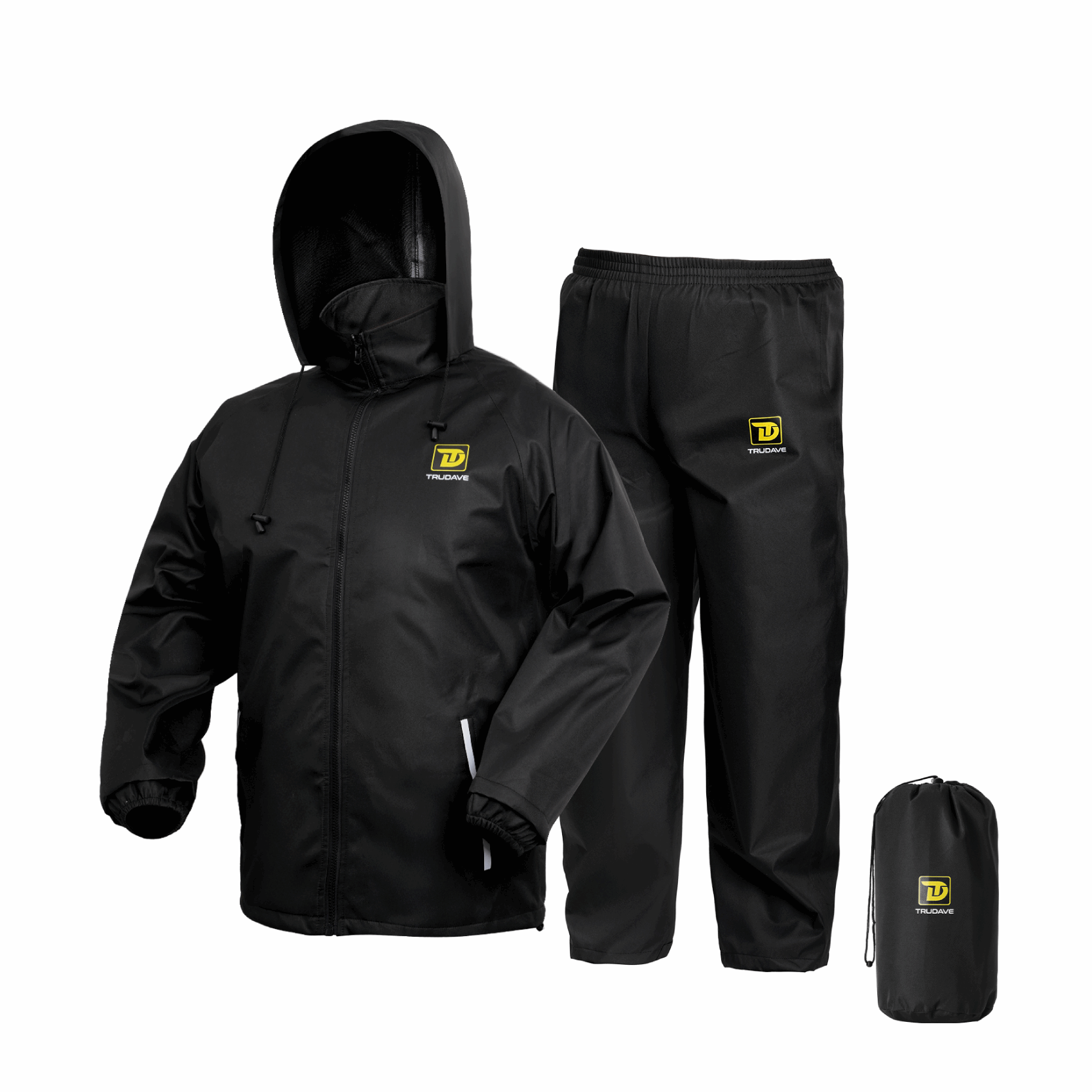
TrailBlaze is a two-piece waterproof rain system built around a coated
shell, fully taped seams and a breathable inner construction. It is
designed for rain exposure rather than prolonged standing submersion.
A rain suit handles precipitation from above, but flooded timber,
cattail marshes and shallow water require a different type of barrier.
That is where chest waders become the more appropriate system.
AquaShield combines an insulating neoprene body with integrated boots
and a fully sealed construction designed for hunting and fishing in wet
terrain.
A 40°F rain can feel brutally cold not because 40°F is inherently more
dangerous than 30°F, but because liquid moisture can undermine the
clothing system you depend on for insulation.
Once rain or sweat wets your layers, heat loss can increase through
conduction, convection and evaporation. Add wind and long stationary
periods, and conditions above freezing can become a serious cold-weather
problem.
The answer is not simply wearing thicker clothes.
Keep the insulation dry. Manage sweat before it builds. Block rain and
wind. Match footwear or waders to the amount of standing water you
expect.
For rain from above, a seam-taped weather shell such as TrailBlaze is the
relevant layer. When the hunt moves into flooded timber, marsh water or
prolonged wading, AquaShield provides the full chest-to-boot waterproof
system that ordinary rain pants cannot.
Respect wet cold even when the thermometer looks mild. In fall and early
winter, staying dry can be just as important as adding insulation.
With over a decade of experience tracking game across rugged North American terrains, Jack knows exactly what it takes to thrive in the wild. He specializes in rigorous field-testing for hunting apparel, boots, and waders, combining his passion for authentic wilderness survival with expert gear reviews and practical tracking techniques.
HUNTING GEAR
Quickshop
Fully Waterproof Build: Neoprene shaft bonded to a camo rubber shell for...