We've sent you an email with a link to update your password.
Reset your password
We will send you an email to reset your password.
Why Tight Boots Make Your Feet Colder (And How to Fix It)
TrudaveGear
TRUDAVE FIELD NOTES / COLD-WEATHER FOOTWEARISSUE 07 · FIT & WARMTH
Myth-Buster
Why Tight Boots Can Make Your Feet Colder
Extra-thick socks and aggressively tightened boots can feel like the
logical answer to freezing weather. But once your footwear becomes too
tight, pressure, reduced internal space and moisture can work against
the very insulation you are trying to improve.
Warm boots need space—not just insulation.
It is one of the most common mistakes hunters and late-season anglers
make: adding another heavy sock or tightening the boot because the
temperature keeps dropping.
Instead of creating more warmth, the final setup may become
uncomfortable, cramped and increasingly cold.
The reason is more complicated than a single “blocked artery.”
Foot warmth depends on several things working together:
normal circulation, insulation loft, dry socks, appropriate
boot volume and protection from the environment.
Tight footwear can create pressure points and crowd the toes. The
American Academy of Orthopaedic Surgeons notes that an overly tight
vamp can contribute to toe pain or numbness, while a properly shaped
toe box should allow the toes to rest without being pinched.
MYTH
“If My Feet Are Cold, I Just Need More Sock.”
Adding layers without considering available boot volume can make the
footwear tighter and create new pressure points around the toes,
forefoot or instep.
FACT
Warmth Comes From a Complete Fit System.
Sock thickness, internal boot volume, insulation, moisture management
and fit all need to work together. More material is only useful when the
boot can accommodate it comfortably.
01 / PRESSURE
Why a Boot That Is Too Tight Can Feel Colder
Warm blood flow is one part of temperature regulation in your hands and
feet. At the same time, localized footwear pressure can contribute to
discomfort, numbness and tingling.
The important point is not that every tight boot literally “shuts off”
circulation. It is that a cold-weather boot should not create excessive
pressure across the forefoot, toe box or top of the foot.
INPUT 01
Comfortable Fit
+
INPUT 02
Insulation Loft
+
INPUT 03
Dry Layers
Cold-weather comfort depends on the whole system—not one insulation number.
Check Where the Boot Feels Tight
Pressure across the top of the foot may indicate that the vamp or
lacing is too tight. Crowded toes point toward a toe-box or overall
sizing issue.
AAOS advises that toes should not feel pinched or cramped and
specifically notes that a vamp that is too tight may contribute to toe
pain or numbness.
Pressure Check
Toe Box
Forefoot
Instep
Heel
02 / INSULATION LOFT
Insulation Needs Space to Trap Air
Boot insulation and warm socks do not generate heat by themselves.
Instead, fibrous materials help slow heat loss partly by trapping small
pockets of air.
When socks and insulation are packed tightly into too little space, their
loft can be reduced. That does not mean there is one universal percentage
of warmth lost—but it does mean that “more thickness” is not automatically
“more warmth.”
BETTER SYSTEM
Insulation With Room
Sock fibers and boot insulation retain their normal shape while the
foot remains comfortably supported.
OVER-COMPRESSED
Too Much Material in Too Little Space
Adding another thick sock can crowd the foot and flatten the material
you expected to provide additional warmth.
The Sock Volume Experiment
The best sock setup is the one your boot can actually accommodate.
Instead of assuming that two thick socks are always warmer than one,
test the entire system together.
CASE A
Thin Cotton Sock
Cotton can retain moisture and dry slowly, which makes it a poor
cold-weather choice when feet sweat during the walk into the hunt.
CASE B
One Appropriate Merino / Synthetic Sock
A properly fitted technical sock can provide warmth and moisture
management without unnecessarily consuming all available boot volume.
CASE C
Multiple Thick Socks in a Tight Boot
This can create a completely different fit—crowding the toes,
increasing pressure and reducing the room available for insulation
loft.
03 / LACING
Tighten the Boot Where You Need Support—not Everywhere
Lace-up hunting boots give you control over fit, but pulling every section
as tight as possible can create unwanted pressure across the top of the
foot.
Window Lacing
REI recommends window lacing as a technique for relieving a pressure
point on the top of the foot.
Instead of crossing the laces directly over the uncomfortable area,
run them vertically through that section, then resume normal crossing
above it.
It is a fit adjustment—not a substitute for boots that are the correct
size and shape.
Cold Feet Can Start With Sweat Long Before You Feel Cold
Hunters often generate significant heat while hiking, carrying gear,
setting decoys or climbing into position.
Once movement stops, damp socks can become uncomfortable as conditions
cool. That is why cold-weather footwear should be treated as both a warmth
system and a moisture-management system.
Merino wool and performance synthetic socks are commonly used because
they manage moisture better than ordinary cotton while still providing
insulation.
FIELD TROUBLESHOOTER
Cold Feet Troubleshooting Matrix
What You Notice
What to Check
First Adjustment
Toes feel cramped, cold or numb soon after putting boots on
Toe-box width, length and overall internal volume
Recheck foot measurements and choose a boot shape/size that does
not crowd the toes.
Pressure or tingling across the top of the foot
Instep pressure and lace tension
Reduce tension or try window lacing.
Boots fit well with normal socks but become tight with winter socks
Available boot volume
Choose a more appropriate sock thickness or reassess boot sizing.
Socks become damp during the walk and feet cool during the sit
Sock material and overheating
Use moisture-managing socks and avoid overdressing during active
travel.
Feet remain numb after removing the boots and warming up
Possible issue beyond ordinary footwear fit
Do not simply keep changing boots—consider medical evaluation.
Late-Season Hunting / WildGuard
Trudave Field Fit / Hunting
WildGuard: Check the Measurement, Not Just the Size Number
For cold-weather hunting, the most useful feature is not a marketing
claim about a “roomy toe box.” It is having published measurements that
allow you to compare your actual foot length with the space inside the
boot.
WildGuard currently publishes insole length by size and recommends that
your measured foot length be slightly shorter than the insole
measurement.
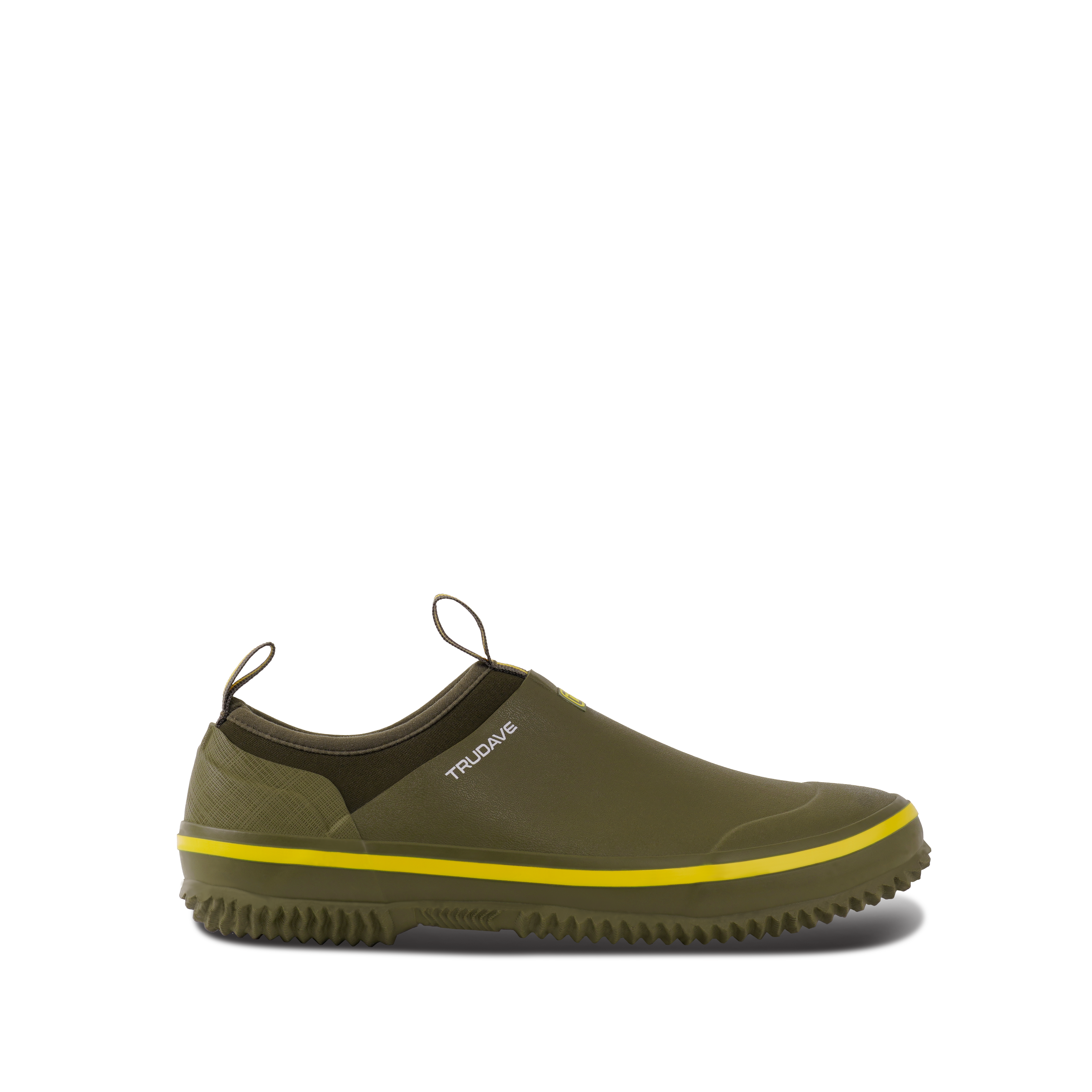
WaveLock: Apply the Same Fit Rule on Cold Wet Decks
For anglers and hunters working around wet boat decks, WaveLock provides
a lower-profile waterproof option. The same cold-weather fit principle
still applies: do not automatically fill every bit of internal volume
with extra socks.
WaveLock publishes insole lengths by size, making it possible to measure
your foot and compare it directly with the available internal length
instead of choosing only from the size printed on another pair of shoes.
Its one-piece rubber shell, flexible neoprene collar and
multi-directional siped outsole are designed for wet-surface use.
Cold-weather footwear should feel
secure without feeling compressed.
If extra socks cause your toes to become crowded, the extra layer is not
necessarily improving the system. If the boot presses hard across the
instep, tightening the laces further is unlikely to solve the problem.
Start by measuring your feet. Choose the sock weight you actually plan to
use. Check the boot's internal measurements when available. Make sure your
toes are not pinched, and adjust lace tension around pressure points
rather than tightening every section equally.
Then manage moisture. A dry, appropriately insulated foot in a
correctly fitted boot has a much better foundation for cold-weather
comfort than a foot packed into layers simply because the temperature
dropped.
The warmest setup is not always the thickest setup.
Fit first. Insulation second. Moisture management always.
With over a decade of experience tracking game across rugged North American terrains, Jack knows exactly what it takes to thrive in the wild. He specializes in rigorous field-testing for hunting apparel, boots, and waders, combining his passion for authentic wilderness survival with expert gear reviews and practical tracking techniques.
HUNTING GEAR
Quickshop
Fully Waterproof Build: Neoprene shaft bonded to a camo rubber shell for...