Fishing Footwear Guide / Boat / Shore / Wading
Deck Boots vs. Waders: What Should You Wear for Shore and Boat Fishing?
The right footwear depends on one simple question:
are you staying above the waterline, or are you intentionally stepping into it?
Above the Waterline
Boat Decks, Docks & Quick Shore Access
Deck boots prioritize agility, wet-surface traction,
easy on/off, and protection from spray and deck wash.
Below the Waterline
Surf, Rivers & Intentional Wading
Waders provide extended body coverage
when the fishing plan requires you to physically enter the water.
Every serious angler has stood at the tailgate before sunrise,
staring at a pile of gear and trying to predict the day.
Do you climb into full chest waders and risk overheating by afternoon,
or pull on deck boots and hope the water stays below your knees?
Choosing between deck boots and waders is not just a question of comfort.
Your footwear affects how freely you move,
how much water exposure you can handle,
and how secure your footing feels when the deck,
shoreline, or riverbed gets slick.
Whether you are launching a center console,
running a backwater skiff,
fishing muddy banks,
chasing surf fish,
or stepping into a cold river,
the environment should make the footwear decision for you.
The Fast Rule
Staying on the boat? Start with deck boots.
Intentionally entering water above boot height?
Move to properly fitted waders and appropriate wading safety gear.
Above the Waterline
Zone A / Boat & Dock
The Deck Boot: Agility, Grip, and Boat-Deck Performance
When the majority of your fishing day happens on fiberglass,
aluminum, docks, ramps, or other wet hard surfaces,
ankle-height deck boots usually provide the simpler setup.
01
Wet-Deck Traction
Boat footwear should prioritize tread that can move water away
from the contact surface and maintain grip on wet fiberglass,
docks, ramps, and other slick surfaces.
Siped and water-channeling outsoles are especially useful
in marine environments.
02
Ankle Mobility
A short deck boot gives you more freedom to move around consoles,
coolers, gunwales, rod holders, and deck equipment.
That lower profile is especially useful when repeatedly changing position
while casting, netting fish, or handling lines.
03
Warm-Weather Comfort
On summer boat days,
a low-profile waterproof boot is usually less cumbersome
than wearing full chest waders for hours when you have no intention
of stepping into deep water.
Trudavegear Deck Setup
WaveLock & DeckFlow for Wet Decks and Dock Duty
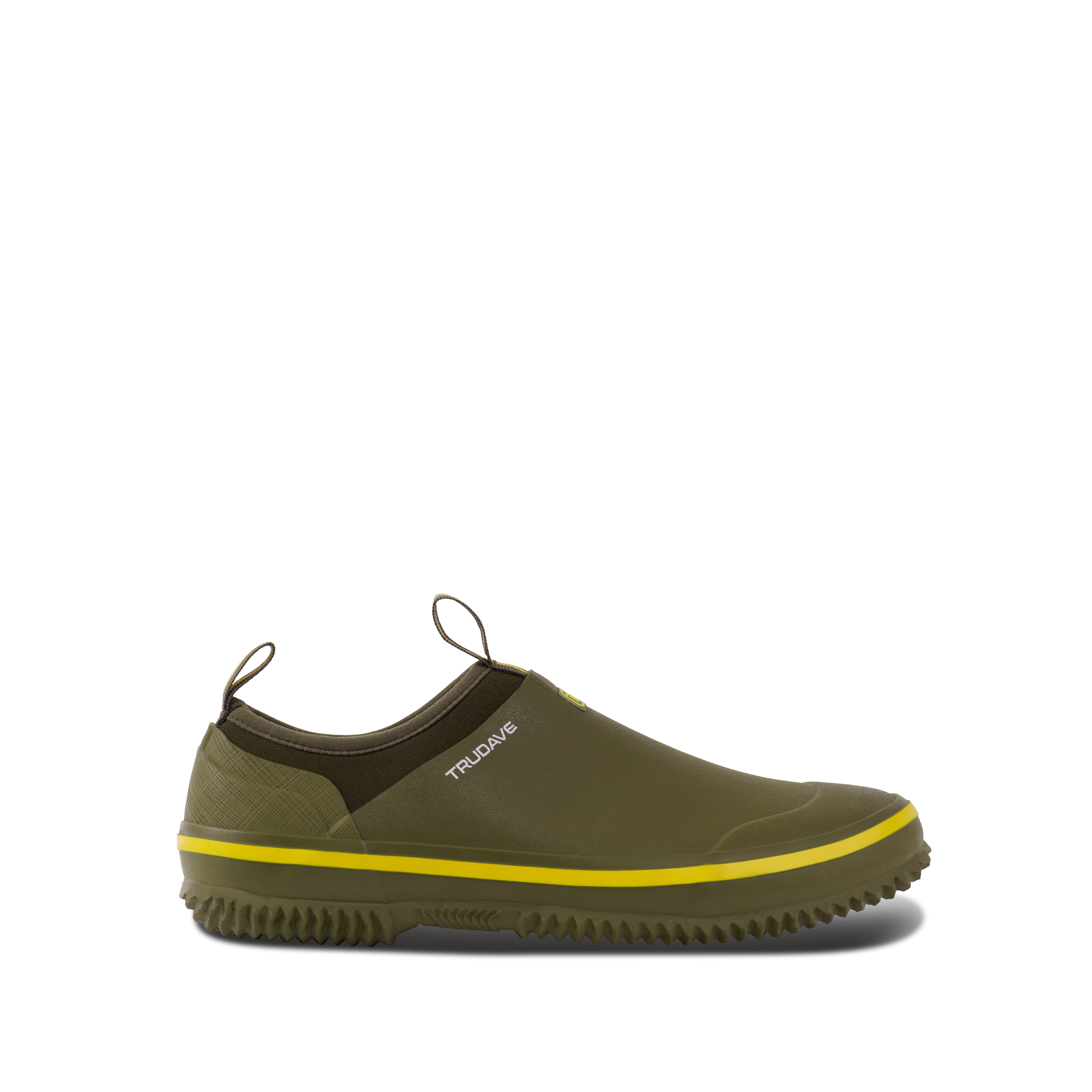
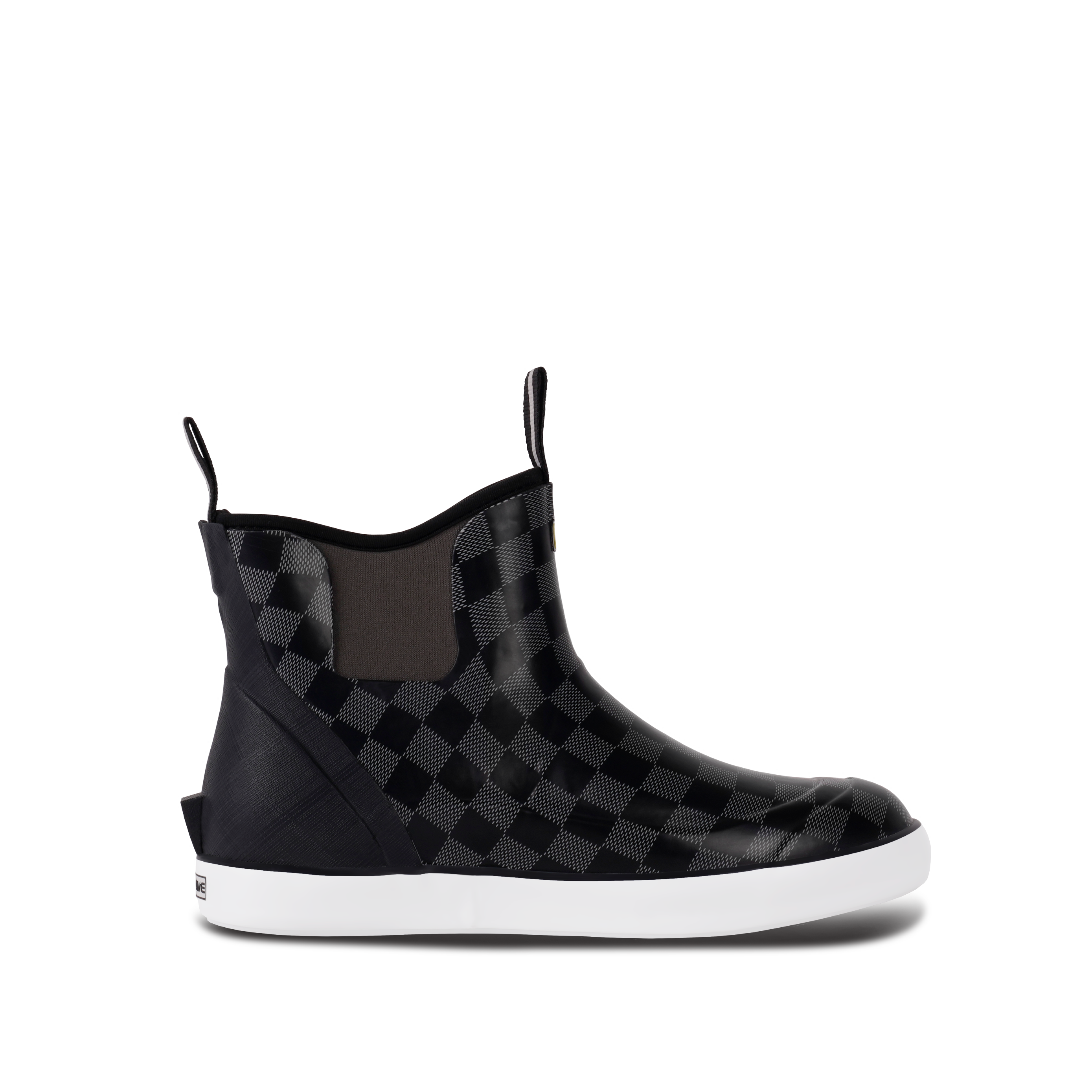
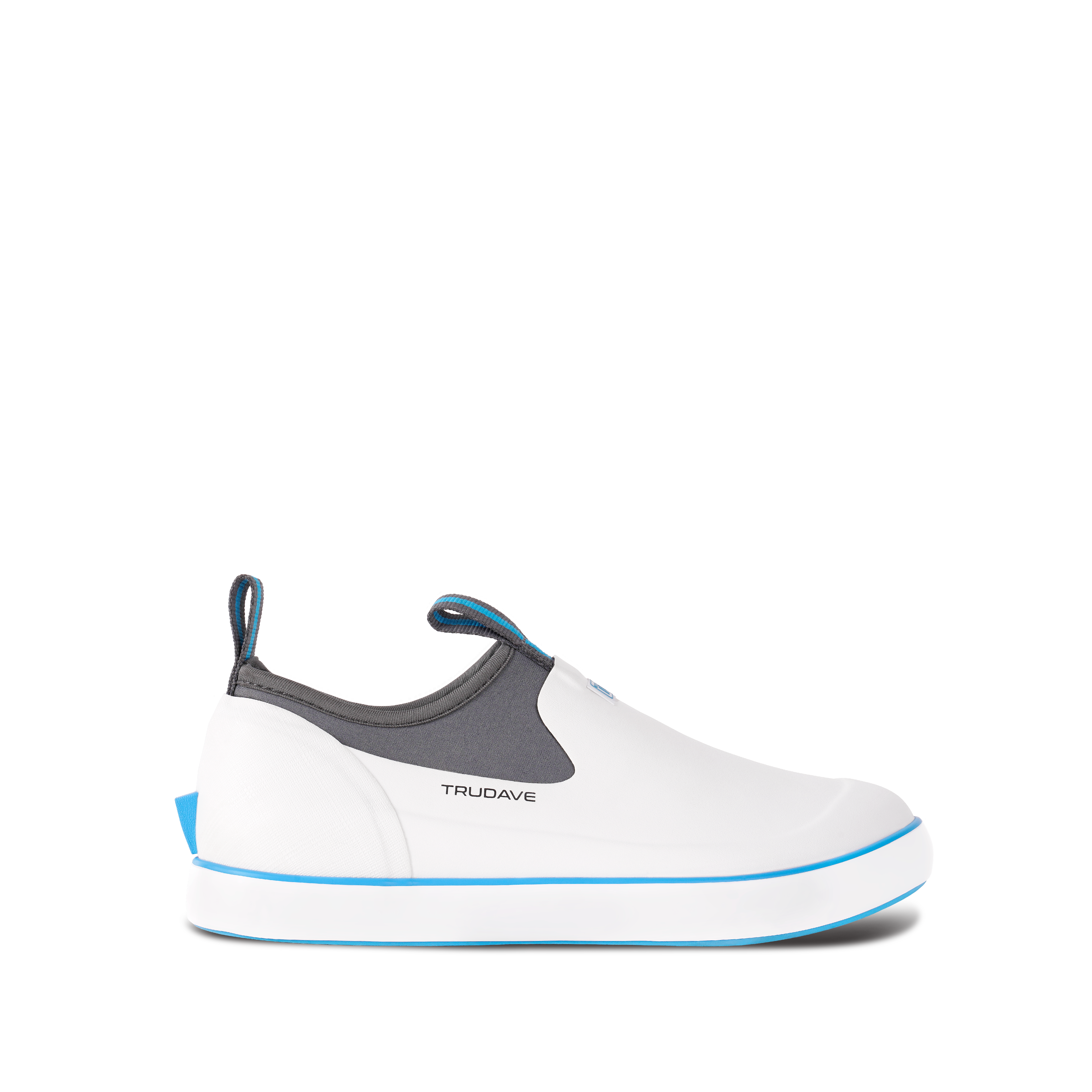
Trudavegear's WaveLock and DeckFlow lines are built around
waterproof rubber construction and deck-focused traction.
WaveLock uses fine siping and multi-directional lugs,
while DeckFlow features a siped, water-channeling,
non-marking outsole designed for wet deck use.
Their ankle-height construction also keeps movement less restrictive
during long fishing days compared with full-height waterproof gear.
Below the Waterline
Zone B / Surf, River & Wading
The Chest Wader: Extended Protection When You Enter the Water
Deck boots stop making sense once the fishing plan requires
intentional immersion beyond boot height.
That is where waders earn their place.
01
Surf Fishing
When fishing from beaches or shallow surf zones,
properly fitted waders can provide substantially more coverage
against cold water, wave wash, and wet sand than ankle boots.
Conditions still matter: strong surf, drop-offs, backwash,
and changing currents require conservative judgment.
02
River and Stream Wading
Waders protect the legs and lower body from cold water
while allowing anglers to reach casting positions
that are inaccessible from the bank.
Wading boots or bootfoot outsoles should be matched
to the riverbed and local regulations.
03
Temperature and Brush Protection
Waders can also help protect against cold currents,
wet vegetation, shoreline brush,
and repeated exposure that would overwhelm ordinary footwear.
Breathable constructions are useful when mobility
and temperature management matter.
Water Safety
Waders Are Not a Substitute for a Life Jacket
When boating, follow applicable boating regulations
and use a properly fitted U.S. Coast Guard-approved life jacket.
The Coast Guard recommends wearing a life jacket while a vessel is underway.
When wading, secure your wading belt,
understand the current and bottom conditions,
and avoid water that exceeds your ability or comfort level.
Cold, swift water can become dangerous very quickly.
The Shoreline Grey Area
Bank Fishing, Kayak Launches, and Shallow Mud
The hardest choice happens when you are not really boating
and not really wading either.
Muddy riverbanks, wet morning grass,
shallow tidal flats, pond edges,
and kayak launches often fall into this transition zone.
If water exposure stays below the top of the boot,
tall rubber boots or deck boots can be much easier
than climbing into full waders.
They keep mud off your legs,
rinse clean quickly,
and are easier to remove before getting back into the truck or boat.
Once the route requires intentionally stepping deeper
than your boot height,
that is the point where waders become the better tool.
Fishing Footwear Strategy Matrix
Match the Footwear to the Water
Offshore / Center Console
Primary Hazard
Wet fiberglass,
spray,
bait debris,
and constant deck movement.
Best Choice
Ankle-Height Deck Boots
Why
Low-profile mobility,
wet-deck traction,
quick on/off,
and minimal bulk.
Surf Casting
Primary Hazard
Wave wash,
cold water,
wet sand,
and uneven shoreline conditions.
Best Choice
Chest Waders + Wading Belt
Why
Greater body coverage
when intentionally entering shallow water
or receiving repeated wave wash.
River / Stream Wading
Primary Hazard
Current,
slippery rocks,
cold water,
and uneven bottoms.
Best Choice
Breathable Waders + Appropriate Wading Boots
Why
Extended cold-water coverage
and outsole options suited
to different river-bottom conditions.
Muddy Bank Fishing
Primary Hazard
Wet grass,
shallow mud,
soft banks,
and puddles.
Best Choice
Tall Rubber Boots
Why
More coverage than ankle boots
without the bulk of full chest waders.
Kayak / Skiff Launch
Primary Hazard
Shallow mud,
wet ramps,
spray,
and quick transitions.
Best Choice
Deck Boots or Tall Rubber Boots
Why
Easy cleanup,
fast removal,
and enough protection
for shallow launch conditions.
Build the Arsenal
Serious Anglers Usually Need More Than One Footwear Setup
Trying to force one piece of gear into every fishing environment
usually creates unnecessary compromises.
Full chest waders are excessive for many boat days,
while ankle-height deck boots obviously cannot replace waders
when the water rises above the shaft.
A more practical setup is to keep a dependable pair
of deck boots ready for boats, docks, ramps,
and shallow shoreline work,
then reserve your waders for surf,
rivers, and situations where you intentionally enter deeper water.
Dial in both systems and you spend less time thinking about wet feet
and more time concentrating on the bite.
Boat Deck to Riverbank
Build Your Trudavegear Fishing Footwear Setup
Choose waterproof deck boots for wet boats, docks,
ramps, and quick shoreline work,
or step into full-coverage fishing waders
when the water becomes part of the fishing plan.
Water & Footwear References
Authoritative Fishing, Boating & Wading Resources
Footwear alone cannot eliminate the hazards associated with boating,
surf, cold water, or river currents.
Use appropriate safety equipment,
monitor local conditions,
and follow applicable boating and water-access rules.
01
U.S. Coast Guard — Life Jacket Wear
The U.S. Coast Guard recommends wearing
a properly fitted, approved life jacket while on the water
and requires recreational vessels to carry
an appropriate wearable life jacket for each person aboard.
Read U.S. Coast Guard Life Jacket Guidance
02
Take Me Fishing — Wader Safety Guidelines
Take Me Fishing recommends wearing a wading belt
and provides practical safety guidance
for anglers navigating rivers and streams in waders.
Read Wader Safety Guidelines
04
Trudavegear — WaveLock Deck Boots
WaveLock deck boots feature a waterproof rubber build,
fine siping micro-channels,
multi-directional lugs,
and an ankle-height design
intended for fishing, boating, docks, and other wet environments.
View WaveLock Deck Boots
05
Trudavegear — DeckFlow Deck Boots
DeckFlow uses a seamless waterproof rubber shell
with a siped, water-channeling,
non-marking outsole designed for wet deck use.
View DeckFlow Deck Boots
06
Trudavegear — Fishing Waders
Explore waterproof chest and hip waders
for fishing, river access, marshes,
shoreline use, and other environments
where extended water coverage is required.
View Trudavegear Waders