Field Footwear Guide / Early Season
What Are the Best Boots for Pigeon Shooting? Comfort, Traction, and Weather Defense
A practical guide to choosing field-ready footwear for wet stubble,
muddy agricultural ground, decoy setups, long walks,
and hours spent waiting on the flight line.
Whether you are setting up over a freshly harvested grain stubble field
or managing local agricultural crop protection, early-season pigeon shooting
offers some of the fastest, most exciting wing-shooting action of the year.
Pigeons are notoriously sharp-eyed and fast-moving, meaning your focus
needs to stay on the field — not on throbbing arches,
slipping soles, or soaked feet.
Pigeon shooting often requires a mix of high-mobility walking,
carrying and positioning decoy spreads, moving across muddy agricultural ground,
and standing stationary for long periods around damp field edges.
If you are wondering what footwear you actually need for the field,
the answer depends heavily on the ground beneath your feet.
The Practical Answer
Choose tall rubber boots for wet and muddy ground.
Choose structured lace-up field boots when longer mileage
and ankle stability matter more.
06:15 AM / Leaving the Truck
The First Decision: Rubber or Lace-Up?
Before you walk a single field edge,
look at the ground conditions.
Pigeon shooting generally sends hunters down one of two footwear routes.
Tall Waterproof Rubber Boots
For Wet Fields and Heavy Agricultural Mud
Tall rubber boots make sense when your route includes flooded margins,
heavy morning dew, wet vegetation, muddy farm tracks,
or deep soft ground.
Flexible neoprene shafts can also provide more comfortable movement
than rigid traditional rubber designs when repeatedly walking,
crouching, or setting up field equipment.
Structured Field Boots
For Dry Ground and Higher Mileage
Leather or synthetic lace-up field boots are better suited
to dry rolling terrain, gravel tracks,
firmer agricultural ground, and shooting days
when you expect to cover significantly more distance.
06:40 AM / Crossing Wet Grass
Waterproofing and Boot Height Matter Fast
Agricultural fields can be deceptively wet first thing in the morning.
Even without rainfall, dew-covered vegetation
can soak low-cut footwear surprisingly quickly.
Waterproofing Check
Match Boot Height to the Ground You Actually Cross
Taller rubber shafts provide better protection through wet grass,
muddy field margins, and shallow standing water.
If you prefer a lace-up field boot,
prioritize a reliable waterproof construction
that can handle damp vegetation and changing weather.
07:05 AM / Carrying the Decoy Spread
Support Starts Mattering Once the Weight Goes On
Carrying decoys, bags, seats, and other field equipment
puts more load through your feet than an ordinary walk.
Comfort Check
Do Not Settle for a Completely Flat Footbed
Traditional inexpensive rubber boots can become tiring
after extended standing and repeated walks across firm farm tracks.
Modern performance-oriented outdoor footwear,
including options in the Trudavegear hunting boot range,
places more emphasis on cushioning,
supportive underfoot construction,
and practical comfort for extended outdoor use.
07:30 AM / Mud Around the Hide
Your Tread Needs to Release Mud
A freshly combined field can become sticky surprisingly quickly
once soil moisture rises.
Traction Check
Deep, Open Lugs Beat Tight Shallow Tread
Widely spaced rubber lugs help release mud as you walk.
This reduces soil buildup beneath the boot
and helps maintain more consistent footing
around field edges, soft tracks, and sloped agricultural ground.
08:00 AM / Settling Into Position
Keep the Footwear Low-Key
Footwear is only one small part of field concealment,
but practical outdoor colors still make more sense
than glossy finishes or highly visible footwear.
Appearance Check
Earth Tones and Matte Finishes Fit the Field Better
Browns, greens, dark gray, black,
and muted camouflage patterns naturally fit agricultural environments
without adding unnecessary visual contrast
when you move around the shooting position.
Boot Selection Check
Four Things Your Pigeon Shooting Boots Need to Get Right
01
Waterproof Coverage
Wet grass, agricultural mud, and changing weather make waterproofing
one of the first considerations.
Match shaft height to the depth of vegetation,
mud, and standing water you expect.
02
Support for Walking and Standing
Pigeon shooting footwear needs to work while you are moving
and while you are standing still.
Look for useful cushioning,
adequate foot support,
and a fit that does not allow excessive heel movement.
03
Mud-Ready Traction
Deep outsole lugs with enough spacing to release soil
are useful on muddy stubble,
clay tracks, damp field margins,
and uneven agricultural ground.
04
Practical Field Colors
Matte and subdued colors are a practical fit for field use.
Browns, dark greens, muted camouflage,
gray, and black integrate naturally into agricultural environments.
Three Footwear Routes
Which Boot Style Fits Your Shooting Ground?
Wet Field Option
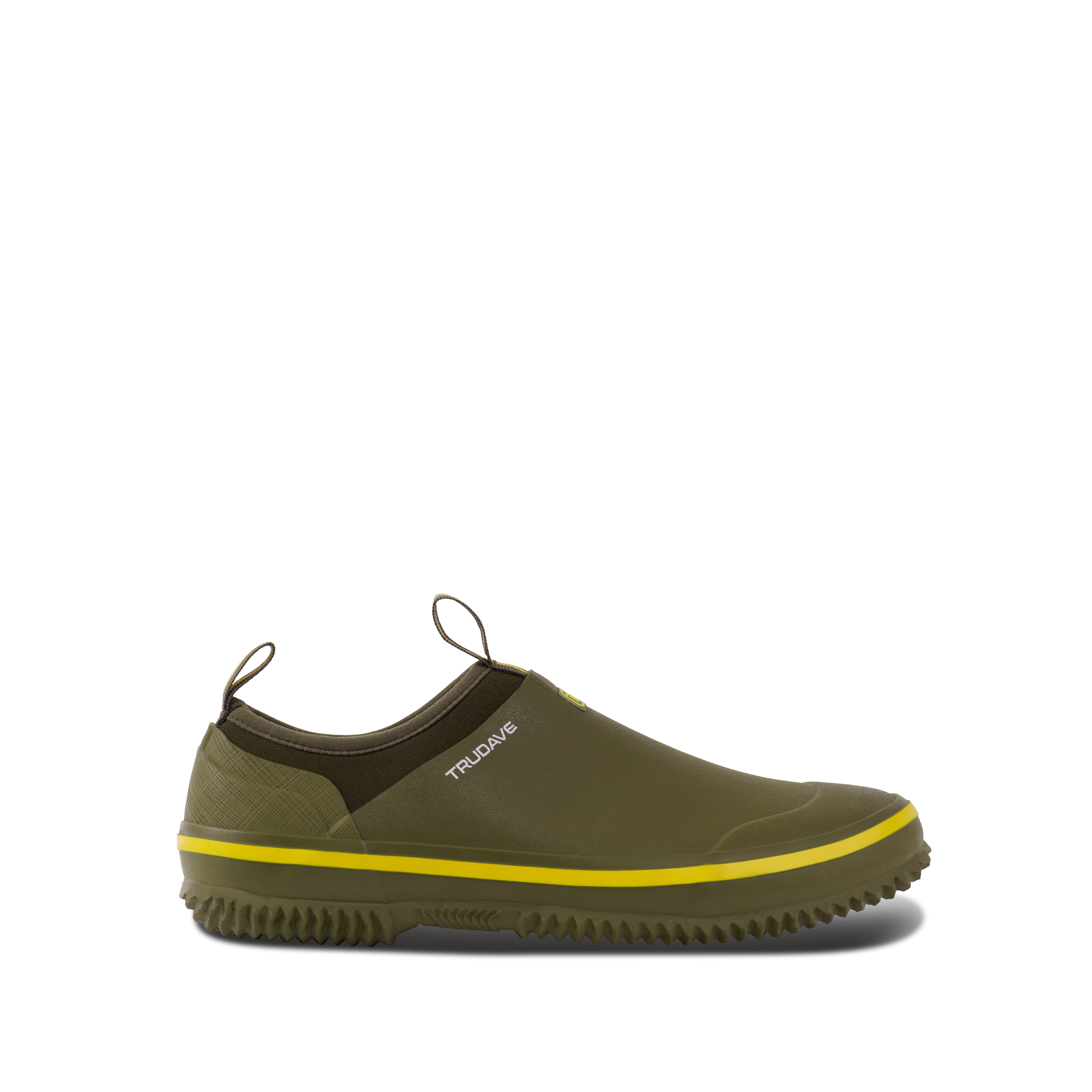
Performance Rubber Utility Boots — Trudavegear
Best Environment
Muddy stubble,
wet grass,
damp farm edges,
field access,
property work,
and changing early-season conditions.
Main Advantage
Waterproof rubber protection
combined with practical outdoor traction
and comfort for extended field use.
Keep in Mind
Check the individual model
and size guide when planning
to wear thicker socks in colder weather.
Dry Ground Option
Traditional Leather or Synthetic Field Boots
Best Environment
Dry rolling fields,
gravel farm roads,
firmer soil,
and shooting days involving more walking.
Main Advantage
Secure ankle fit,
controlled heel movement,
and comfortable movement
over longer distances.
Keep in Mind
Deep mud,
flooded margins,
and prolonged standing water
are not their strongest environment.
Warm Weather Option
Lightweight Ankle Waterproof Boots
Best Environment
Warm early-season days,
quick field setups,
light outdoor work,
and relatively dry ground.
Main Advantage
Lightweight feel,
quick slip-on convenience,
and less bulk during warmer weather.
Keep in Mind
Short shafts offer less coverage
through tall wet vegetation,
muddy margins,
and standing water.
Shoot-Day Notes
Small Details That Make a Long Field Day Easier
Socks Matter
Moisture-managing Merino wool or synthetic socks
are a practical choice for long shooting days
because they help manage moisture
as activity levels and temperatures change.
Break Boots In First
Wear new boots while scouting,
working around the property,
setting decoys,
or doing outdoor chores
before relying on them for a full shooting day.
Clean After Muddy Fields
Rinse agricultural mud and debris from footwear after use
rather than allowing it to remain packed into outsole lugs
and around flex points.
Store Them Properly
Allow footwear to dry naturally
and store rubber or neoprene boots
away from prolonged direct sunlight
and excessive heat.
The Bottom Line
The Best Pigeon Shooting Boots Are the Ones You Stop Thinking About Once the Field Comes Alive.
If your day involves wet grass,
muddy stubble,
and damp field margins,
supportive waterproof rubber boots
are usually the practical choice.
If your shooting ground is dry,
rolling,
and demands more mileage,
structured lace-up field boots
provide more controlled ankle support
for longer walking routes.
Match your footwear to the field
and keep your attention where it belongs:
on the shooting day ahead.
Wet Fields / Mud / Farm Ground / Outdoor Utility
Explore Trudavegear Hunting Boots
Waterproof hunting footwear for wet grass,
muddy agricultural ground,
field access,
scouting,
property work,
and changing outdoor conditions.
Shop Hunting Boots
Field References
Authoritative Footwear & Field Comfort Resources
Traction, waterproofing, sock choice,
fit, and footwear construction can all affect comfort
during long outdoor days.
The following official resources provide additional guidance
on slip resistance, blister prevention,
waterproof footwear technology,
and hunting boot selection.
01
CDC / NIOSH — Slip-Resistant Shoes
The National Institute for Occupational Safety and Health
provides guidance on slip-resistant footwear,
including the role of rubber soles
and tread patterns on wet or slippery surfaces.
Read NIOSH Slip-Resistant Footwear Guidance
02
American Academy of Dermatology — Blister Prevention
The American Academy of Dermatology provides guidance
on preventing friction blisters,
including properly fitting footwear
and moisture-managing socks during prolonged activity.
Read AAD Blister Prevention Guidance
03
GORE-TEX — Waterproof Footwear Technology
GORE-TEX provides information about waterproof
and breathable footwear technology used in
hiking, outdoor, and field-oriented footwear.
Explore GORE-TEX Footwear Technology
04
Trudavegear — Hunting Boots Collection
Explore Trudavegear hunting boots for wet ground,
mud, field access, scouting,
hunting, and outdoor utility.
Individual models vary in insulation,
shaft height, materials,
outsole construction, and intended use.
View Trudavegear Hunting Boots
05
Trudavegear — Work & Farm Boots
Explore waterproof outdoor utility footwear
for agricultural work,
wet grass, muddy property conditions,
farm chores, and rainy outdoor use.
View Trudavegear Work & Farm Boots