We've sent you an email with a link to update your password.
Reset your password
We will send you an email to reset your password.
What Saltwater Really Does to Your Fishing Gear
TrudaveGear
0 comments
Marine Maintenance Log / Saltwater Exposure
What Saltwater Really Does to Your Fishing Gear:
The Science of Marine Corrosion
Saltwater does more than leave a crust on rods, reels, tools and
footwear. Chlorides create a demanding corrosion environment for
metals, dried salt accumulates in moving components and fabric
surfaces, and repeated marine exposure makes post-trip maintenance
essential.
Saltwater is one of the most demanding environments for fishing equipment,
but not every material fails for the same reason.
On reels, pliers, hooks, fasteners and other metal components, chloride
ions increase the risk of localized corrosion. When dissimilar metals are
electrically connected in seawater, galvanic corrosion can also become a
concern.
On fabrics and footwear, the story is different. Salt residue can remain
after water evaporates, attract moisture, interfere with surface
treatments and accumulate in seams, zippers and moving components.
The practical lesson is not that the ocean instantly destroys every
material. It is that marine gear needs a repeatable rinse, dry,
inspect and store routine.
MARINE MYTH CHECK
Salt Does Not Automatically “Cut Open” Waterproof Membranes
GORE-TEX testing states that saltwater itself does not clog, reduce the
breathability of, or damage GORE-TEX fabric. Salt deposits can,
however, attract moisture and mask the performance of the garment's
durable water-repellent finish. That is why regular fresh-water rinsing
and manufacturer-approved cleaning remain important.
LOG 01
Metal / Chloride Exposure
Why Saltwater Is So Hard on Reels, Tools and Hardware
Seawater contains dissolved ions that make it an effective electrolyte.
That allows electrochemical corrosion reactions to proceed more readily
than they would in a much less conductive environment.
Stainless steel protects itself with a thin passive oxide film, but
chloride-rich environments can locally disrupt that protection and
increase the risk of pitting and crevice corrosion.
Coastal salt deposits can create the same problem even when a component
is no longer submerged. As water evaporates, chlorides become more
concentrated on the surface.
Stage 01
Saltwater Reaches Metal
Chloride-containing water coats exposed hardware, reel components,
tools and fasteners.
Stage 02
Electrochemical Reactions Continue
Water and dissolved ions provide an environment in which anodic and
cathodic corrosion reactions can proceed.
Stage 03
Passive Film Can Break Down
Chlorides can increase the risk of localized attack on susceptible
stainless steels and other metals.
Stage 04
Pitting or Crevice Attack Develops
Damage may remain localized and difficult to see until corrosion is
already established.
Localized Pitting / Illustration
Why Pitting Can Be Easy to Miss
Pitting corrosion is highly localized. A small opening visible on the
surface can hide a larger cavity beneath it.
Outokumpu notes that chloride-containing environments such as seawater
create elevated risk for pitting and crevice corrosion in stainless
steels.
When seawater evaporates, dissolved salts remain behind as deposits.
Those deposits can accumulate around reel spools, line, zipper tracks,
seams and other small spaces.
Shimano specifically warns that salt can crystallize between fishing
line and a reel spool and contribute to corrosion if it is not removed.
The key point is accumulation—not the idea that every salt crystal acts
as a microscopic knife cutting through waterproof fabrics.
What Salt Deposits Can Do
Build Up in Places That Are Hard to See
Dried deposits can remain around moving reel parts, spool edges,
zipper sliders, stitching and surface textures.
They can also attract moisture and make future cleaning more
difficult.
What Not to Claim
Salt Does Not Automatically Destroy Every Waterproof Membrane
Membrane behavior depends on the material. GORE-TEX specifically
states that saltwater does not damage its membrane or reduce its
breathability.
Manufacturer care instructions should therefore take priority over
generic claims about all waterproof fabrics.
Material Exposure Board
Saltwater Does Not Attack Every Material the Same Way
Metal
Chloride Corrosion
Stainless steels, aluminum alloys and plated components have
different corrosion resistance, but chloride-rich seawater can
increase localized corrosion risk.
Reels & Moving Parts
Salt Deposit Build-Up
Dried salt and grit can remain around spools, bearings, handles and
other moving components. Manufacturers routinely recommend fresh-water
rinsing after saltwater use.
Waterproof Clothing
Surface Contamination
Salt residue can attract moisture and interfere with the apparent
performance of water-repellent surface treatments. Follow the garment
manufacturer's cleaning instructions.
LOG 03
Rubber Footwear / Marine Exposure
Rubber Boots Still Need Post-Saltwater Care
Rubber footwear removes many of the corrosion concerns associated with
leather hiking boots, fabric mesh and exposed metal lacing hardware.
Smooth rubber surfaces are also relatively easy to rinse after a day on
the water.
That does not mean saltwater makes every rubber compound brittle by
instantly “leaching all the plasticizers” from it. Rubber aging depends
on the specific compound and can involve UV, heat, ozone, oxygen,
mechanical flexing and chemical exposure.
For marine footwear, the simplest and most useful maintenance habit is
still to remove salt residue with clean fresh water and allow the boots
to dry away from excessive heat and direct sunlight.
Marine Element Hazard Matrix
What to Inspect After a Saltwater Trip
Material / Component
Main Marine Concern
What You May Notice
Maintenance Direction
Stainless Steel / Metal Hardware
Chloride-driven pitting, crevice or galvanic corrosion
Rust staining, deposits, pitting, stiff hardware
Fresh-water rinse, dry thoroughly and follow manufacturer
lubrication guidance
Reel / Spool / Line
Salt and grit accumulating in moving or confined areas
Rough operation, dried deposits, noise or corrosion
Gentle fresh-water rinse, dry and service according to reel
manufacturer instructions
Waterproof Shell
Salt and other contaminants accumulating on outer fabric
Reduced surface beading, dirty face fabric or stiff deposits
Rinse or wash according to the garment manufacturer's care label
Rubber Deck Boots
Salt, mud, fish residue and prolonged environmental exposure
Surface deposits, odor or grime around tread and flex areas
Fresh-water rinse, air dry and store away from excessive heat and
direct sun
Zippers / Small Hardware
Salt deposits and corrosion around tight tolerances
Stiff slider movement or visible deposits
Flush with fresh water and use only manufacturer-approved
lubricants where required
Post-Trip Protocol
The Fresh-Water Reset
Simple maintenance is more useful than waiting for visible corrosion
Step 01
Remove Loose Sand, Mud and Fish Residue
Clear away abrasive grit before rinsing or wiping sensitive
equipment.
Step 02
Rinse Salt-Exposed Gear With Fresh Water
Use a gentle rinse rather than high pressure on reels and other
precision equipment. Follow the specific manufacturer's directions.
Step 03
Allow Gear to Dry Thoroughly
Dry reels, footwear, shell garments and tools before placing them
into closed bags, lockers or storage compartments.
Step 04
Inspect Moving Parts and High-Risk Hardware
Check reel handles, spool areas, zippers, pliers, fasteners and
other places where salt may remain trapped.
Step 05
Lubricate Only Where the Manufacturer Recommends
Do not spray generic lubricant into every opening. Reel and zipper
lubrication requirements vary by product.
Marine Footwear / Inshore & Deck Use
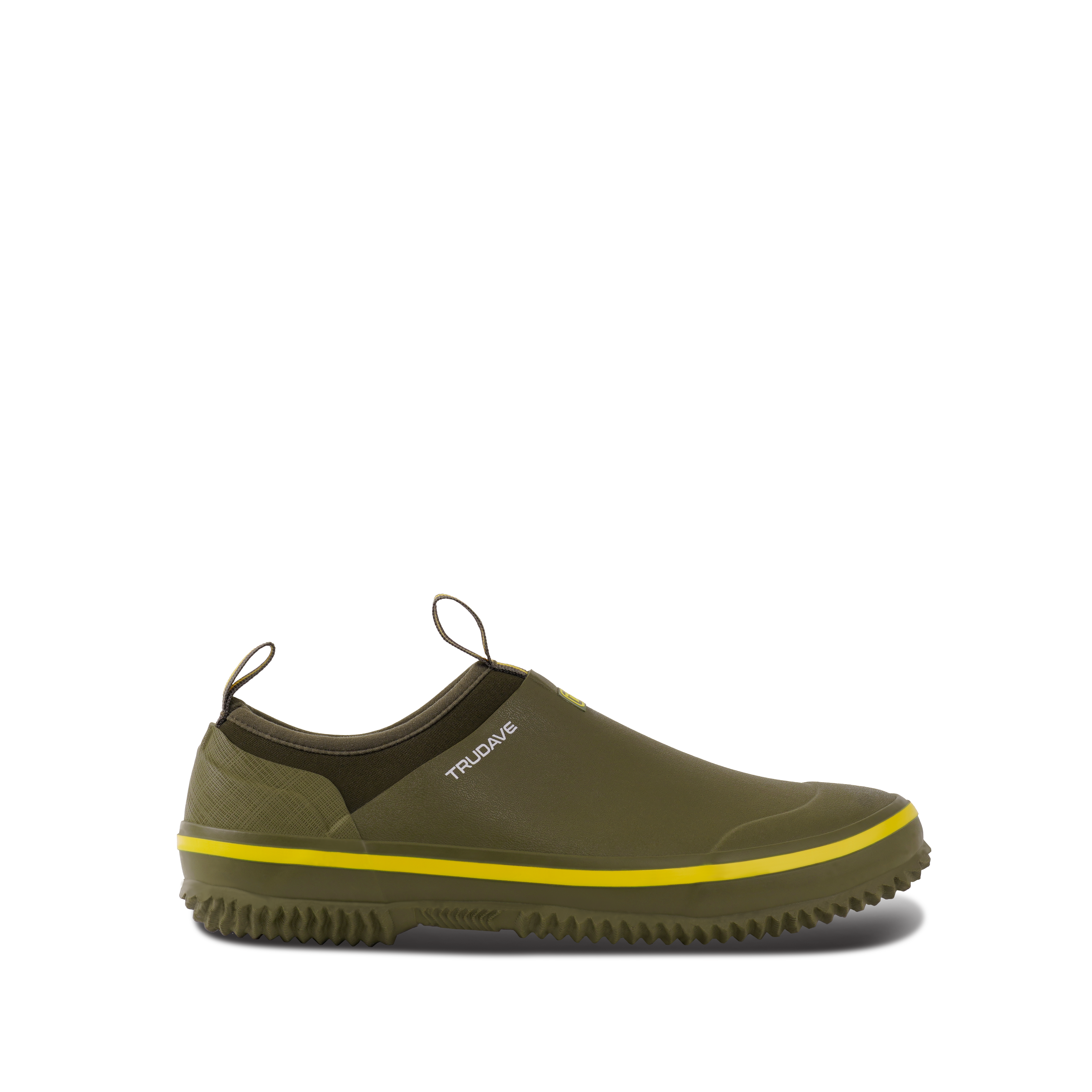
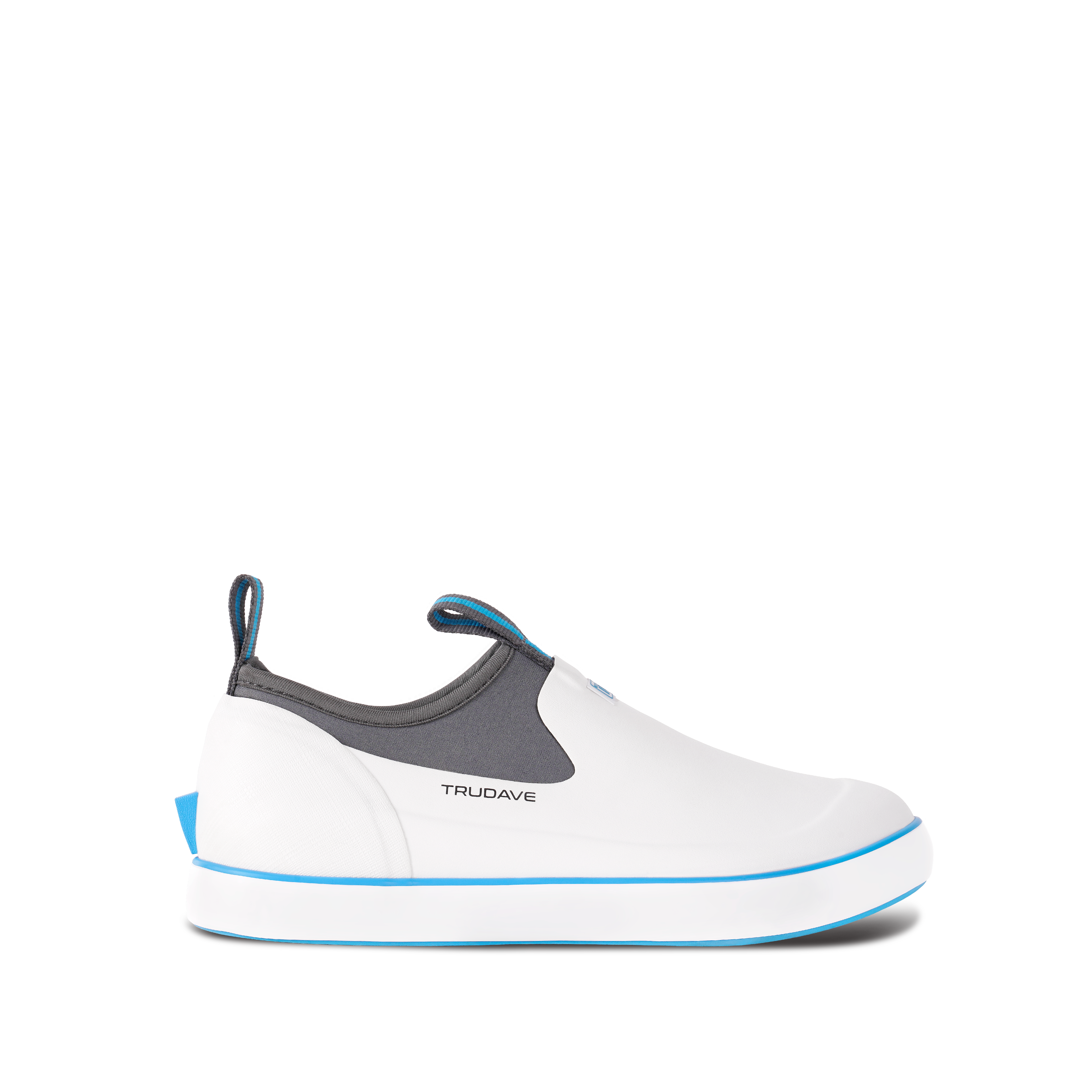
Ocean Breeze: Easy-Clean Rubber for Everyday Marine Use
Ocean Breeze is a natural fit for this topic because the current product
specification specifically emphasizes a smooth rubber upper that can be
rinsed clean of salt, dirt and mud.
The low-cut slip-on construction also avoids conventional metal lace
hooks and eyelets, removing several small hardware points that would
otherwise require extra attention after repeated saltwater exposure.
WaveLock: Rinse the Salt, Keep the Wet-Deck Traction
WaveLock takes a slightly different approach. Its one-piece rubber shell
and neoprene collar provide a simple waterproof structure, while the
outsole focuses heavily on wet marine traction.
Trudave currently specifies fine siping micro-channels combined with
multi-directional lugs. The smooth rubber exterior is also described as
easy to rinse clean of salt and mud.
Reels have been gently rinsed according to manufacturer guidance.
Rod guides and metal tools have been checked for salt deposits.
Waterproof shells have been rinsed or washed according to their care
label.
Deck boots have been rinsed with clean fresh water.
Boot tread channels are free of mud, fish residue and salt deposits.
Zippers and sliders move normally before storage.
Wet gear has been allowed to dry before entering closed storage.
Rubber footwear is stored away from excessive heat and direct sunlight.
The Bottom Line
Saltwater is a demanding environment because chloride-rich moisture,
evaporation and repeated exposure create several different maintenance
problems at once.
Metal components face genuine corrosion risk. Salt can accumulate in
reels, tools and small hardware. Waterproof garments can carry surface
deposits that affect water-repellent performance. Rubber footwear becomes
coated in salt, mud and organic residue that should be removed before
storage.
But not every dramatic saltwater claim is technically accurate.
Salt does not automatically shred waterproof membranes, and rubber does
not become brittle simply because seawater instantly extracts all of its
plasticizers.
The most reliable defense is much simpler:
rinse marine gear with fresh water, let it dry properly, inspect the
components where deposits can hide, and follow the manufacturer's
lubrication and cleaning instructions.
For footwear, smooth rubber slip-on designs such as Ocean Breeze and
WaveLock simplify the routine by eliminating traditional lace hardware
and providing surfaces that can be rinsed clean after a day offshore or
on the dock.
The ocean does not have to win. The gear that lasts is usually the gear
that gets cleaned before the salt has time to stay.
Seasoned angler with decades of experience in freshwater and saltwater fishing. Specializing in gear reviews, fishing techniques, and conservation practices.
FISHING GEAR
Quickshop
100% Waterproof & Floatable: TPU shell with RF-welded seams keeps water out and...