We've sent you an email with a link to update your password.
Reset your password
We will send you an email to reset your password.
How to Choose Hunting Boots for Georgia and Florida
TrudaveGear
Deep South Field Atlas · Boot Selection
How to Choose Hunting Boots for Georgia and Florida:
The Ultimate Deep South Guide
Pine flatwoods, cypress swamps, coastal marshes, wiregrass, creek
bottoms and North Georgia ridges all demand something different from
your hunting footwear. In the Deep South, staying dry matters—but so do
heat management, mud traction, boot height and realistic wildlife
protection.
Hunting Georgia and Florida requires a different boot strategy from
chasing elk in the Rockies or sitting through deep Midwestern snow.
Southern hunters spend far more time thinking about water, humidity,
mud, vegetation and heat.
South Florida can put you near marshes, wet prairie and cypress country.
Georgia's Coastal Plain combines wet pine flatwoods, creek bottoms,
agricultural ground and thick vegetation. Move north into Georgia and
the equation changes again as elevation, rocky terrain and long climbs
become more important.
That means there is no single “Georgia and Florida hunting boot.”
The right choice depends on where you hunt, how much water you
cross, how far you walk, and how much heat or cold you expect.
Field Note 01 / Water
Boot Height: Match the Shaft to the Water, Not a Fixed Rule
Tall rubber boots are extremely useful across wet sections of Georgia and
Florida, but a 15- or 16-inch shaft should be treated as a practical
option—not a universal requirement.
Hunters regularly crossing shallow swamp water, saturated grass, creek
edges and deep mud benefit from additional shaft height. Hunters covering
dry upland ground or steep North Georgia ridges may be better served by a
shorter, more supportive hiking-style boot.
When a Tall Rubber Boot Makes Sense
Flooded pine flatwoods and swamp edges.
Heavy morning dew in waist-high vegetation.
Muddy access trails and shallow creek crossings.
Wet turkey-season mornings.
Marsh edges where an ankle boot would allow water or debris over
the collar.
Trudave's StreamTrek, for example, uses a tall waterproof
rubber/neoprene construction. Depending on size, the published shaft
height is approximately 16–17 inches.
Rubber vs. Leather: Choose for the Terrain You Actually Hunt
Deep South moisture gives waterproof rubber and neoprene footwear a real
advantage, but leather is not automatically the wrong material for every
Georgia or Florida hunt.
Think Wetland vs. Upland
Rubber / Neoprene
Particularly useful in mud, wet grass, marsh edges and repeated
shallow-water exposure. The smooth exterior is also easy to rinse
after contact with swamp mud and wet vegetation.
Leather / Technical Hiking Boots
Can still make sense on steep, relatively dry North Georgia terrain
where ankle support, lower weight and precise foothold on rocky
slopes matter more than standing-water protection. They require
proper cleaning and drying after repeated wet use.
Southern Wildlife Hazard
Snake Protection: Know Exactly What Your Boot Is Rated to Do
Venomous snakes are a real consideration in both states, especially
when hunters move through palmetto, wiregrass, wetland edges, fallen
timber and other vegetation that limits visibility around the feet.
However, shaft height alone does not make a boot
snake-resistant. If snake-bite protection is a priority for
your hunt, choose footwear specifically designed, tested and marketed
for that purpose.
Florida
Florida FWC lists six native venomous snake species. Habitats range
from freshwater wetlands and swamps to dry uplands and pine country.
Georgia
Georgia DNR currently lists seven venomous snake species. Their
distribution varies by region, and not every species occurs across
the entire state.
Important:
Trudave StreamTrek and the standard Trudave rubber hunting boots shown
in this guide are being recommended for waterproofing, mud protection
and terrain performance—not as certified snake-proof footwear. Do not
rely on ordinary rubber or neoprene hunting boots for snake-bite
protection unless the specific product explicitly states that it has
been tested for that purpose.
Insulation Strategy: Do Not Bring a Northern Boot to a Southern Heat Problem
Georgia and Florida hunters often deal with a bigger footwear problem
than extreme cold: overheating.
Early-season hunts, spring turkey hunts and long walks through humid
terrain can generate substantial heat inside waterproof footwear.
Heavily insulated cold-weather boots may become unnecessarily warm long
before they provide a meaningful advantage.
Deep South Insulation Dial
Hot / Humid
Minimize Insulation
Favor lighter construction, moisture-managing socks and interiors
designed to move heat and perspiration.
Cool Morning
Moderate System
Let sock weight do more of the temperature adjustment instead of
automatically using a heavily insulated winter boot.
Cold Snap / North GA
Add Warmth as Needed
Colder mountain hunts and stationary late-season sits may justify
more insulation than a South Florida or coastal hunt.
Regional Map / Selection
Georgia & Florida Hunting Boot Terrain Matrix
Region / Hunt
Typical Terrain
Boot Priorities
Recommended Direction
South Florida
Wetland / Swamp Country
Standing water, wet prairie, cypress country, mud and dense
vegetation
Tall waterproof construction, manageable heat, mud traction;
use dedicated tested snake footwear where snake-bite protection
is required
Tall waterproof rubber/neoprene boot for water exposure;
certified snake boot for hunts where snake protection is a
priority
Georgia Coastal Plain
Pine Flatwoods
Wet pine ground, wiregrass, mud, creek bottoms and brush
Tall shaft, mud-shedding outsole, easy-clean shell and
moisture-managing interior
15–17 inch waterproof rubber/neoprene hunting boot where water
depth and terrain justify the height
North Georgia
Mountain & Ridge
Elevation changes, rocky slopes, roots, creek crossings and long
hikes
Foot support, secure fit, traction, reasonable weight and
waterproofing
Supportive hiking-style hunting boot or lighter rubber boot,
depending on the amount of standing water
GA + FL
Spring Turkey
Wet morning vegetation, long walking, warm afternoons and
visibility-limiting brush
Waterproofing, lower heat buildup, quiet/flexible movement and
appropriate wildlife protection for the location
Lightweight tall waterproof boot; use tested snake-resistant
footwear if snake protection is an important requirement
Marsh / Waterfowl
Mud, shallow water, wet vegetation and boat access
Waterproof shaft, aggressive mud traction and easy cleaning
Tall rubber hunting boots for shallow access; use waders when the
expected water depth exceeds boot height
G
Georgia: One State, Two Very Different Boot Problems
The Coastal Plain pushes hunters toward waterproof rubber and taller
shafts, while North Georgia can reward a more supportive, hiking-driven
fit. Do not choose your Georgia boot based only on the state name—choose
it based on the specific region.
F
Florida: Heat Management Belongs on the Gear Checklist
Florida hunters should balance water protection with internal heat.
Heavy insulation that makes sense for a stationary northern hunt can
become excessive when walking through warm, humid Florida terrain.
Gear Reference / Tall Boot
StreamTrek for Wet Southern Ground
For hunters dealing with wet grass, shallow creek crossings, muddy
flatwoods and marsh edges, StreamTrek is a practical example of the type
of construction to look for.
The current design combines a neoprene shaft with a waterproof camo
rubber shell, an adjustable calf gusset, mud-shedding outsole, reinforced
toe and heel areas, and an Airmesh interior intended to help manage heat
and moisture.
Again, it should be viewed as a waterproof hunting boot—not a
snake-proof boot.
The Deep South Transit Strategy
You do not need your tallest hunting boots on your feet during every
minute of a warm southern hunting day.
Stop 01
Drive / Camp
Keep your feet comfortable during the drive instead of sitting in a
tall warm hunting boot for hours.
→
Stop 02
Ramp / Staging Area
A waterproof slip-on deck boot works well for wet boat ramps, muddy
staging areas and loading equipment.
→
Stop 03
Hunt
Change into the shaft height and protection level that matches the
actual swamp, flatwoods, ridge or marsh ahead.
Transit Footwear / Boat & Ramp
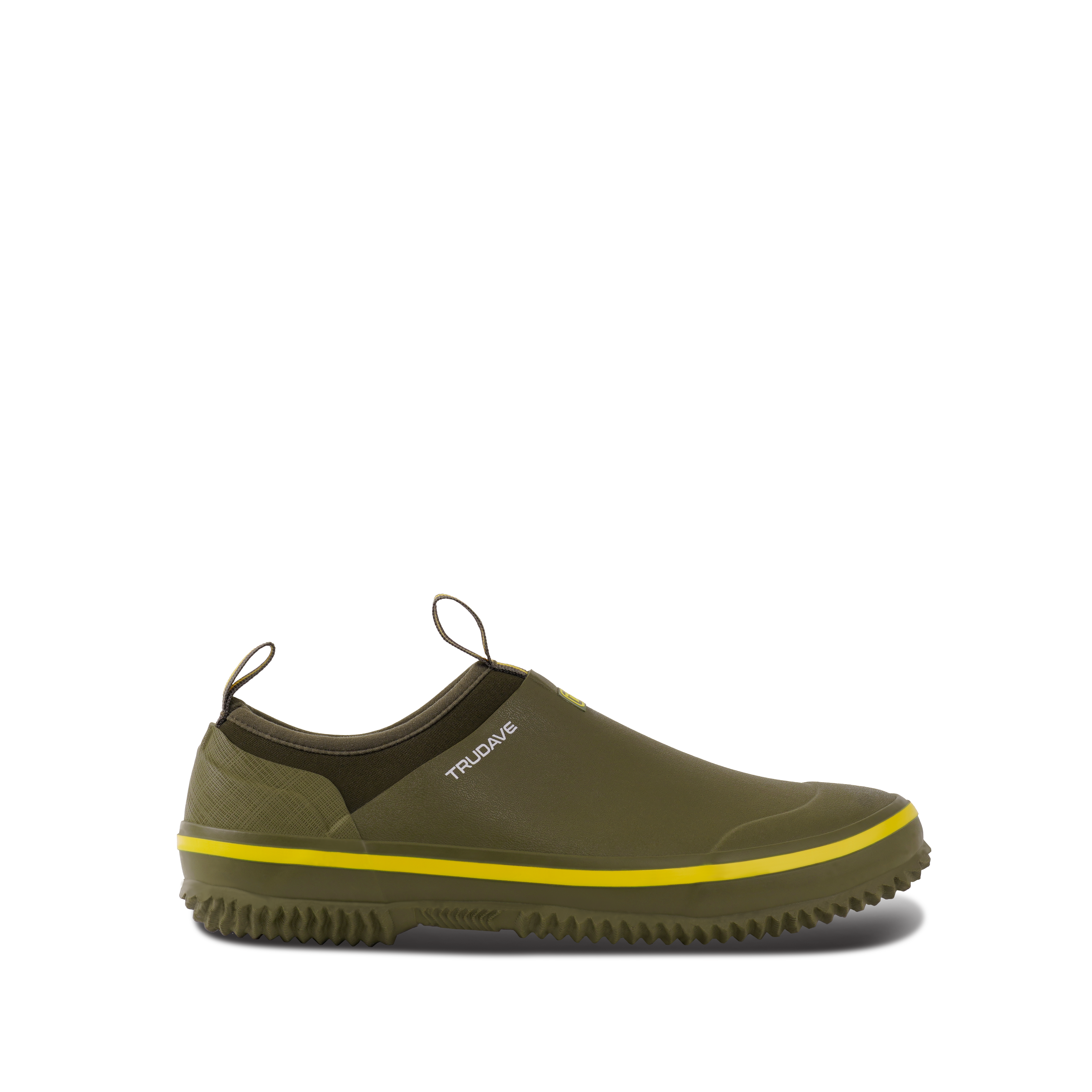
WaveLock Waterproof Deck Boots
WaveLock makes more sense as a staging, boat, dock and wet-ramp boot
than as protection for deep swamp travel.
The one-piece waterproof rubber shell, flexible neoprene collar and
water-channeling outsole make it useful when you want something easy to
slip on and rinse clean before changing into taller hunting footwear.
Choose shaft height for the deepest water and wet vegetation you
realistically expect to cross.
✓
Heat & Activity
Long walks and warm weather favor lighter insulation and better internal
moisture management.
✓
Mud Traction
Look for deep, widely spaced lugs that can release soft mud instead of
packing solid.
✓
Hiking Distance
A heavy tall rubber boot may be excellent in a swamp but less efficient
for long, steep North Georgia hikes.
✓
Snake Protection
If snake-bite protection is required, confirm that the exact model is
specifically designed and tested for that purpose. Tall rubber alone is
not enough.
✓
Sock & Fit System
Try the boot with the sock weight you intend to hunt in and make sure
your toes and forefoot are not crowded.
Field Note / Before You Hunt
Check the Current Georgia or Florida Hunting Regulations
Seasons, legal methods, wildlife management area rules and permit
requirements can vary significantly by state, species and specific public
hunting area.
Choosing hunting boots for Georgia and Florida is not about buying the
tallest or most heavily insulated boot available.
In the wet Coastal Plain and South Florida, waterproof rubber construction
and useful shaft height can make mud, wet vegetation and shallow water far
easier to manage.
In warm conditions, however, excessive insulation can become a
disadvantage. And in North Georgia, a hunter covering steep, rocky ground
may value hiking support and lower weight more than maximum shaft height.
Snake awareness should also be part of your southern hunting plan, but
never assume an ordinary tall rubber boot is snake-proof.
If that protection matters for the terrain you hunt, choose footwear
specifically designed and tested for it.
Match the boot to the actual ground beneath you: water depth, mud,
vegetation, heat, mileage and wildlife risk.
With over a decade of experience tracking game across rugged North American terrains, Jack knows exactly what it takes to thrive in the wild. He specializes in rigorous field-testing for hunting apparel, boots, and waders, combining his passion for authentic wilderness survival with expert gear reviews and practical tracking techniques.
HUNTING GEAR
52% OFF
Quickshop
Fully Waterproof Build: Neoprene shaft bonded to a camo rubber shell for...