River Hunting Field Guide
Floating Downriver for Doves and Geese:
How Deck Boots Redefine Comfort in US Water Hunting
Canoes, jon boats, muddy gravel bars and constantly changing footing make
river hunting a game of transitions. The right footwear needs to move
easily from boat deck to wet bank without adding unnecessary bulk.
There is an undeniable sense of adventure in drifting down a winding
American river system at first light. Whether you are traveling by canoe or
flat-bottom jon boat along a quiet Midwestern creek or moving through
southern bottomlands, river-based hunting creates a constantly changing mix
of water, mud, gravel and boat deck.
One moment may be spent navigating a quiet bend, and the next could involve
pulling onto a muddy bar, moving gear or setting up for passing geese where
hunting is legal.
That variety creates a difficult footwear problem. Tall waders can be useful
when deeper water is unavoidable, but they may feel unnecessarily bulky
during long periods seated inside a small boat. Ordinary athletic shoes,
meanwhile, are poorly suited to repeated exposure to spray, mud and wet
shorelines.
The appeal of the modern deck boot is simple:
ankle-height waterproof protection, wet-surface traction and quick
slip-on convenience in a package that is easier to move around in during
normal boat use.
The River Hunter's Dilemma: One Hunt, Three Different Surfaces
Floating a river is rarely just a matter of sitting in a boat. Your feet
repeatedly move between very different environments throughout the day.
01 / THE BOAT
Inside the Hull
Limited floor space, aluminum ribs and constantly changing body position
favor footwear that stays relatively compact and allows natural ankle
movement.
02 / THE BANK
Mud, Gravel & Wet Ground
Getting in and out of the boat may mean slippery clay, shallow puddles,
vegetation and loose gravel rather than a clean dock.
03 / THE TRANSITION
Back and Forth
River hunters repeatedly move from wet surfaces to dry ground and back
again, making quick-on footwear and easy-clean rubber especially useful.
Important
Legal Note
Floating a River Does Not Mean Shooting From a Boat Under Power
Migratory bird hunting is regulated at both the federal and state
levels. For waterfowl, the U.S. Fish & Wildlife Service states that
hunters may not take waterfowl from a motorboat or sailboat unless the
motor is shut off or the sail is furled and the vessel's forward
progress has stopped.
Dove and goose seasons, shooting hours, allowable methods and
water-access rules can also vary by state and by individual public
hunting area. Always check the regulations that apply to the exact river
or property before hunting.
Official sources:
USFWS Waterfowl Hunter Regulations
|
USFWS Dove Hunter Information
Why Deck Boots Make Sense for River-Based Hunting
No single boot is ideal for every water depth or hunting method. But during
normal boat operation, launches, wet banks and shallow splash exposure,
ankle-height deck boots can provide a useful middle ground between ordinary
shoes and taller waterproof footwear.
01
Waterproof Protection Without Tall-Boot Bulk
Rubber-shell and rubber-neoprene deck boots help keep rain, spray,
puddles and shallow mud away from your feet while maintaining a much
lower profile than tall waders or knee boots. Remember that
ankle-height boots cannot stop water that comes over the collar.
02
Traction Designed Around Wet Surfaces
Siped tread, drainage channels and multi-directional outsole patterns
can help improve footing on wet boat decks, docks and muddy access
points. Some Trudave models, including Ocean Breeze and
NeopreneTrek, also use confirmed non-marking outsoles for
boat-friendly use.
03
More Natural Movement Around a Small Boat
A lower ankle profile can make stepping around seats, decoy bags,
thwarts and other gear easier than moving in bulky high-shaft
footwear. Pull loops and heel kick plates also make repeated changes
faster at the ramp or camp.
Gear for the Float: 6 Trudave Deck Boot Options
Trudave's Deck Boots Collection includes six waterproof models with
different ankle profiles, outsole designs and fit options for fishing,
boating and wet outdoor environments.
01

Ankle Deck Boot
Good match for cool launches and wet boat days
WaveLock combines a one-piece rubber shell with a flexible
neoprene-supported ankle design. The higher ankle profile makes it a
useful option when river access involves muddy ramps, spray and wet
shoreline transitions.
Waterproof shell
Slip-resistant outsole
Pull-on design
VIEW BOOT →
02

Boat-Friendly Deck Boot
Good match for frequent movement around the boat
Ocean Breeze uses a rubber upper with neoprene stretch areas and a
cushioned low-cut build. Its non-marking, finely siped outsole makes
it especially relevant for wet aluminum, fiberglass and finished boat
surfaces.
Non-marking outsole
Fine siping
Neoprene stretch fit
VIEW BOOT →
03

Low-Profile Slip-On
Good match for compact canoes and crowded jon boats
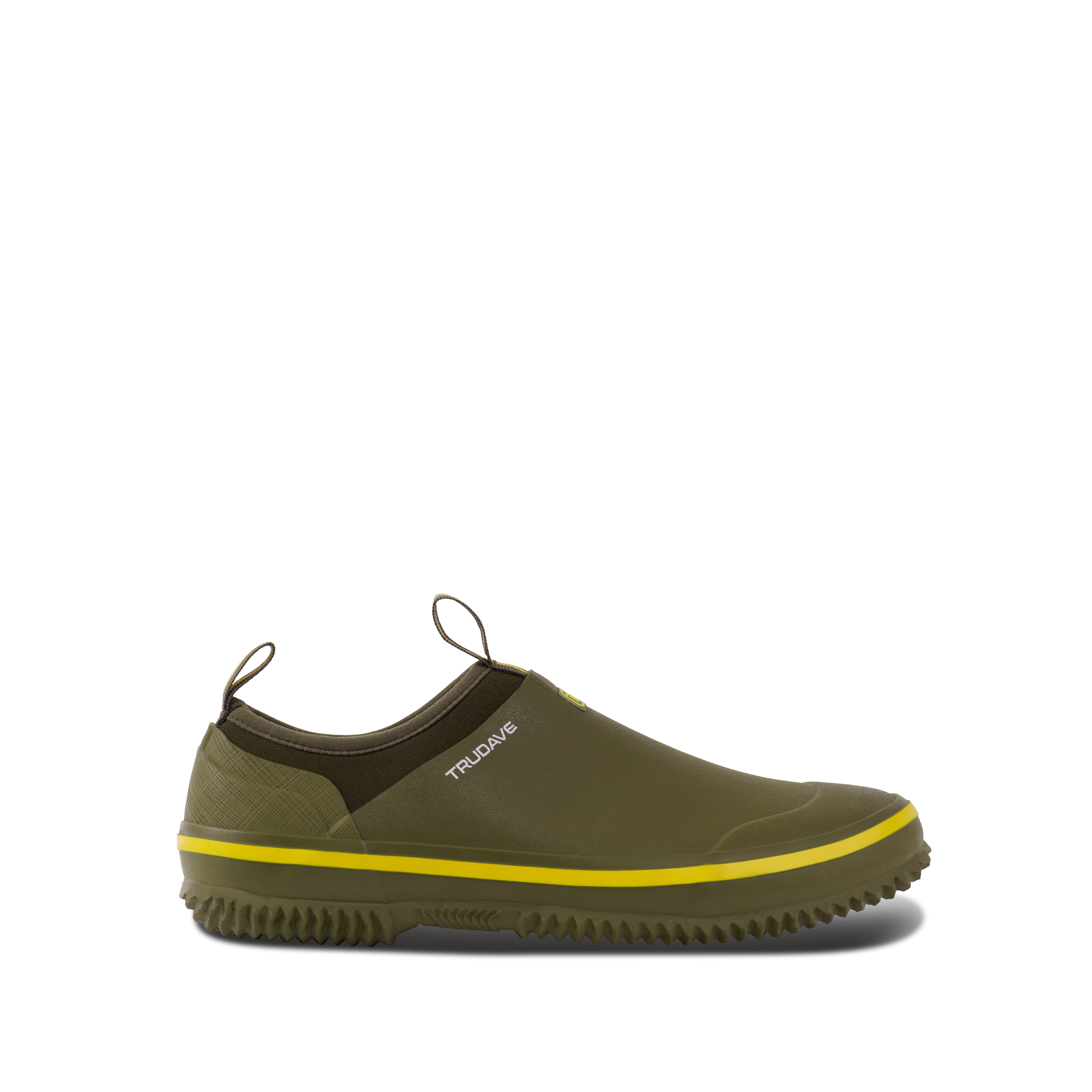
NeopreneTrek has the lowest-profile shape in the collection, making it
a useful choice when space around seats and equipment is limited. The
slip-on construction also makes it easy to transition between boat,
ramp and camp.
Non-marking outsole
Siped traction
Low slip-on shape
VIEW BOOT →
04

Women's Ankle Deck Boot
Good match for women boating, fishing and working around wet ground
DeckFlow combines an ankle-height rubber shell with pull tabs and a
wet-surface outsole. Its streamlined profile works well when moving
between a boat floor, dock and muddy river access point.
Seamless rubber shell
Ankle-height fit
Easy pull-on design
VIEW BOOT →
05

Women's Outdoor Crossover
Good match for riverbanks, wet camp areas and everyday outdoor use
WildProwl blends waterproof rubber construction with a quick slip-on
ankle design. It works as a versatile crossover when a trip involves
more than just the boat—camp chores, muddy banks and wet-weather use
included.
Waterproof rubber build
Flexible side panels
Heel pull tab
VIEW BOOT →
06

Men's Slip-On Ankle Boot
Good match for long days moving between boat, shoreline and ramp
Seafarer Lite offers a streamlined ankle-height design with a
waterproof rubber shell and easy-on construction. It is intended for
hunters and anglers who want waterproof protection without a tall,
bulky shaft.
Waterproof construction
Low ankle profile
Slip-resistant tread
VIEW BOOT →
Know When You Still Need Waders
Deck boots are useful around wet boat floors, docks, boat ramps, puddles
and shallow mud, but they are not a replacement for chest or hip waders
when a hunt requires you to enter deeper water.
Water can enter any ankle boot if it rises above the collar. Choose your
footwear according to the actual water depth and conditions you expect,
rather than assuming one boot can handle every part of a river hunt.
Do Not Let Better Footwear Replace Basic Boat Safety
Good traction can help you move around the boat, but footwear is only one
part of river safety. Cold water, fast currents and unexpected capsizing
create risks that boots cannot solve.
The U.S. Coast Guard recommends wearing a Coast Guard-approved life jacket
while a recreational vessel is underway. Federal requirements also call for
an appropriately sized approved wearable life jacket for each person
onboard, with additional state requirements possible.
Cold-water immersion deserves particular attention during autumn hunting.
Coast Guard guidance warns that sudden immersion can cause cold shock and
rapid loss of physical ability, making flotation and preparation especially
important on cold river systems.
The Bottom Line
River hunting is defined by transitions. Boat deck to gravel bar. Dry bank
to wet mud. Sitting behind the tiller to stepping out with gear in your
hands.
That is exactly where a well-designed deck boot earns its place. The goal is
not to replace every piece of waterproof hunting footwear, but to give you a
lower-profile option for the parts of the trip where mobility, splash
protection and wet-surface traction matter most.
Match the boot to your river, weather and expected water depth, verify the
hunting regulations for the area, and build the rest of your setup around
safe, efficient movement from launch to take-out.
Official Resources for River & Migratory Bird Hunters
U.S. Fish & Wildlife Service
U.S. Fish & Wildlife Service
U.S. Fish & Wildlife Service
From the First River Bend to the Take-Out Ramp
Explore Trudave's waterproof deck boot collection for low-profile
footwear designed around boating, fishing, wet decks and demanding
outdoor conditions.
Shop Trudave Deck Boots →