We've sent you an email with a link to update your password.
Reset your password
We will send you an email to reset your password.
Can Fishing Waders Work for Duck Hunting? Pros & Cons
TrudaveGear
Wader Compatibility Field Test · Fishing vs. Waterfowl
Can Fishing Waders Work for Duck Hunting?
Fishing waders and waterfowl waders share the same basic mission—keeping
water out—but the conditions surrounding that job can be very different.
Here is when your fishing setup can cross over into the duck marsh, and
when dedicated hunting gear becomes the better choice.
Every outdoorsman appreciates gear that can pull double duty. If you
already own a good pair of breathable or neoprene fishing waders for
chasing trout or salmon, it is natural to wonder whether they can simply
follow you into the duck blind.
The answer is yes—but the conditions matter.
A waterproof fishing wader can absolutely keep water out during a
waterfowl hunt. In fact, breathable waders are widely used by modern duck
hunters because they are lighter, easier to move in, and can be layered
underneath as temperatures change.
The real question is not whether the label says “fishing” or “hunting.”
It is whether the wader's construction, boot system, insulation,
reinforcement, fit and color match the environment you are about to enter.
Equipment Profiles
Same Waterproof Job. Different Design Priorities.
There is plenty of overlap between modern fishing and hunting waders.
These are the typical priorities—not absolute rules—for each category.
Fishing Profile
Fishing Waders
Often designed around walking comfort, breathability, mobility and
stability on rocky riverbeds. Stockingfoot configurations are common.
Waterfowl Profile
Duck Hunting Waders
Often emphasize marsh concealment, cold-water comfort, mud-friendly
boot systems and reinforcement in areas exposed to brush and debris.
Test 01
Camouflage & Concealment
Does the color of fishing waders make them unsuitable for ducks?
Typical Fishing Setup
Many fishing waders use neutral gray, tan, brown or olive colors.
These colors work well around rivers and shorelines but are not
necessarily designed around waterfowl camouflage patterns.
Bright or contrasting upper sections may stand out against dark
cattails, flooded timber or a brushed blind.
Typical Waterfowl Setup
Camo patterns or darker earth tones are common.
Patterns may be designed around reeds, marsh vegetation or timber.
Hunting-specific details often coordinate more naturally with
jackets, blinds and surrounding cover.
Workaround
Fishing waders do not automatically ruin concealment. If the upper body
is visible, cover neutral or bright fabric with an appropriate camo
jacket and use natural cover or a properly brushed blind. The more
exposed your hunting position is, the more important the overall
silhouette becomes.
Test 02
Durability in Brush, Timber and Marsh Debris
Can fishing waders survive the physical abuse of duck country?
Fishing Waders
Quality fishing waders can be extremely durable and may include
reinforced knees, shins and abrasion-resistant fabrics.
Their construction often prioritizes movement and long walks.
Lightweight models may provide less protection against sharp brush
than heavier reinforced designs.
Waterfowl Waders
Hunting-focused models may use heavier shell materials or reinforced
lower-leg areas.
Thick neoprene naturally creates a different feel and level of
protection than lightweight breathable fabric.
Construction is often selected with flooded timber, reeds, mud and
marsh debris in mind.
Key Point
Do not judge durability only by whether a product is labeled “fishing”
or “hunting.” Check the actual fabric, seam construction and reinforced
areas. A premium breathable fishing wader may be more durable than a
basic lightweight hunting model.
Test 03
Cold-Water Performance
This is where the difference can become much more important.
Active Fishing
Anglers often walk, reposition and cast throughout the day.
Breathable shells can help manage heat generated during activity.
Warmth can be adjusted through base layers and fleece wader pants.
Stationary Waterfowl Hunting
Duck hunters may spend long periods standing or sitting still.
Cold water can steadily remove heat while activity remains low.
Insulated boots, thicker neoprene and additional layers can become
increasingly valuable later in the season.
Verdict
Breathable fishing waders can still work in cold conditions if they
provide enough room for an effective layering system. The biggest weak
point is often the feet, especially when a lightweight stockingfoot
system was never intended for long periods of stationary cold-water use.
Boot Configuration
Stockingfoot vs. Bootfoot Matters More Than Many Hunters Think
Fishing waders commonly use stockingfoot construction, while many
waterfowl-oriented models use integrated bootfoot systems. Neither is
universally better—they solve different problems.
Common Fishing Choice
Stockingfoot Waders
Neoprene stocking feet are worn inside separate wading boots. This
system can provide excellent fit, ankle support and stability when
hiking or navigating rocky riverbeds. Separate boots also allow
hunters to select their preferred outsole and support level.
Common Waterfowl Choice
Bootfoot Waders
The boot is permanently integrated into the wader. Bootfoot systems
are quick to pull on, easier to deal with in deep mud and can provide
more room around the foot for cold-weather socks and insulated boot
construction.
Head-to-Head
Fishing Waders vs. Duck Hunting Waders
Feature
Typical Fishing Wader
Typical Waterfowl Wader
Color / Pattern
Gray, olive, tan and other neutral tones are common.
Marsh, timber and waterfowl camo or darker earth colors are common.
Boot Style
Stockingfoot is very common, although bootfoot fishing models also
exist.
Integrated bootfoot designs are common for mud, cold and quick
entry.
Mobility
Often optimized for walking, hiking and active wading.
Depends on the model; breathable hunting waders can also offer
excellent mobility.
Reinforcement
Varies from lightweight shells to heavily reinforced premium
models.
Marsh-oriented models may add heavier lower-leg and knee
protection.
Warmth
Commonly controlled through layers underneath the shell.
May combine under-wader layers with insulated integrated boots or
neoprene construction.
Best Strength
Mobility, breathability and walking comfort.
Cold-water hunting, mud management and marsh-focused features.
Make the Call
When Can You Use Fishing Waders—and When Should You Upgrade?
Fishing Waders Can Work
Use What You Already Own
Early-season or mild-weather duck hunts
Long walks where lightweight breathable construction is useful
Relatively clean marshes, ponds or shallow water
Hunting from a well-concealed blind
You already have enough room for appropriate under-wader layers
You only waterfowl hunt occasionally
Consider Dedicated Gear
Upgrade for Tougher Conditions
Frequent late-season waterfowl hunting
Long periods standing in very cold water
Flooded timber, thorny brush or heavy marsh vegetation
Thick mud where integrated boots are more convenient
You need camo built directly into the wader
Your current boot system does not leave enough room for cold-weather socks
Early-Season Conversion
How to Adapt Fishing Waders for Duck Hunting
Cover the Upper Body
If your fishing waders are light gray or another noticeable color,
wear a camo hunting jacket over the upper section and make full use
of natural concealment.
Build a Real Layering System
Start with a moisture-managing base layer. Add fleece or technical
wader pants as temperatures fall instead of simply stacking bulky
cotton sweatpants underneath.
Inspect the Lower Legs
Check for reinforced knees and shins before forcing lightweight
waders through woody brush, sharp reeds or debris-heavy flooded
timber.
Pay Extra Attention to Your Feet
Make sure your wading boots still fit properly with the socks you
plan to wear. More sock thickness is not helpful if it makes the
entire boot system uncomfortably tight.
Carry a Repair Kit
Hunting environments can introduce sticks, wire, vegetation and
other hazards that are difficult to see underwater. A compact wader
patch kit deserves a place in the blind bag.
Trudave Field Setup
Match the Gear to the Job
Instead of asking one piece of footwear to do everything, use different
gear for different stages of the hunt.
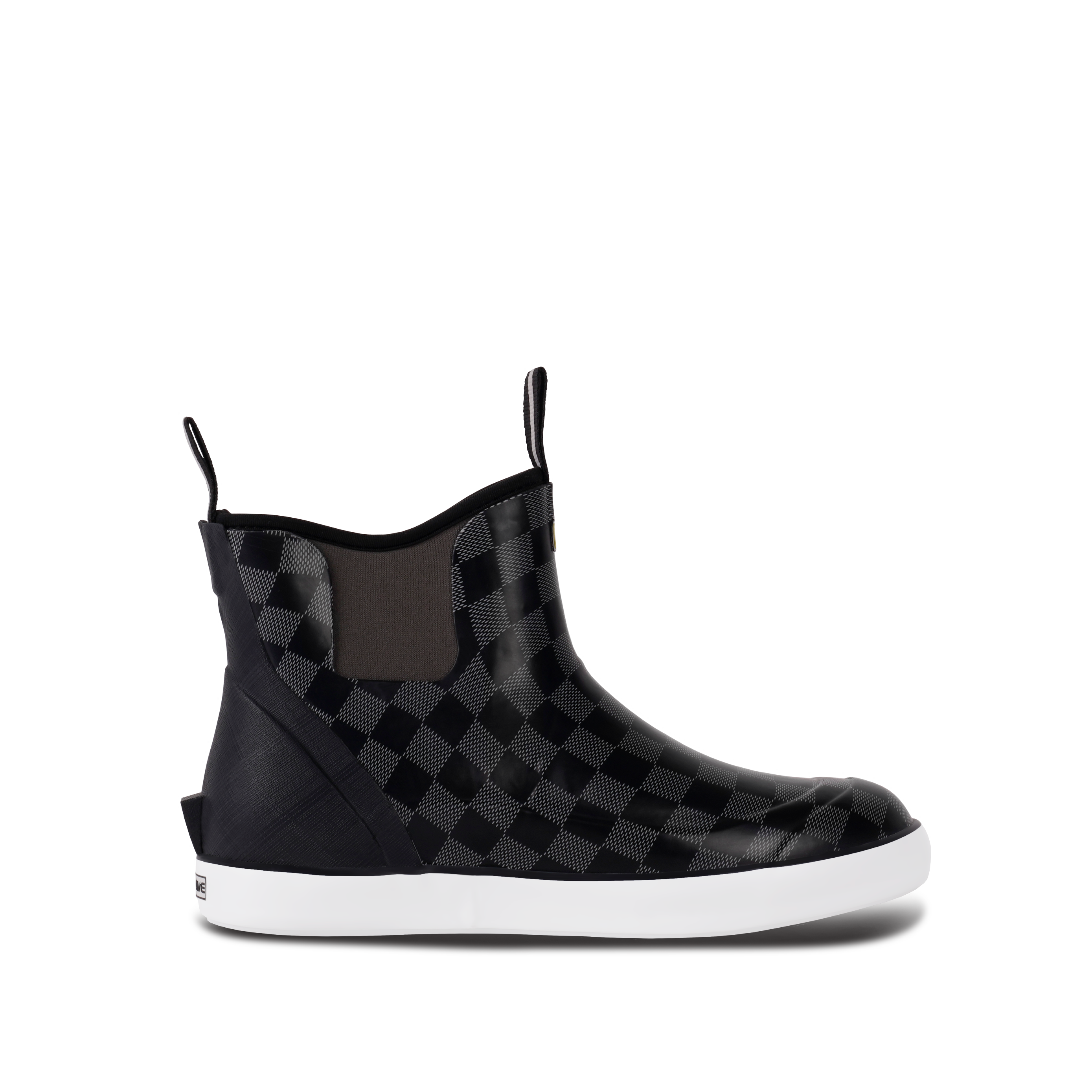
Boat Transit & Setup
WaveLock Waterproof Deck Boots
A waterproof ankle-height option for launching the boat, loading
decoys and working around wet decks before full chest waders are
necessary.
A well-built pair of breathable fishing waders can be an excellent
early-season option, particularly for hunters covering long distances or
hunting mild weather. Add an appropriate layering system, control the
visible color with your outer hunting clothing and inspect the waders for
enough reinforcement for the terrain.
But the equation changes as the season gets colder and the marsh gets
rougher. Long stationary periods in cold water, deep mud, flooded timber,
ice and heavy vegetation can make insulated bootfoot waterfowl waders much
more practical.
The label on the wader matters less than its actual construction.
Evaluate the fabric, reinforcement, boot system, room for layers,
insulation and terrain before deciding whether the fishing setup already
hanging in your garage is ready for duck season.
With over a decade of experience tracking game across rugged North American terrains, Jack knows exactly what it takes to thrive in the wild. He specializes in rigorous field-testing for hunting apparel, boots, and waders, combining his passion for authentic wilderness survival with expert gear reviews and practical tracking techniques.
HUNTING GEAR
52% OFF
Quickshop
Fully Waterproof Build: Neoprene shaft bonded to a camo rubber shell for...