We've sent you an email with a link to update your password.
Reset your password
We will send you an email to reset your password.
Waders Too Bulky? Why Deck Boots are Better for Boat Hunting
TrudaveGear
Boat Hunting • Riverbanks • Early Season
Waders Too Bulky? Why Deck Boots Are Better for Short Boat Hunts and Riverbank Dove Hunting
Chest waders still have their place in deep water and flooded timber. But when the hunt is short, the water is shallow, and mobility matters, a low-profile waterproof deck boot can be the simpler tool for the job.
TRUDAVE FIELD GUIDEHUNTING FOOTWEARBOAT & SHORELINE USE
We’ve all been there. You get off work, check the wind, and realize you have a perfect two-hour window before sunset. Early-season doves are moving along the riverbank, or local geese are working a small farm pond down the road.
You want to drop the jon boat in or walk the muddy edge — but the heavy chest waders sitting in the truck suddenly feel like more gear than the hunt actually requires.
Waders are essential when the water demands them. For deep marshes, flooded timber, cold water and extended wading, they provide coverage a low boot simply cannot replace.
But for short boat runs, wet shoreline grass, muddy launches and shallow puddles, a waterproof deck boot can offer a faster, lighter and more mobile alternative.
01
Zero Prep Time: The Slip-On Advantage
On a quick hunt, simplicity matters. Chest waders require more setup: stepping into them, adjusting layers, pulling up suspenders and getting everything situated before you leave the truck.
Low-cut deck boots are built around a much simpler idea: step in and go.
That makes them especially useful when you are moving repeatedly between your truck, ramp, boat, blind or riverbank. When the hunt is finished, many deck-boot designs are just as quick to remove.
Where this matters most: afternoon dove hunts, short scouting runs, quick pond setups, boat launches and situations where most of your time is spent above the waterline.
02
More Freedom for High-Mobility Wing-Shooting
Wing-shooting involves constant movement. You may be turning toward a crossing dove, shifting position in a small boat, kneeling to manage decoys or moving quickly along an uneven bank.
Full chest waders can feel bulky during warmer, high-mobility hunts, particularly when the extra waterproof coverage is not actually needed. A low-cut deck boot leaves the legs unrestricted and reduces the amount of material you are carrying around your lower body.
Chest Waders
Maximum Water Coverage
Better suited to deeper water, flooded marshes and situations where you expect to wade well beyond ankle depth.
Deck Boots
Maximum Simplicity
Better suited to shallow water, boat decks, muddy banks and hunts where unrestricted leg movement is the priority.
03
Built for Splash, Puddles and Riverbank Mud
You do not always need chest-high protection just because the hunt happens near water.
A waterproof rubber deck boot can handle many of the conditions that make regular shoes miserable: wet grass, launch-ramp puddles, muddy shoreline soil, boat spray and shallow standing water.
The key is understanding the limit of a low boot. Waterproof deck boots are designed to keep water from penetrating the waterproof upper, but water can still enter through the opening if you step deeper than the collar.
Deck boots are a shallow-water solution, not a replacement for waders when you expect to stand or walk in deeper water.
04
Traction Designed Around Wet Surfaces
Wet aluminum, fiberglass, dock boards and muddy ramps demand a different kind of traction than dry upland ground.
Many purpose-built deck boots use water-channeling tread patterns, fine siping and rubber outsole compounds designed around wet-surface use. Several Trudave deck-boot models also use non-marking outsoles intended for boat decks.
No outsole can make a wet or icy surface completely slip-proof, so careful footing still matters — especially when mud, frost or fish slime is involved.
05
Quick Comparison: Short Hunts & Boat Duty
Feature
Chest Waders
Waterproof Deck Boots
Setup
More gear to put on, adjust and remove.
Slip-on designs make transitions fast and simple.
Water Coverage
Designed for significantly deeper water.
Best for spray, mud, puddles and shallow water below the collar.
Mobility
More material around the legs and torso.
Low-profile design leaves the legs unrestricted.
Warm Weather
Can feel excessive during short, warm early-season hunts.
Less body coverage can feel more comfortable in mild conditions.
Boat Use
Ideal when the hunt also requires deeper wading.
Purpose-built models may offer siped, water-channeling, non-marking outsoles.
Best Use
Marshes, flooded timber, deep launches and prolonged wading.
Jon boats, docks, muddy banks and quick shoreline hunts.
Choose Deck Boots When...
You expect to stay mostly above ankle-deep water.
You are hunting from a jon boat, canoe or shoreline.
The hunt is short and you want quick on/off footwear.
Wet decks, mud and shallow puddles are the main concern.
You want less material around your legs while moving.
Keep the Waders When...
You expect to stand in deeper water.
You are entering flooded timber or marsh vegetation.
Cold water exposure is a major concern.
You may need thigh-, waist- or chest-level protection.
Retrieving decoys requires substantial wading.
Trudave Deck Boot Guide
Six Deck Boots Built for Wet Ground, Boats and Fast Transitions
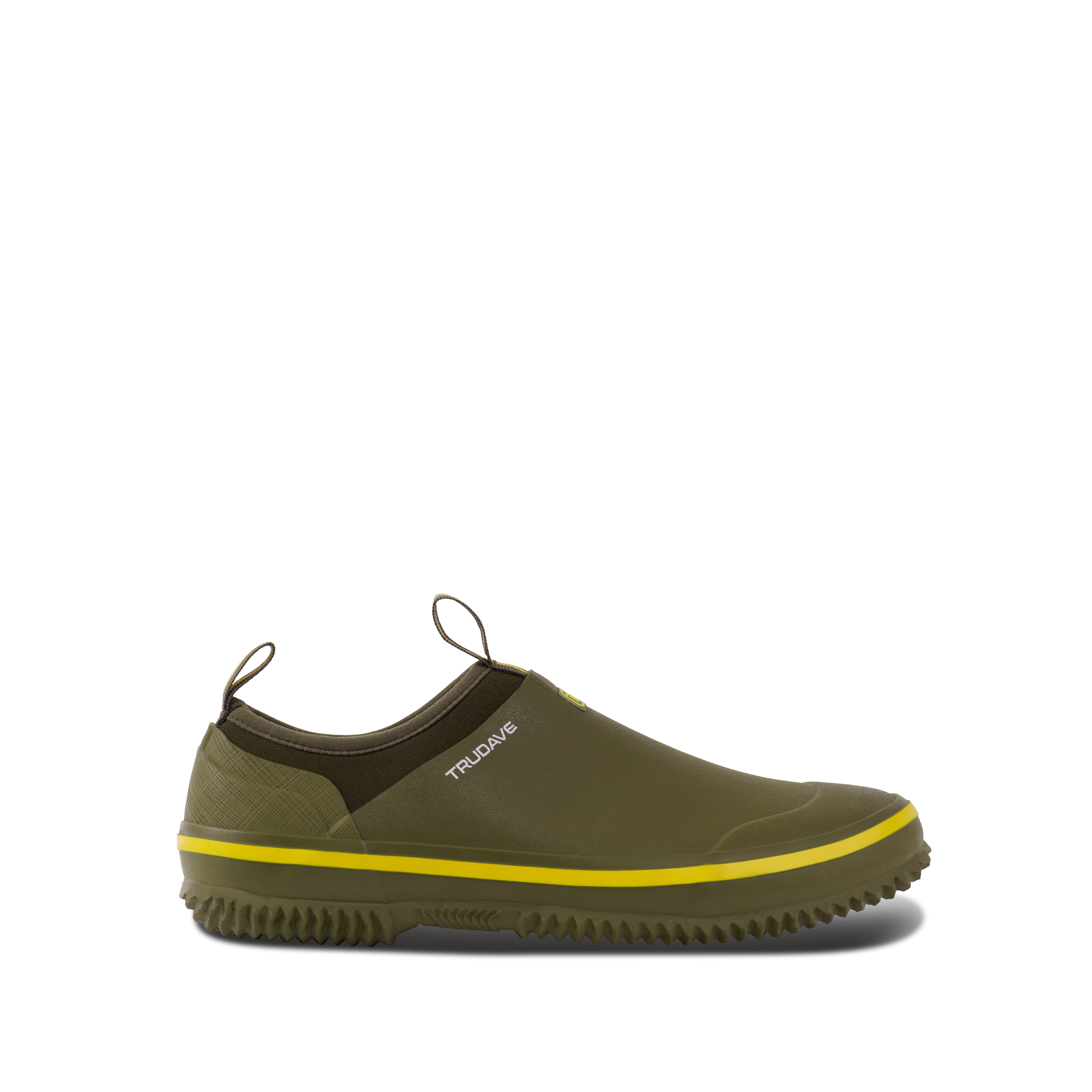
Trudave's current Deck Boots Collection includes men's, women's and unisex-style options with different outsole designs, fit profiles and waterproof constructions for boat, dock and wet-weather use.
Best for: cool mornings, wet ramps and short waterfowl boat runs.
A one-piece rubber shell and neoprene collar provide waterproof protection, while fine siping and multi-directional tread are designed for traction around wet surfaces.
Best for: boat decks, muddy riverbanks and high-mobility early-season trips.
Features a low-cut rubber upper, flexible neoprene ankle panels, lightweight cushioning and a non-marking outsole with fine siping for wet-surface use.
Best for: wet docks, fishing boats and quick truck-to-water transitions.
Laminated rubber and neoprene construction pairs with a non-marking outsole using fine siping and multi-directional herringbone tread to channel water on wet surfaces.
Best for: long boat days where easy on/off and a low-profile feel matter.
Uses a seamless rubber shell, neoprene collar, wet-surface tread, reinforced toe and heel areas, plus a rear kick plate designed to make removal easier.
Best for: wet decks, docks and muddy shoreline conditions.
Built with a seamless rubber shell, lightweight ankle cut and siped water-channeling outsole. The non-marking compound is designed to reduce scuffs on boat surfaces.
Best for: boat use, wet grass and fast-moving outdoor chores around camp or the shoreline.
Combines a seamless waterproof rubber shell with a lightweight slip-on profile, cushioned footbed and fine-siped non-marking outsole for wet environments.
AnkleLock is not part of the dedicated Deck Boots Collection, but it can make sense for muddy banks and uneven shoreline ground when you want a waterproof ankle boot with additional underfoot structure.
The design uses a rectangular steel shank intended to add arch support and puncture resistance, along with 6mm neoprene and a deeper tread pattern.
Chest waders and deck boots solve different problems.
When you are walking through flooded timber, retrieving decoys in deeper water or spending long periods standing in a marsh, waders provide the coverage you need.
But you do not necessarily need chest-high gear for every wet hunt. For a quick evening dove hunt along a muddy riverbank, a short jon-boat run, a wet launch ramp or a shallow shoreline setup, waterproof deck boots can give you the protection you actually need without carrying unnecessary bulk.
Match the footwear to the water depth, weather and terrain — not simply to the fact that you are hunting near water.
Field References & Official Resources
U.S. Fish & Wildlife Service — Migratory Bird Hunting Regulations Federal information covering migratory game bird hunting regulations, annual frameworks and links to current regulatory documents. View FWS regulations →
U.S. Coast Guard — Life Jacket & Recreational Boating Safety Official guidance covering life jackets, fit, accessibility and safe recreational boating practices. View boating safety guidance →
Trudavegear — Waterproof Deck Boots Compare current Trudave deck-boot models, sizing information, waterproof construction and outsole features. Browse the collection →
Less Gear. More Time in the Field.
Explore waterproof deck boots built for wet decks, muddy banks, fishing boats and quick outdoor transitions.
With over a decade of experience tracking game across rugged North American terrains, Jack knows exactly what it takes to thrive in the wild. He specializes in rigorous field-testing for hunting apparel, boots, and waders, combining his passion for authentic wilderness survival with expert gear reviews and practical tracking techniques.
HUNTING GEAR
52% OFF
Quickshop
Fully Waterproof Build: Neoprene shaft bonded to a camo rubber shell for...