We've sent you an email with a link to update your password.
Reset your password
We will send you an email to reset your password.
How UV Light Damages Rubber Boots (And How to Prevent It)
TrudaveGear
0 comments
Material Aging Lab · Rubber Footwear
How UV Light Damages Rubber Boots:
The Silent Killer of Outdoor Footwear
Rubber boots can survive mud, rain, salt spray and rough terrain only
to deteriorate while sitting unused in the wrong storage location.
Sunlight, oxygen, heat and time can gradually change the polymer
structure that gives rubber its flexibility and durability.
Exposure
SOLAR UV
Reaction
PHOTO-OXIDATION
Visible Result
CRACKING / HARDENING
You pull your rubber boots out before opening morning and notice something
is different: the surface looks faded, the flex zones feel stiffer, and
small cracks have started appearing around areas that repeatedly bend.
Hunters and anglers naturally blame thorns, ice, sharp rocks or years of
hard use. Sometimes they are correct. But rubber also ages chemically
while exposed to the environment.
Ultraviolet radiation is one contributor to that aging
process. In the presence of oxygen, absorbed solar radiation can
initiate photo-oxidative reactions that change polymer chains and
progressively reduce material performance.
The effect depends on the specific rubber compound, additives, UV dose,
temperature, oxygen exposure and other environmental conditions. That is
why the most useful strategy is not trying to predict an exact number of
hours of sunlight—it is reducing unnecessary exposure.
UV Lab / Process 01
What Sunlight Actually Does to Rubber
Rubber aging is not simply the material “drying out.” UV exposure can
trigger photochemical reactions, while oxygen participates in
photo-oxidation. Depending on the elastomer and conditions, these reactions
may produce chain scission, additional crosslinking and other chemical
changes that alter mechanical performance.
Stage 01
UV Energy Reaches the Surface
Solar UV is absorbed by susceptible components within the material or
by light-absorbing chemical groups.
Stage 02
Reactive Species Form
Photochemical reactions can create free radicals that participate in
further oxidation reactions.
Stage 03
Polymer Structure Changes
Chain scission, oxidation and additional crosslinking can alter the
elastomer network.
Stage 04
Surface Performance Declines
Over time the material may become less flexible, lose mechanical
strength and develop surface cracks.
Surface Inspection
What Does a Chalky or Whitish Rubber Surface Actually Mean?
This is one area where outdoor advice often becomes too simplistic.
A white or grey surface film is not automatically proof that UV radiation
has “pulled all the oils out” of a boot.
Possible Aging Signals
Fading, Chalking, Stiffness & Cracking
Long-term environmental aging can change rubber appearance and
mechanical behavior. UV-induced damage to polymer materials is often
concentrated near the surface, where discoloration, chalking and
cracking may develop.
Important Distinction
“Bloom” Is Not a UV Diagnosis
Rubber compounds contain multiple ingredients, and surface bloom can
occur when certain compounding ingredients migrate toward the
surface. Appearance alone cannot tell you exactly which aging
mechanism is responsible.
Exposure Audit
Three Storage Habits That Work Against Rubber
Some of the harshest exposure a pair of boots receives happens after the
hunt is already over.
01
Leaving Boots in an Open Pickup Bed
Direct sunlight combines UV exposure with elevated surface
temperatures, especially when the vehicle is parked for long
periods.
Avoid
02
Drying Boots in Strong Direct Sun
Direct solar exposure is unnecessary when clean boots can dry
naturally in shade with adequate ventilation.
Avoid
03
Long-Term Storage Next to a Bright Window or Heat Source
A cool, dry, well-ventilated storage location away from strong light
and artificial heat is a better long-term environment for rubber
footwear.
Relocate
The 4-Step Rubber Boot Care Routine
Rubber does not require complicated maintenance. The goal is mainly to
remove contaminants, avoid harsh cleaning methods and reduce unnecessary
environmental exposure.
01
Remove Mud & Debris
Use a soft brush or cloth to remove loose dirt before washing the
rubber surface.
02
Rinse With Cool Water
Use water and a non-abrasive cloth. Mild soapy water can be used for
stubborn dirt instead of aggressive solvents.
03
Air Dry in Shade
Allow boots to dry naturally in a ventilated area away from direct
sunlight and artificial heat.
04
Store Correctly
Keep boots upright in a cool, dry area away from strong light,
heaters and other long-term environmental stress.
Long-Term Storage
Give Rubber a Better Off-Season Home
Better Practice
DO
Clean off mud, salt and field debris.
Dry naturally before long-term storage.
Store upright when possible.
Choose a cool and well-ventilated location.
Keep footwear away from direct sunlight.
Inspect flex zones before the next season.
Avoidable Exposure
DON'T
Leave boots in direct sunlight for weeks or months.
Place them against radiators or heaters to dry.
Store the shaft folded sharply for long periods.
Use strong solvents without manufacturer approval.
Apply slippery conditioners to the outsole.
Assume every white surface film is UV damage.
Quick Inspection Guide
Environmental Aging vs. Better Maintenance
Inspection Area
Potential Aging Signs
Better Maintenance Practice
Surface Appearance
Fading, chalking, discoloration or other visible surface changes
Reduce unnecessary direct-light exposure and inspect periodically
Flex Zones
Fine cracking around the vamp, ankle or other repeatedly flexed
areas
Keep rubber clean, avoid extreme heat and store the boot without
sharp folds
Material Feel
Noticeable hardening, loss of flexibility or unusual tackiness
Store away from strong light and heat and follow model-specific
care instructions
Waterproof Performance
Water intrusion where cracks or physical damage have developed
Inspect boots before season and replace or repair damaged areas
according to manufacturer guidance
Off-Season Storage
Months of unnecessary sunlight, heat or folding stress
Cool, dry, shaded and ventilated storage
Trudave Rubber Footwear / Tall Boot
TrailMist: A Rubber Boot Worth Storing Correctly
TrailMist is a useful example of why rubber-boot maintenance matters.
Its construction combines a 6mm neoprene shaft with a thickened rubber
shell extending from the foot toward the calf.
The rubber components provide the waterproof and abrasion-focused
exterior that handles mud, wet grass and outdoor chores—but those same
materials should still be protected from unnecessary long-term sunlight
and heat during storage.
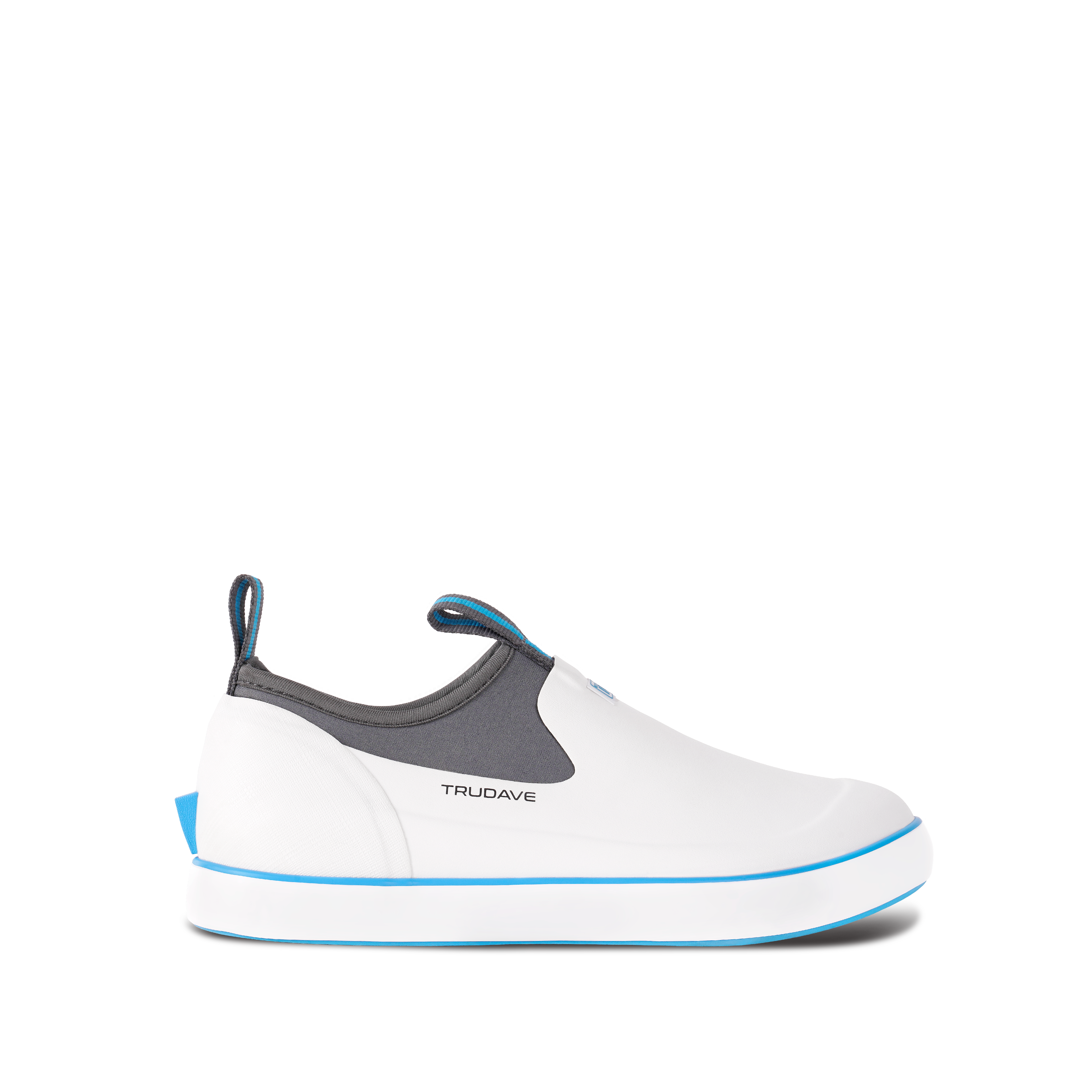
Ocean Breeze: Salt, Spray and Sun Mean Care Still Matters
Deck boots face a different exposure cycle. Instead of disappearing into
a muddy hunting pack, they may spend entire fishing days on open boats,
docks and ramps where direct sunlight is unavoidable.
Ocean Breeze uses a smooth rubber upper with neoprene stretch panels,
a non-marking gum outsole and fine siping for wet-deck traction. The
smooth surface also rinses clean after exposure to salt, mud and dirt.
Normal use in sunlight is expected. The maintenance problem is leaving
the boots exposed long after the fishing day is over. Rinse them,
air-dry them away from excessive heat and move them into shaded storage
instead of leaving them permanently on the boat or truck.
Rubber footwear is designed to live outdoors—but that does not mean
sunlight is chemically harmless to it.
Solar UV can contribute to photo-oxidative aging of susceptible rubber and
polymer materials. Over time, changes to the polymer network can affect
elasticity, mechanical strength and surface integrity.
But UV is only one part of the story. Heat, oxygen, ozone, mechanical
flexing, contaminants and storage conditions all contribute to how a boot
ages.
The practical solution is simple:
use your boots outdoors, but do not store them outdoors.
Rinse away mud and salt. Let the boots air dry away from excessive heat.
Keep them in a cool, dry, shaded and ventilated area between trips. Follow
the manufacturer's instructions before applying conditioners or other
treatments.
A few minutes of maintenance after the hunt or fishing trip can reduce
unnecessary environmental stress during the months when your boots are
sitting unused.
Seasoned angler with decades of experience in freshwater and saltwater fishing. Specializing in gear reviews, fishing techniques, and conservation practices.
FISHING GEAR
Quickshop
100% Waterproof & Floatable: TPU shell with RF-welded seams keeps water out and...