Cart
0
Early Fall Field Guide · Wingshooting
From freshly harvested grain fields to muddy farm edges, early-season pigeon hunting rewards hunters who scout carefully, hide well and stay mobile when the birds begin to move.
When most hunters think of fall, their minds immediately jump to crisp mornings in a whitetail stand or chasing elk through high-country timber. But for wing-shooters looking for fast-paced action before the main big-game seasons hit their stride, early autumn can offer another challenging opportunity: pigeon hunting.
Rock Pigeons (Columba livia) are common around agricultural areas, barns, grain facilities and other human structures. According to the Cornell Lab of Ornithology, their diet is centered heavily around seeds, and farmland is one of their typical habitats.
That combination can make recently harvested agricultural areas especially worth scouting. Still, success requires more than simply arriving with a shotgun and a box of shells. You need to understand where birds are feeding, how they approach a field, where to hide and how to remain comfortable enough to stay focused when conditions turn wet and muddy.
01
Locate the Daily Feeding Routine
Productive pigeon hunting begins long before you load your gear into the truck. Your first job is to identify where birds are feeding and, equally important, how they are getting there.
- Target recently harvested agricultural ground. Corn, wheat, barley and other grain fields can leave food scattered after harvest, creating feeding opportunities for local birds.
- Watch before you hunt. Spend time observing bird movement instead of immediately setting up. Look for repeated traffic between roosting areas and feeding ground.
- Identify consistent flight lines. Barns, grain facilities, bridges and nearby structures may help you understand where local birds are coming from and which edge of the field they prefer to approach.
Scouting Tip
A field covered in grain does not automatically make a good hunting location. Bird traffic matters more. Watch where the flock actually wants to be before deciding where to build your setup.
02
Build a Convincing Decoy Spread
Once you know where the birds want to feed, the next challenge is making your chosen landing area look natural enough to encourage approaching pigeons to commit.
- Think like feeding birds. Avoid placing every decoy at exactly the same angle or distance. Natural feeding groups are irregular rather than perfectly spaced.
- Use the wind to your advantage. Position the spread so incoming birds have a natural approach path toward the area where you want them to finish.
- Add controlled movement. Where legal and appropriate, motion decoys or flappers can help add life to an otherwise static setup.
- Leave an open landing pocket. A J-shaped or loosely curved spread can create a visual opening that helps guide incoming birds toward a predictable area.
Keep It Natural
More decoys are not always better. A smaller spread placed exactly where birds already want to feed can outperform a large spread in the wrong location.
03
Make Concealment Part of the Setup
Open agricultural terrain does not provide hunters with many places to disappear. Even a productive feeding location can become difficult if approaching birds repeatedly pick out movement or a human silhouette.
- Use existing structure. Whenever legally permitted, hedgerows, fence lines, field edges, standing vegetation and other natural breaks can help reduce your outline.
- Avoid unnecessary movement. Stay still while birds are approaching and make your move only when you are committed to the shot.
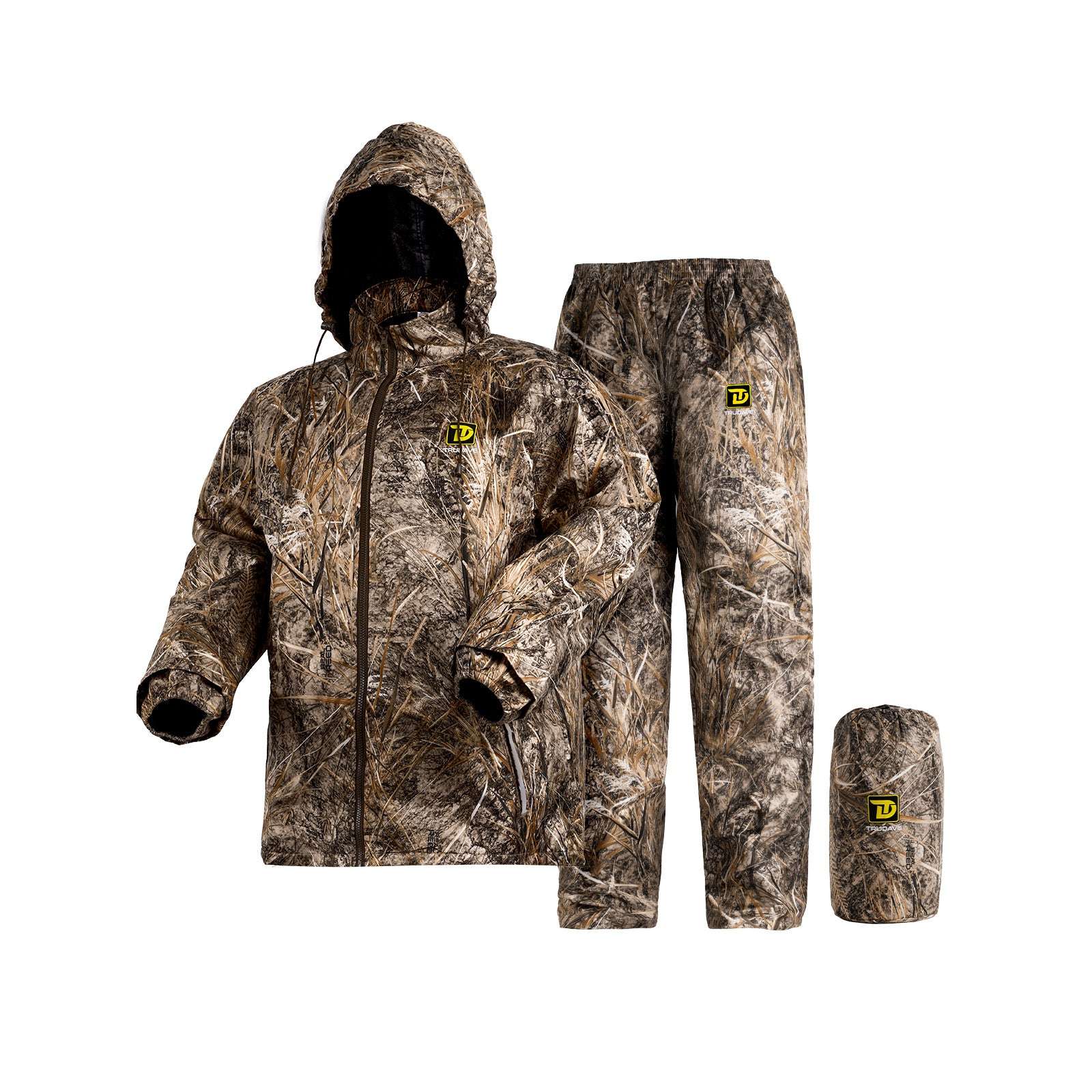
- Match the environment. Early-season fields may range from green vegetation to dry yellow stubble and exposed soil. Choose outer layers that do not sharply contrast with your immediate background.
Setup Detail
Look at your position from the direction birds are approaching, not just from behind the blind. What appears hidden at ground level may stand out clearly from above.
04
Choose Footwear for Wet Fields and Constant Movement
Early fall does not always feel cold, but it can still be surprisingly wet. Heavy morning dew, muddy tractor tracks, damp grass and soft post-harvest ground can soak ordinary footwear long before the action begins.
Pigeon hunting can also involve more movement than hunters expect. You may carry decoys into a field, reposition after flight lines shift, retrieve birds and repeatedly pivot as fast-moving targets change direction.
- Prioritize waterproof construction. Rubber-shell footwear helps keep mud, wet vegetation and shallow standing water away from your feet.
- Consider early-season temperature. Heavy insulation can be unnecessary during mild September conditions, so match warmth level to the actual weather and activity level.
- Look for usable traction. Mud, crop residue and wet grass can make seemingly flat fields surprisingly slick.
- Do not ignore fit. Secure footwear helps when repeatedly turning, walking uneven field edges or carrying gear over soft ground.
Trudave Field Gear
Built for the Wet Side of Hunting Season
Trudave hunting boots include waterproof rubber and neoprene configurations designed for rain, mud, wet vegetation and outdoor terrain. For early-season hunts, choose a model and insulation level that matches your expected temperature and activity.
Explore Hunting Boots05
Stay Smooth on Fast, Changing Targets
Pigeons can appear deceptively easy when they are approaching from a distance. Once they reach shooting range, however, their quick changes of direction can expose weaknesses in your shooting form.
- Keep the gun moving. One common wingshooting mistake is slowing or stopping the barrel at the moment the shot is taken.
- Focus on the bird, not the barrel. Maintain visual concentration on the target and allow the gun to move naturally through the line of flight.
- Expect direction changes. Birds approaching a spread may bank, climb or turn when they detect movement or something unusual.
- Choose responsible shots. Know what is beyond the target and avoid shots toward buildings, roads, livestock, equipment or neighboring property.
Wingshooting Reminder
Smooth movement and controlled shot selection matter more than rushing. A bird changing direction is not a reason to force a low-percentage or unsafe shot.
Early-Season Pigeon Strategy Checklist
Use this quick reference before heading into the field.
| Tactic | Key Action | Why It Matters |
|---|---|---|
| 1. Scout the Feed | Watch recently harvested grain fields and identify actual bird traffic. | Helps you hunt where pigeons already want to spend time. |
| 2. Build the Spread | Create a natural feeding group with an open landing area. | Gives approaching birds a more convincing destination. |
| 3. Stay Concealed | Use field edges, vegetation and available cover to break up your outline. | Reduces the chance of incoming birds detecting movement early. |
| 4. Prepare for Mud | Wear waterproof boots with appropriate traction and seasonal warmth. | Helps keep you comfortable while walking, retrieving and repositioning. |
| 5. Shoot Smoothly | Maintain your swing and stay focused on safe, controlled shots. | Fast, maneuverable birds punish rushed shooting technique. |
The Bottom Line
Early-season pigeon hunting can be an excellent opportunity to sharpen wingshooting skills and spend time scouting agricultural country before later fall seasons arrive.
The most productive approach is simple: find the food, watch the flight line, build a realistic setup, disappear into the surroundings and stay mobile enough to adapt when the birds change their pattern.
And when early-morning dew and post-harvest mud become part of the hunt, reliable waterproof footwear can make a long day in the field considerably more comfortable. Explore Trudave Hunting Boots for waterproof options designed for hunting, rain, mud and demanding outdoor conditions.