This article is edited by Trudave. With years of expertise in waterproof apparel and footwear, Trudave aims to provide impartial and professional advice on selecting hunting gear for different seasons. Visit our official website: https://trudavegear.com .

If you spend enough time hitting the trails, hunting in the backwoods, or just clearing brush out in the sticks, you already know the drill. You’re enjoying the day, and then you hear it: that dry, unmistakable ch-ch-ch of a rattlesnake telling you you’ve stepped into the wrong zip code.
When you're in snake country, your footwear is your first and last line of defense. But there’s a ton of dangerous misinformation out there about what actually keeps fangs out of your calves.
Here is the hard truth about what shoes snakes can—and cannot—bite through.
Quick Gear Guide: DryFlow vs. HuntGuard
If you are choosing Trudave footwear for wet hunting ground, brush, farm work, or muddy backcountry conditions, these are the two most relevant options in this guide. The biggest difference is coverage: DryFlow is a tall 15–16 inch boot, while HuntGuard is a 6.5-inch ankle boot built for easier movement.

More Lower-Leg Coverage
DryFlow Tall Waterproof Rubber Work Boots
$69.88$94.99
Best suited to wet brush, ranch work, marsh edges, muddy hunting access, and situations where you want substantially more lower-leg coverage than an ankle boot.
- 15–16 inch shaft depending on size
- 5mm neoprene shaft with thick rubber shell
- Steel shank support for uneven ground
- Deep self-cleaning traction for mud and wet terrain
View DryFlow Boots

More Flexible Ankle Option
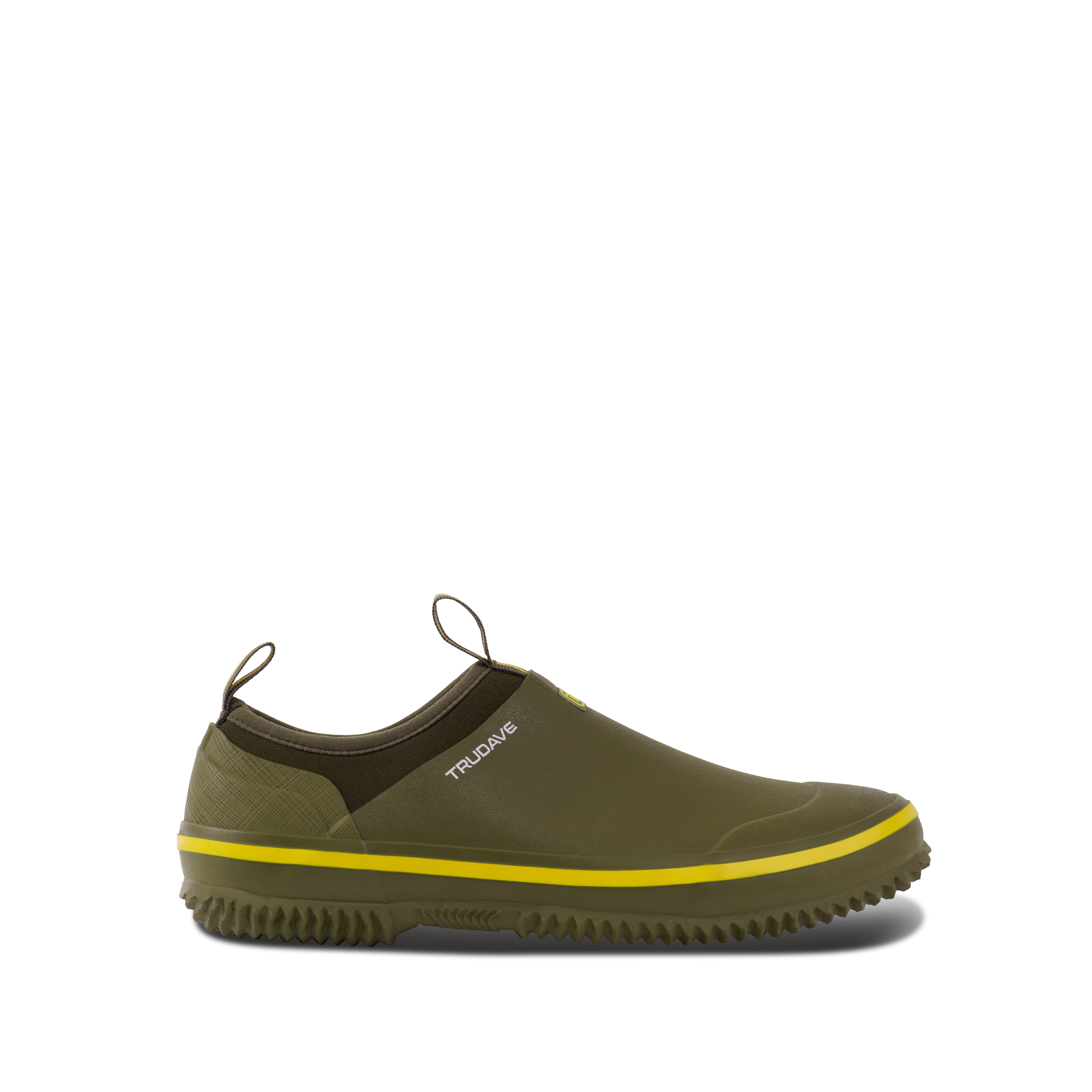
HuntGuard Men's Waterproof Rain Boots
$69.99$94.99
A more agile choice for wet hunting mornings, bank fishing, ranch chores, garden work, and muddy terrain where full-height lower-leg coverage is not the priority.
- 6.5-inch ankle-height shaft
- Waterproof rubber and neoprene wrap
- Deep-lug traction on mud, wet grass, and rock
- Steel shank plus cushioned EVA midsole
View HuntGuard Boots
Important: Neither DryFlow nor HuntGuard is presented here as certified snake-proof footwear. DryFlow simply provides substantially more lower-leg coverage than HuntGuard. If your primary requirement is verified snake-bite resistance, choose footwear or gaiters specifically tested and marketed for that purpose.
The "Good Enough" Myth
Let’s get this out of the way first: regular shoes do not cut it. * Sneakers and trail runners: A rattlesnake fang will punch through mesh and canvas like a hot knife through butter.
-
Standard rubber rain boots: Most cheap rubber boots are too thin. A mature pit viper can pierce right through them.
-
Regular leather cowboy or work boots: This is the biggest myth out there. While heavy-duty leather might deflect a glancing strike from a smaller snake, the fangs of a large Eastern Diamondback or Timber Rattler can easily penetrate standard leather. It's just not worth the gamble.
The Strike Zone: Most North American pit vipers (rattlesnakes, copperheads, and cottonmouths) strike no higher than a third to half of their total body length. This means 90% of snake bites happen below the knee.
The Real Deal: What Actually Stops a Fang
If you want absolute peace of mind when you're bushwhacking, you need materials engineered specifically to stop a hypodermic needle traveling at 10 feet per second. Here is what you should be looking for:
1. Dedicated Snake Boots
These are purpose-built boots designed specifically for hunters and off-trail hikers. They aren't cheap, but they are worth their weight in gold. They rely on tightly woven, high-tech fabrics rather than just sheer thickness.
-
Kevlar & Cordura Nylon: These are the gold standards. Snake boots use tightly layered, ballistic-grade nylon or Kevlar (the same stuff in bulletproof vests). The fangs physically cannot separate the weave to reach your skin.
-
High-Density Vulcanized Rubber: Some brands use a specialized, extra-thick rubber compound over a neoprene core. These are fantastic if you're navigating swamps or areas with water moccasins, but they can get brutally hot in the summer.
2. Snake Gaiters (The Versatile Alternative)
If you don't want to shell out $200+ for heavy snake boots, snake gaiters are your best friend. These are stiff, armor-like sleeves made of ballistic nylon or polycarbonate armor panels that strap over your regular hiking boots and wrap around your lower legs.
-
The benefit: You get to wear your favorite, already-broken-in hiking boots while still getting heavy-duty protection from your ankle up to your knee.
-
The catch: You must make sure there is no gap between the bottom of the gaiter and the vamp (top) of your hiking shoe.
What to Look For When Buying
If you're gearing up for snake season, keep these three rules in mind:
-
Look for the 16-Inch Rule: Your boots or gaiters need to be at least 16 inches tall to cover the average strike zone.
-
Check for "Snake-Proof" Certification: Don't just buy a "thick boot." Look for gear that is explicitly marketed and tested as snake-proof. Brands like Danner, LaCrosse, and Irish Setter are the heavy hitters in this space.
-
Mind the Vamp: The top of your foot is highly vulnerable. Ensure whatever you wear has serious armor over the bridge of your foot, not just the shin.
DryFlow or HuntGuard: Which One Fits Your Day?
| Feature |
DryFlow |
HuntGuard |
| Shaft height |
15–16 in. |
6.5 in. |
| Best for |
Wet brush, ranch work, muddy access, marsh edges, higher lower-leg coverage |
Wet hunting mornings, bank fishing, ranch chores, garden and yard work |
| Waterproof build |
5mm neoprene + thick rubber shell |
Waterproof rubber + neoprene wrap |
| Ground support |
Steel shank + deep self-cleaning tread |
Steel shank + deep-lug traction |
| Movement |
More coverage, taller feel |
More ankle flexibility |
| Snake-proof certification |
Not claimed |
Not claimed |
At the end of the day, the best snake protection is situational awareness. Watch where you step, never put your hands or feet where you can't see, and let the snakes go about their business. But for those times when you accidentally invade their personal space? Make sure you're wearing the right armor.
Shopping for Trudave footwear? Choose DryFlow when tall waterproof coverage is the priority, or HuntGuard when you want a lower, more flexible waterproof boot for everyday wet outdoor use.
This article is edited by Trudave. With years of expertise in waterproof apparel and footwear, Trudave provides professional gear guidance.
If you'd like to learn more about hunting gear, outdoor activity safety, or related information, you can visit the following authoritative websites:
Additionally, if you're looking for high-quality waterproof gear, be sure to check out Trudave’s official website .
Thank you for reading and supporting us. We hope every outdoor adventure keeps you warm, dry, and confident.




Bill Spreitzer —
Like additional information re. Snake Boots and Brands, Prices etc.