Applied Materials Engineering
Traction is not a byproduct of chance. It is the calculated intersection of fluid dynamics, rubber compounds, and structural geometry.
Whether you are bracing against a sudden swell on a blood-slicked fiberglass deck or navigating moss-covered rocks during a spring turkey hunt, gravity is unforgiving. Most consumers assume that any boot with a "bumpy" bottom will prevent a fall. In reality, true anti-slip performance is a highly technical discipline. Here is how premium marine and outdoor footwear actually defies physics.

The primary cause of slips in wet environments is hydroplaning. When a flat or heavily lugged surface strikes a layer of water, the fluid becomes trapped beneath the rubber, creating a frictionless barrier between the boot and the ground.
The Solution: Razor Siping
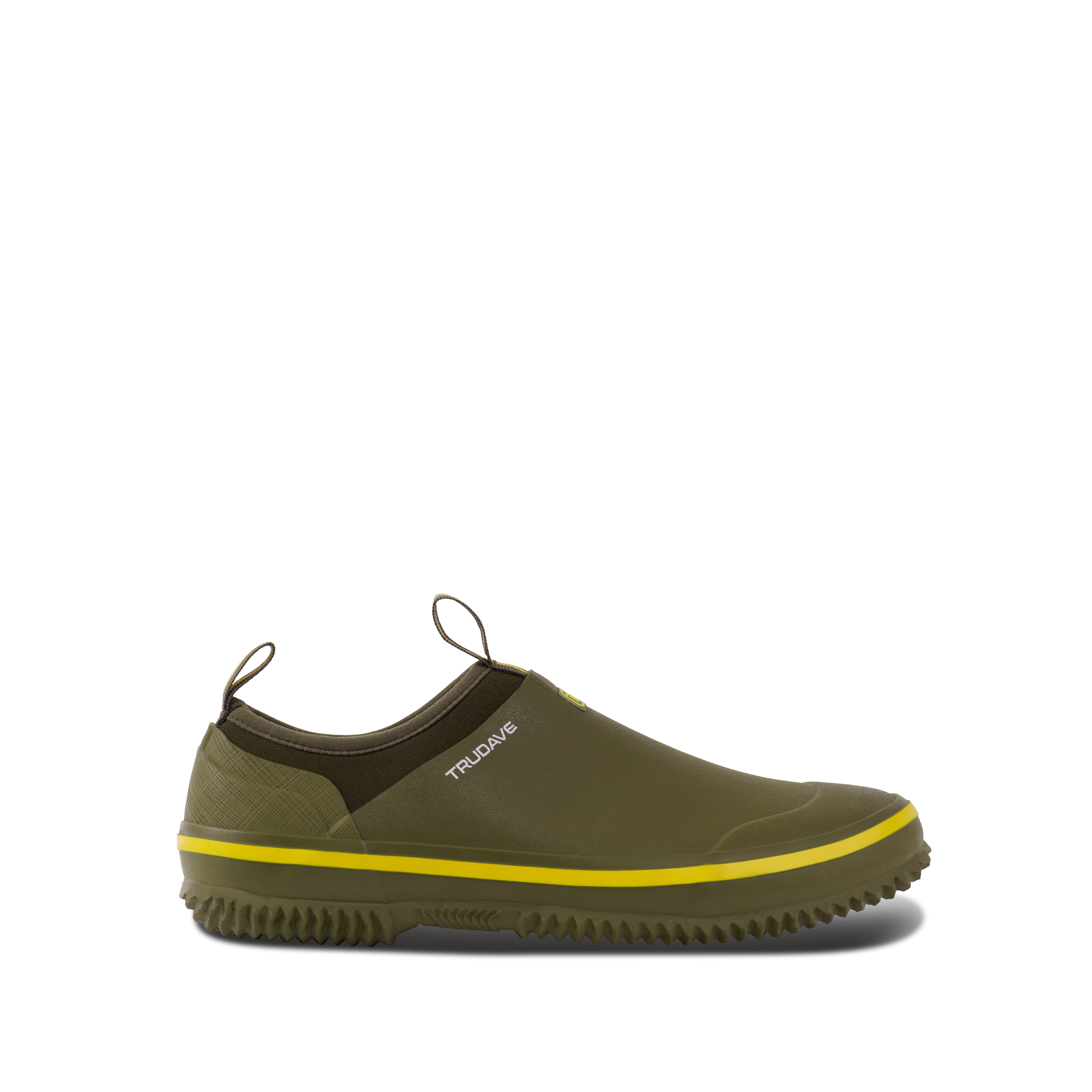
Derived from performance tire engineering, micro-sipes are thousands of microscopic slits cut directly into the outsole. When your foot strikes the deck, downward pressure forces these slits to open, creating channels that instantly expel trapped water. As you lift your foot, the sipes close, creating a vacuum-like grip on the microscopic pores of the fiberglass.
The "stickiness" of an outsole is measured by its durometer (hardness). A high-durometer rubber lasts forever but turns into a rigid, slippery ice skate in cold temperatures. A low-durometer rubber grips like glue but degrades rapidly on concrete.
Premium outdoor brands balance this by formulating proprietary vulcanized rubber blends. These compounds are chemically engineered to remain pliable and sticky in near-freezing offshore conditions, yet durable enough to withstand the abrasive grit of a boat deck or jagged limestone trails.
Traction isn't just about the rubber; it's about how your foot interfaces with the terrain. Traditional boots utilized rigid steel shanks for arch support, effectively numbing your foot's ability to "feel" the ground beneath it.
By eliminating the steel shank and integrating a high-density, shock-absorbing EVA midsole, modern boots allow for enhanced proprioception. When your foot can subtly articulate and conform to an uneven surface or a rolling deck, it maximizes the surface area contact of the outsole. More contact equals exponentially higher friction.
An anti-slip sole cannot perform if the boot fits poorly, causing your weight to shift violently inside the chassis. This is why mapping true measurements—utilizing inches rather than arbitrary standard shoe sizes—is critical for securing the heel and stabilizing the forefoot.
Furthermore, structural stability requires gender-specific engineering. A women's mid-calf boot built on a dedicated female last ensures that the arch drops precisely where it should. This proper biomechanical alignment ensures that weight is driven cleanly down through the siped outsole, activating the grip exactly as the engineers intended.
Engineered for the uncompromising outdoorsman and outdoorswoman. Learn more about our technical footwear and performance standards at Trudavegear.com.