You aren't starring in an episode of Deadliest Catch. Stop buying gear designed for Alaskan crabbers. Here is the blueprint for finding lightweight, affordable, and hyper-functional deck boots for the weekend warrior.
Walk into a premium outdoor outfitter on a Friday afternoon, and you will witness a predictable tragedy. A guy who just wants to spend his Saturday morning casting for redfish on a center console, or dropping a line off a local pier, is being talked into a $220 pair of heavy-duty, commercial-grade offshore boots.
The outdoor retail industry suffers from a severe case of "The Overkill Epidemic." Marketers have convinced the weekend angler that if they aren't wearing the exact same gear as a commercial longliner battling 30-foot swells in the Bering Sea, they are somehow underprepared.
This is a costly, uncomfortable lie. The reality is that hardcore professional boots are designed for hyper-specific, brutal environments. They are incredibly heavy, stiff, and often overkill for a 6-hour bay fishing trip. In 2026, the smart weekend fisherman is pivoting to a new class of footwear: boots that deliver professional-grade safety features (like non-slip soles) without the suffocating weight, the rigid steel shanks, and the exorbitant "logo tax."

Chapter 1: The Trap of "Commercial Grade"
Let’s dissect what "commercial grade" actually means. Boots built for industrial fishermen prioritize armor over agility. They frequently feature thick steel shanks in the midsole to prevent punctures from heavy machinery, and dense, unyielding rubber uppers meant to withstand freezing temperatures and caustic chemicals.
For the weekend angler, that steel shank is a curse. It adds pounds of dead weight to your feet, causing lower back fatigue by lunchtime. It also completely numbs your proprioception—your foot's ability to "feel" the deck beneath you. If you are hopping off a skiff onto a sandy bank, or balancing on a wet dock, you need agility, not medieval armor.
The Pro Upsell vs. The Weekend Reality
| Feature |
The $200 "Pro" Upsell |
The Smart Weekend Boot |
| Midsole Structure |
Heavy Steel Shank |
Lightweight Composite EVA |
| Weight Profile |
Exhausting (4+ lbs/pair) |
Athletic & Nimble |
| Height |
Knee-High (Sweat boxes) |
Mid-Calf / Ankle (Breathable) |
| Traction |
Heavy Lugs |
Micro-Siped (Deck Safe) |
| Best For |
Industrial Crab Boats |
Skiffs, Piers, & The Brewery |
Chapter 2: The Non-Negotiable: Siped Outsoles
While you don't need a steel shank, there is one professional feature you absolutely cannot compromise on: Traction. A bloody, wet fiberglass boat deck or a mossy concrete boat ramp is arguably more dangerous than the open ocean if you lose your footing.
"Most cheap rain boots act like ice skates on a wet boat deck. The secret to staying vertical is Razor Siping."
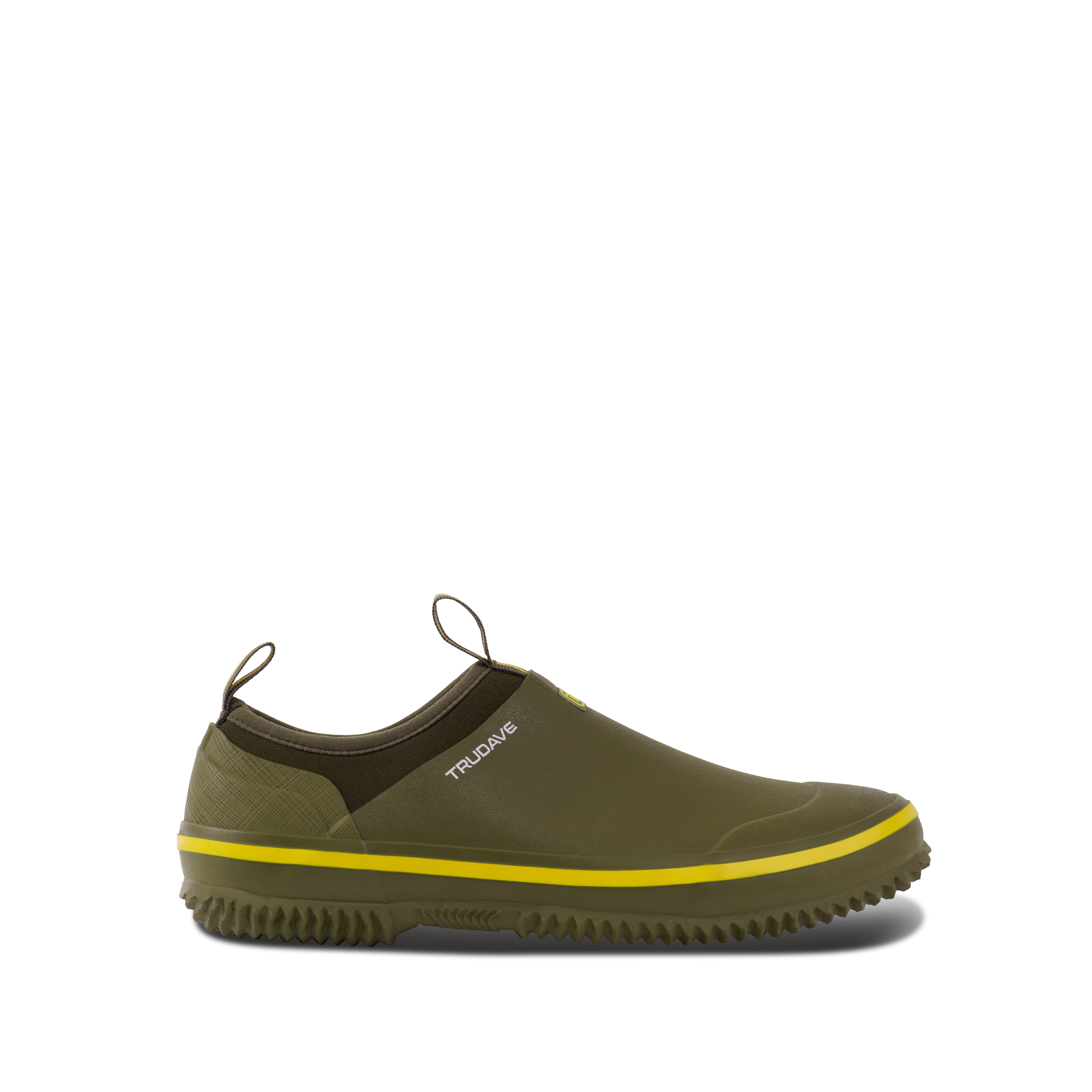
Do not buy a boot with a flat bottom or standard hiking lugs. You must ensure the boot features a micro-siped outsole. Originally designed for high-performance rain tires, sipes are thousands of microscopic slits cut into the rubber. As you step down, they open up, channeling water away from the contact patch and creating a vacuum-like grip on smooth, wet surfaces. This is the one piece of "pro tech" the weekend warrior must demand.
Chapter 3: The Mid-Calf Sweet Spot & Versatility
Legacy brands love to push knee-high boots because they look dramatic in marketing photos. But unless you are wading through deep muck, knee-high rubber boots will turn your legs into suffocating saunas by 9:00 AM on a summer Saturday.
The ideal boot for the weekend fisherman is the mid-calf or ankle deck boot. It provides plenty of waterproof clearance to hose down the deck or step into the shallows to land a fish, but it is low enough to allow air circulation. More importantly, it offers versatility. A well-designed, lightweight deck boot can seamlessly transition from the boat ramp, to the hardware store, to grabbing a beer at the local brewery without making you look like you got lost on your way to a commercial cannery.
Chapter 4: Sizing for Occasional Use
Even if you only fish a few weekends a month, a poorly fitted boot will ruin your day. Legacy brands rely on "standard shoe sizes," which leads to loose heels and chafed Achilles tendons. The friction from your heel slipping out of a boot will destroy the internal lining—and your skin—very quickly.
-
The Measurement Rule: Always buy from brands that encourage sizing based on actual foot measurements in inches.
-
Women on the Water: Female anglers should absolutely refuse the "shrink it and pink it" models. Demand a boot built on a dedicated female last (narrower heel, proper arch). Weekend fishing should be relaxing, not a battle against poorly fitting unisex footwear.
Conclusion: Invest Smart, Not Hard
You don't need to take out a small loan to keep your feet dry and secure on your days off. By leveraging Direct-to-Consumer (DTC) brands that bypass the retail markup, and by knowing exactly what engineering specs to look for—no steel shanks, mid-calf profiles, and siped outsoles—you can secure premium performance at a fair price.
Save your money for bait, gas, and better tackle. Buy the right boot, and let the professionals keep their heavy armor.