You buy a pair of 100% waterproof rubber boots to stay dry in the field. But by noon, your socks are completely soaked anyway. It is not a leak. It is you. Welcome to the "Sweat-Box Effect."
In the outdoor industry, we face an unavoidable law of physics: a material that is 100% impenetrable to external water is also 100% impenetrable to internal evaporation. When you encase your foot in vulcanized rubber and neoprene, you are essentially sealing it inside a micro-greenhouse.
However, extreme foot sweating and the resulting blisters are not inevitable. They are symptoms of poor gear configuration. Here is the field breakdown of why your boots are turning into saunas, and the specific equipment protocols required to neutralize the threat.

DIAGNOSTIC 01:
The Cotton Death Trap
The most common cause of "swamp foot" has nothing to do with the boot; it is the sock. When you wear traditional white cotton socks inside a rubber boot, you are committing a catastrophic tactical error.
Cotton acts like a sponge. It absorbs perspiration but refuses to release it, trapping moisture directly against your skin. This causes the skin to macerate (soften and break down), leading directly to severe blistering and rapid heat loss if the temperature drops.
ACTION REQUIRED: Never wear cotton in the field. You must utilize Merino Wool or synthetic Polypropylene blends. These materials wick moisture away from the skin and push it toward the lining of the boot, maintaining a dry barrier.
DIAGNOSTIC 02:
The "Chimney Effect" and Boot Height
Many consumers instinctively buy knee-high boots, assuming taller is better for protection. But wrapping the thickest part of your calf in airtight rubber traps an immense amount of body heat. Because hot air rises, a tight knee-high boot seals the top, preventing the heat from escaping.
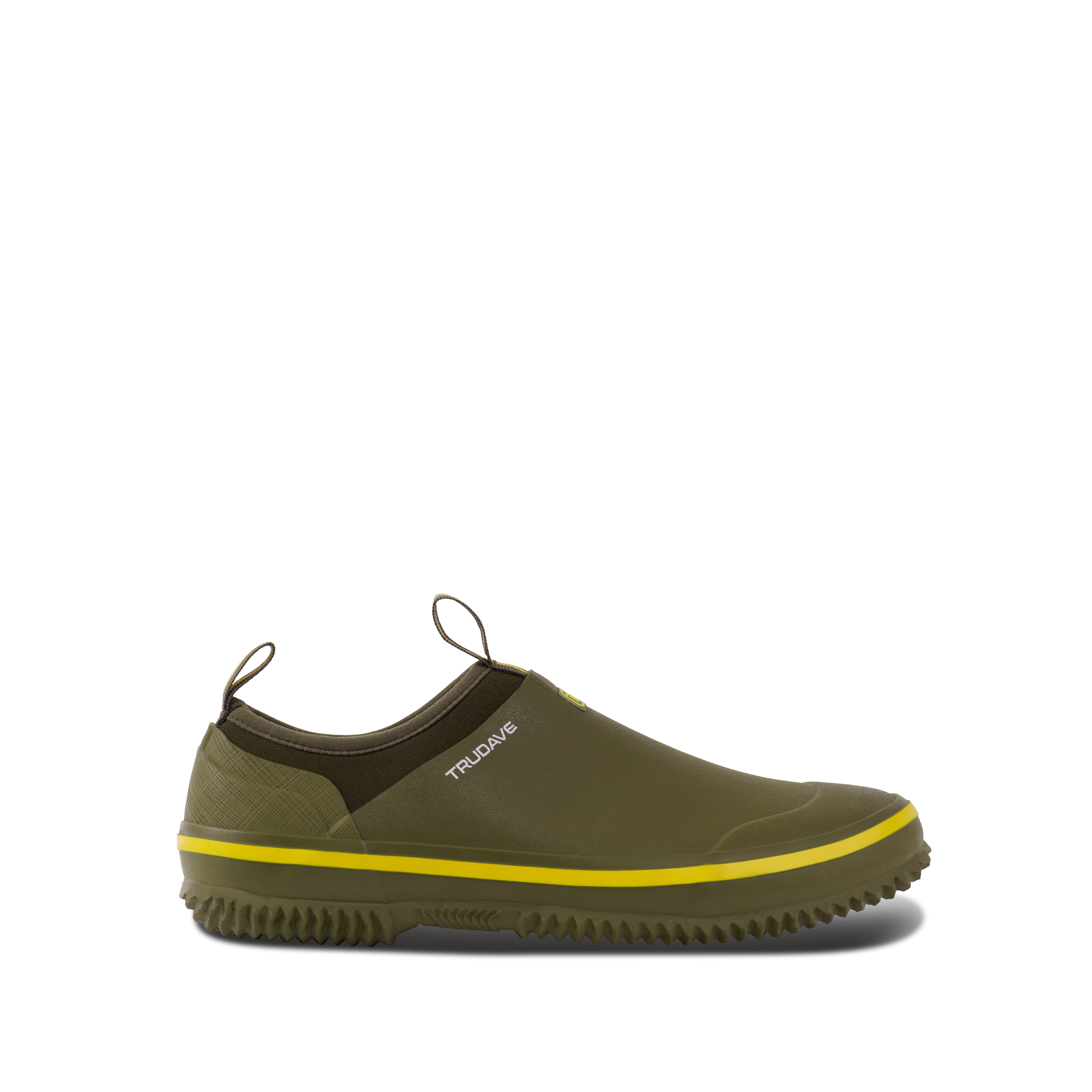
The Solution: Unless you are actively wading through deep swamps, the optimal profile is the mid-calf boot. A mid-calf design leaves the upper calf exposed to ambient air and creates a "chimney effect." As you walk, the natural pumping motion of your foot forces hot, moist air out the top of the boot, radically dropping the internal temperature.
DIAGNOSTIC 03:
Friction Generated Thermal Energy (Sizing)
Friction creates heat. If your boots are bought using arbitrary "standard shoe sizes," they likely feature a sloppy fit in the heel. Every time you take a step and your heel slips, you generate thermal energy inside an enclosed space. This accelerates sweating exponentially.
To eliminate this, premium footwear protocols dictate sizing your boots using actual foot measurements in inches. Locking the foot precisely into the boot's cavity neutralizes micro-frictions, keeping the internal environment significantly cooler.
DIAGNOSTIC 04:
Metabolic Output and Dead Weight
The heavier the boot, the harder your body works. Legacy boots embedded with thick steel shanks act like ankle weights. Pushing these through mud forces your cardiovascular system to work in overdrive, raising your core body temperature and triggering a massive sweat response.
-
LEGACY TECH: Steel Shank (Heavy, Rigid, Induces Sweating)
-
MODERN FIX: Composite EVA Midsole (Ultralight, Flexible)
-
RESULT: Lower Metabolic Exertion = Cooler Feet
By engineering the steel shank out of the boot, modern high-density EVA midsoles save you thousands of pounds of lifting over a 5-mile hike. Less physical exertion directly equates to less sweat.