Editor's Note: This dispatch is brought to you by the Trudave team. We build rugged, uncompromising footwear because we've seen firsthand what happens when gear fails miles from the truck. Visit us at trudavegear.com.

Sit around any hunting camp fire long enough, and the debate is bound to start. On one side, you have the old-school mountain hunters swearing that nothing beats a heavily oiled, lace-up leather boot. On the other side, the whitetail and waterfowl guys are laughing from the mud, completely locked into their slip-on rubber boots.
So, who is actually right? The outdoor industry loves to sell the idea of a "do-it-all" boot, but the truth is much harsher: there is no single winner. Choosing between rubber and leather isn't about brand loyalty; it’s about matching your footwear to the brutal reality of your terrain.
Let’s strip away the marketing fluff and put these two heavyweights head-to-head.
The Tale of the Tape: Core Strengths
The Case for Leather
Leather boots are the mountain goats of the gear world. They are built for long miles, heavy packs, and vertical ascents.
-
Ankle Support: If you are side-hilling on a 40-degree scree slope with an 80lb pack of elk meat, rigid leather laces lock your ankle in place to prevent rolls.
-
Breathability: Leather naturally breathes. Combined with modern membranes, it pushes foot sweat out, preventing the dreaded "swamp foot" on high-output hikes.
-
Custom Fit: After a brutal break-in period, high-quality leather literally molds to the exact shape of your foot like a custom cast.
The Case for Rubber
Rubber boots are the undisputed kings of the swamp. They are built for absolute containment and ruthless efficiency.
-
100% Waterproof: No DWR sprays. No failing membranes. If the water doesn't top the collar, your feet are bone dry. Period.
-
Scent Control: Rubber traps human odor better than any other material. For bowhunters creeping into a whitetail stand, this is a massive tactical advantage.
-
Zero Break-In: Pull them out of the box and hit the timber. No blisters, no stiff leather digging into your ankles.
The Fatal Flaws (Where They Fail)
Neither material is perfect. Leather hates standing water. If you sit in a flooded duck blind or walk through heavy morning dew for four hours, the outer leather will eventually "wet out" (absorb water). Even if the inner membrane keeps you dry, the boot becomes freezing cold and incredibly heavy. Plus, leather demands constant maintenance.
Rubber’s historical weakness has always been weight and breathability. Traditional heavy rubber boots with stiff internal shanks can feel clunky on long hikes, dragging your legs down in the brush.
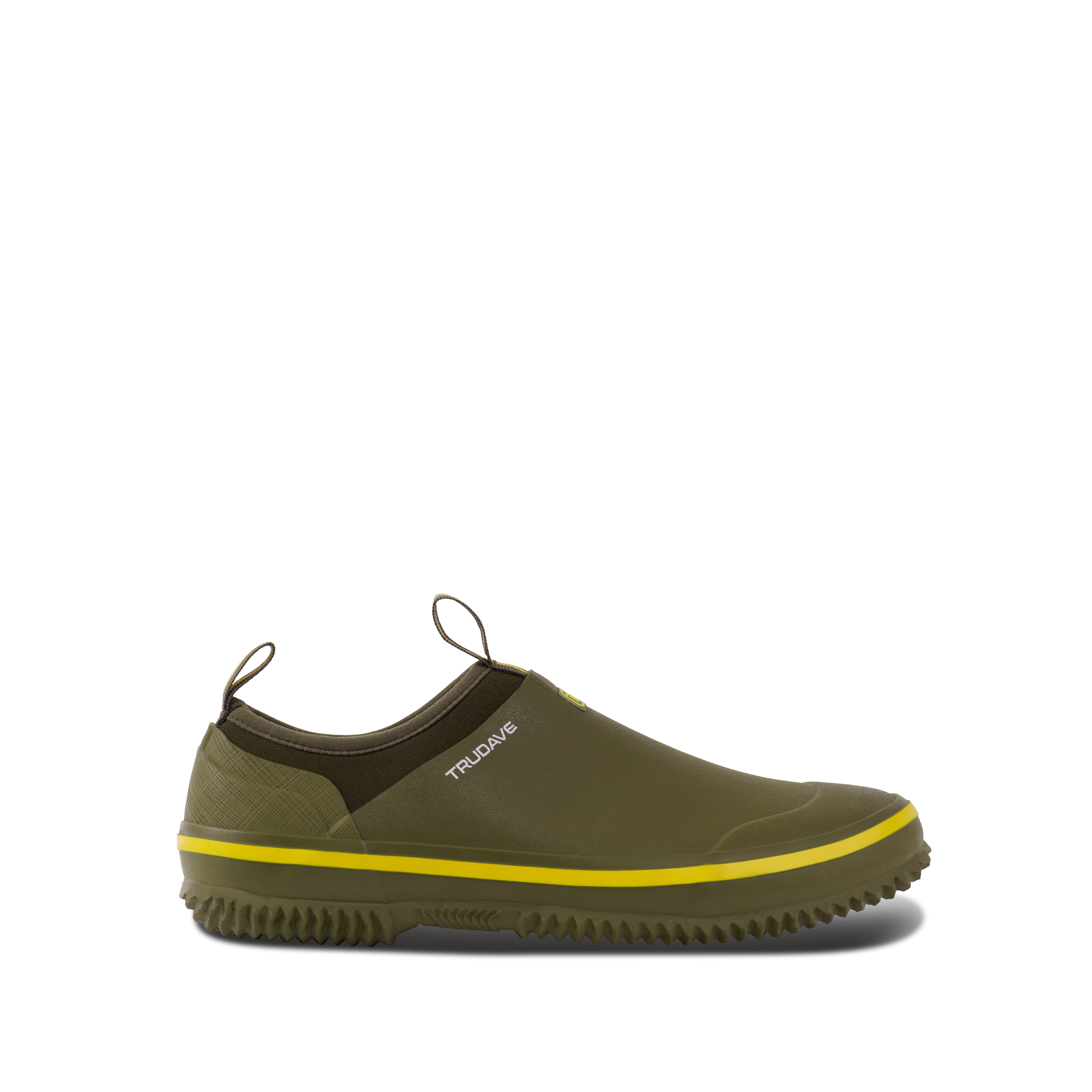
Field Notes: The Modern Agility Shift This is exactly why modern hunters are moving away from clunky, knee-high wellingtons. A highly flexible, mid-calf rubber boot is the new standard for mobility. Furthermore, by choosing a design with no steel shank, you drastically cut the overall weight. You get the 100% waterproof protection of a rubber boot, but with the lightweight agility of a sneaker when maneuvering through thick timber.
The Final Verdict
There is no "one boot to rule them all." A serious outdoorsman needs a quiver of gear. Keep a pair of rugged leather hikers for scouting and chasing bugles in the dry high country. But when the rain moves in, the frost hits the fields, and you need to slip silently through the mud to your tree stand, nothing beats the uncompromising protection of a premium rubber boot.
Ready for the Slop?
When the hunt demands absolute waterproof protection without the clunky weight, TruDave Gear delivers. Explore our lightweight, steel-shank-free rubber boots engineered to keep you agile and bone-dry in the worst conditions.
Shop TruDave Rubber Boots