Wet decks, fish slime, salt spray, long hours, and sore feet all expose the same problem: a boot that looked good online but was never built for the way you actually fish.
If you spend enough time on the water, you quickly learn that your day is only as good as your footwear. When the bite is hot and the deck is covered in fish blood, salt spray, and bait slime, the last thing you want to think about is your feet.
Yet, walk down any marina dock, and you will see anglers dealing with lower back pain, slipping on wet fiberglass, or peeling off soaking-wet socks at the end of a long offshore run. The culprit is often simple: a poorly chosen pair of deck boots.
With so many brands on the market in 2026, finding the right pair can feel overwhelming. Before you gear up for your next trip, make sure you are not making these three common mistakes — and learn what you should be wearing instead.
Dockside Diagnosis
A Deck Boot Is Not Just a Waterproof Boot
Marine footwear has to handle wet fiberglass, saltwater, slime, long standing hours, quick washdowns, and constant bending. A boot that works in the yard or woods may be the wrong tool on a boat deck.
Mistake #1 / The Arch Support Trap
Assuming “One Shape Fits All”
The most common mistake anglers make is buying a boot purely based on a logo they saw on social media, without considering their actual foot shape, arch height, and support needs.
For decades, the standard deck boot was built around a relatively simple rubber platform. Heritage staples like the XTRATUF Ankle Deck Boot, often called the “Alaska Sneaker,” are legendary for their history, pliability, and classic grip. But a traditional, flatter footbed will not feel right for every angler.
If you have high arches, sensitive heels, or foot fatigue after long days standing on hard fiberglass, the wrong boot can make your knees, hips, and lower back feel it by the time you reach the dock.
Sore Feet Before the Ride Home
Your feet feel tired, your heels ache, or your lower back starts complaining after hours of standing.
Modern Supportive Deck Boots
Look for a deck boot with a supportive footbed, stable heel hold, and cushioning that does more than feel soft for the first few minutes.
The Fix
Choose Support Before You Choose the Logo
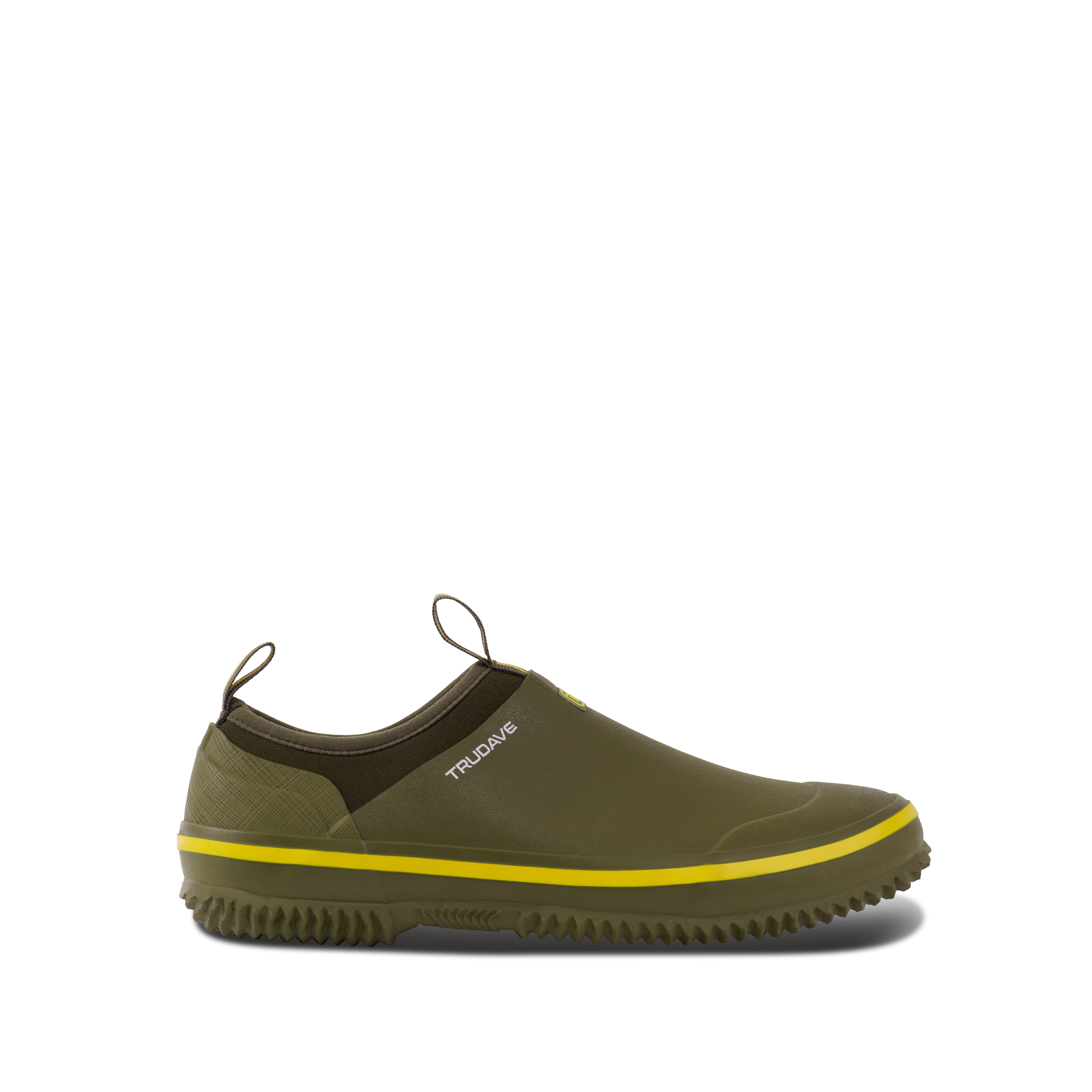
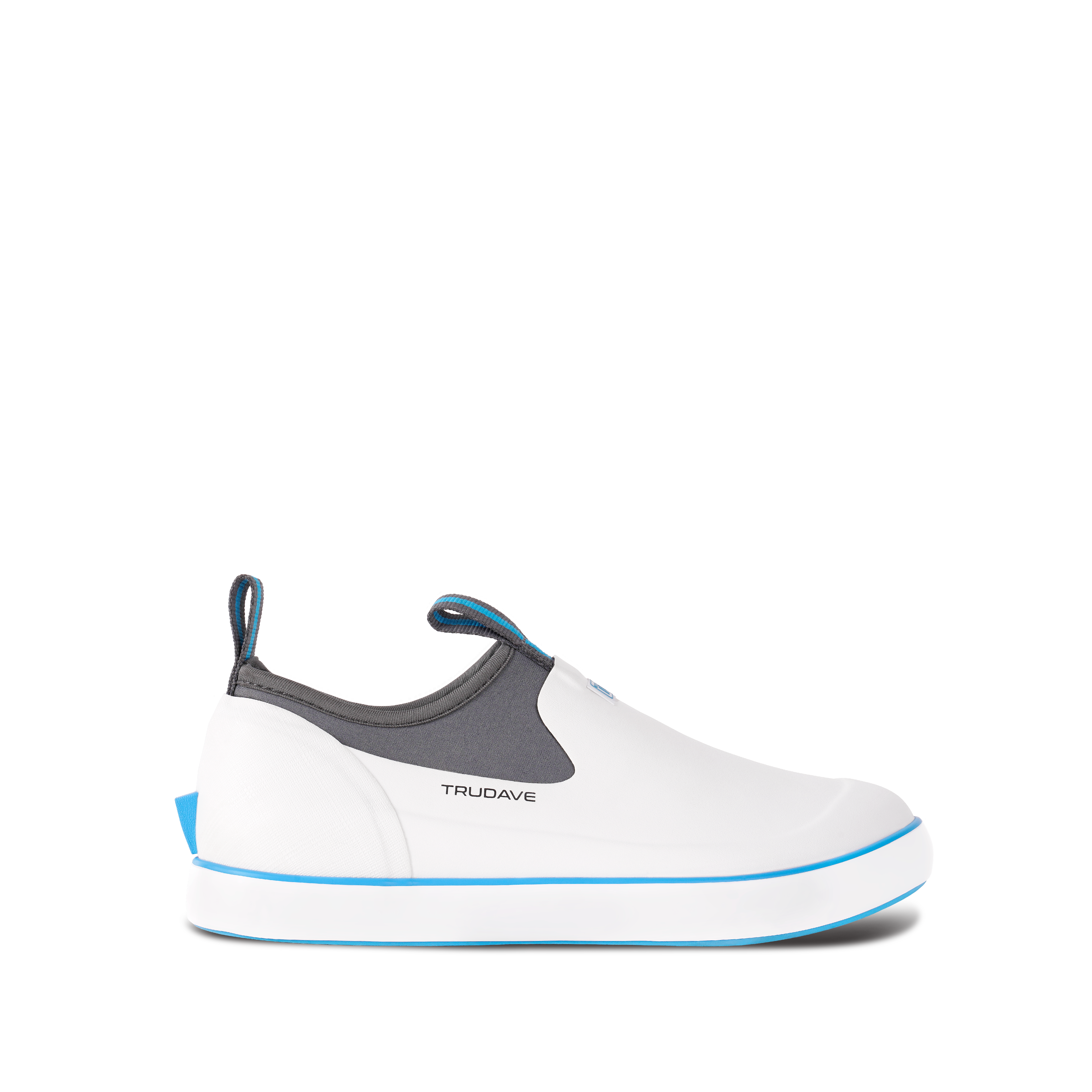
If deck fatigue is your main problem, check out the Trudavegear Performance Deck Boot. Instead of relying on a flat rubber feel, Trudavegear focuses on supportive comfort, waterproof protection, and a fit built for long hours around the water.
Mistake #2 / The Sole Science Problem
Ignoring the Bottom of the Boot
A lot of anglers grab heavy rubber hunting boots or cheap rain boots and assume they are good to go. Big mistake. A wet boat deck can behave like an ice rink, and deep, chunky mud lugs are not designed for smooth fiberglass.
True marine footwear relies on tread patterns, rubber compounds, and often siping — small slits or channels that help move water away from the outsole contact area so the boot can grip better on wet surfaces.
Slipping Where You Should Be Planted
The boot looks rugged, but it slides on wet fiberglass, fish slime, smooth docks, or washdown water.
Non-Marking Marine Outsoles
Flip the boot over before you buy. Look for non-marking rubber, siping, surface contact, and tread made for wet decks instead of mud fields.
The Fix
Buy for Wet Fiberglass, Not Mud
Heavy-duty commercial brands like Grundéns do a strong job with non-marking lugged outsoles and razor-cut siping for rough, wet conditions. Trudavegear uses wet-surface traction designed for fishing, boating, washdowns, and slick dock conditions.
The key is finding a sole that grips without marking up the deck and channels water away efficiently.
Mistake #3 / The Flexibility Balance
Choosing Stiff Armor Over Comfortable Movement
When you are rigging lines, gaffing a fish, kneeling to wash down the deck, or stepping over a gunwale, your ankles need to bend. Some anglers buy stiff rubber boots thinking maximum durability is always better, only to find that the collar rubs their lower calf all day.
On the other end of the spectrum, some ultra-light boots, such as the Huk Rogue Wave, use soft neoprene-and-rubber construction that feels light and easy for warm-weather trips. That can be great for casual boating, but some anglers still prefer more structure for messy deck work.
Chafing, Rubbing, or No Structure
One boot feels stiff and restrictive; another feels soft but not supportive enough for rougher work.
The “Goldilocks” Construction
Look for enough rubber structure to protect and stabilize, plus enough upper flexibility to move naturally with your ankle.
The Fix
Balance Protection and Flex
A deck boot like Trudavegear aims for a practical middle ground: waterproof protection, a supportive feel, and a flexible upper that works for a wide range of anglers, boaters, and wet outdoor tasks.
Before You Buy
Deck Boot Inspection Checklist
- Does the outsole say non-marking?
- Is the tread designed for wet, smooth decks rather than deep mud?
- Does the boot have enough arch and heel support for long standing hours?
- Can your ankle bend naturally when kneeling, stepping, or washing down the deck?
- Does the collar feel comfortable, or does it rub your lower calf?
- Is the boot easy to pull on and kick off with wet hands?
- Will the fit still work with the socks you actually wear on the water?
The Bottom Line
Buying the Right Deck Boot Is About Endurance, Safety, and Performance
Buying the right deck boot is not just about keeping your feet dry. It is about staying stable on wet decks, reducing fatigue, protecting your feet, and keeping your body comfortable through long hours on the water.
Established brands like XTRATUF, Grundéns, and Huk have earned their place for different types of anglers. But if your biggest problems are arch fatigue, stiffness, and all-day traction, stepping into a more comfort-focused deck boot like Trudavegear may be one of the best upgrades you make this season.
A great deck boot is a standalone tool. Because it is waterproof and built for wet conditions, pair it with a quality moisture-wicking sock instead of heavy cotton. Your feet will stay more comfortable when the deck gets wet and the day runs long.
See you out on the water.
Built for Wet Decks, Washdowns, and Long Days Outside
Upgrade Your Deck Boot System with Trudavegear
Trudavegear deck boots are built for waterproof protection, dependable wet-surface grip, supportive comfort, and long days around boats, docks, bait, spray, and saltwater.
Shop Trudavegear Deck BootsOfficial Sources and Further Reading
Deck Boot Product Pages and Slip-Resistance Resources
Product features, materials, outsole patterns, and sizing notes can change over time. Always check each brand’s official product page before buying.
XTRATUF — Men’s Ankle Deck Boot
Official product information for XTRATUF’s ankle deck boot, including its slip-resistant, non-marking Chevron outsole.
View XTRATUF Ankle Deck BootGrundéns — 6" Deviation Ankle Boot
Official product information for Grundéns Deviation, including its non-marking lugged rubber outsole and razor-cut siping.
View Grundéns Deviation Ankle BootHuk — Rogue Wave Boots
Official product information for Huk Rogue Wave boots, including neoprene rubber construction and a non-marking outer sole.
View Huk Rogue Wave BootsTrudavegear — Deck Boots Collection
Official Trudavegear collection page for waterproof deck boots designed for fishing, boating, wet docks, and outdoor use.
View Trudavegear Deck BootsCDC / NIOSH — Slip-Resistant Shoes
NIOSH explains that slip-resistant shoes use rubber soles and tread patterns designed to better grip wet or greasy floors.
Read NIOSH slip-resistant footwear guidance