Why Lightweight Rubber Boots Beat Heavy Leather Boots in October
By the time October rolls around, hunting season is hitting its stride. The crisp air of early autumn settles into the woods, morning frost coats the fields, and deer movement begins changing with the season.
October weather, however, rarely stays consistent. You may begin a morning scouting hike in near-freezing conditions and finish the same day navigating warmer, muddy bottomland.
Standing in front of the gear rack, many hunters face the same question: heavy-duty lace-up leather boots or lightweight rubber boots?
Heavy leather absolutely has a place when the terrain becomes steep, rocky or heavily loaded. But for a large percentage of October woodland hunting, a lighter rubber boot offers a very different set of advantages.
In October, the best boot is often not the toughest-looking one. It is the one that handles water, mud and miles without becoming a burden.
Conquering October’s Endless Moisture
October means dew, frost and frequent autumn rain. Even without stepping into a creek, several hundred yards through frosted grass or wet brush can expose footwear to continuous moisture.
Simpler Scent & Mud Management
October is an important period for whitetail hunters. Scraping and rubbing activity increases as the month progresses, and hunters begin spending more time checking sign, repositioning stands and entering sensitive areas.
October hunters rarely stand still all day. Cameras move. Stands move. Sign changes. Miles add up.
Shedding Unnecessary Weight
Checking trail cameras, scouting fresh sign, relocating a stand or following terrain features can quickly turn what looked like a short trip into several miles.
Heavy structured boots make sense when that structure is needed. But additional material and stiffness can also mean carrying more weight through terrain that does not necessarily demand it.
Wet vegetation and muddy access routes make waterproof coverage a priority.
Scouting and stand work reward footwear that does not unnecessarily fight your stride.
Muddy rubber can typically be rinsed quickly before the next morning's hunt.
Modern Rubber Boots Have Changed
Old rubber boots developed a reputation for flat footbeds, limited cushioning and uncomfortable long-distance walking.
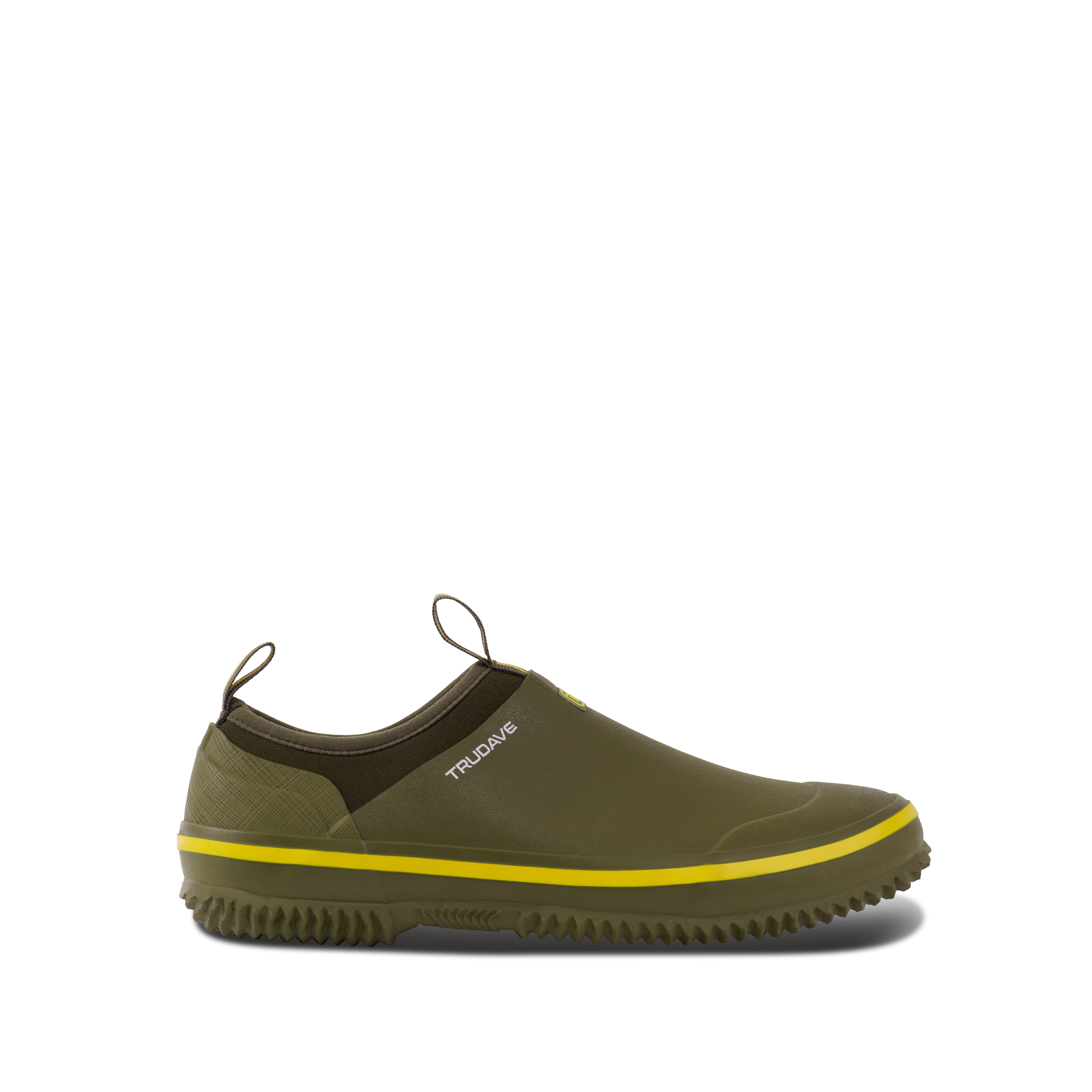
That comparison is becoming less useful as modern hunting footwear evolves. Depending on the design, current rubber boots can include flexible neoprene uppers, cushioned EVA components, shaped heel areas and more supportive footbeds.
Trudavegear hunting boots follow the same general philosophy: combining waterproof protection with the flexibility and underfoot comfort required for active outdoor use.
Rubber vs. Leather: The October Scorecard
Direct Comparison| Factor | Lightweight Rubber | Heavy Leather | October Edge |
|---|---|---|---|
| Wet Grass | Continuous waterproof rubber coverage | Performance depends on waterproof construction and condition | Rubber |
| Mud & Standing Water | Well suited to repeated wet exposure | Limited by shaft and tongue construction | Rubber |
| Cleanup | Usually rinse and wipe | May require brushing, drying and leather care | Rubber |
| Mobility | Flexible lightweight models available | Typically more structured and heavier | Rubber |
| Steep Rocky Terrain | Better suited to moderate terrain | Excellent structure for technical climbs | Leather |
Choose for October. Not for January.
Heavy leather hunting boots are not the wrong choice. They simply solve a different set of problems.
If your hunt involves steep rock, unstable slopes, significant loads or technical mountain terrain, additional structure and support may be worth the weight.
But classic October whitetail country often means something else: wet grass, muddy food plots, creek bottoms, rolling timber and frequent scouting.
In those environments, a lightweight rubber boot can deliver the waterproof coverage, easy cleanup and mobility that matter most.
Stay Light. Stay Dry. Stay in the Woods.
Explore Trudavegear hunting boots designed for wet grass, muddy access routes, creek crossings and changing fall conditions.
Shop Hunting BootsThe Bottom Line
October is a transition month. Frosty mornings become warmer afternoons, dry trails turn into muddy bottoms, and a short scouting trip can quickly become several miles.
That makes versatility more valuable than simply choosing the heaviest boot on the rack.
For wet vegetation, muddy creek bottoms, moderate terrain and active woodland hunting, a lightweight rubber boot offers a strong balance of waterproof protection, mobility and easy maintenance.
Save the heavy leather boots for terrain that truly demands them. In the October woods, lighter can often be the smarter choice.