Opening-Day Boot Camp Early-Season Hunting / Wet Fields / First Boot Setup
New Hunter Training Manual
A no-nonsense beginner’s guide to choosing waterproof hunting boots for morning dew, wet grass, muddy food plots, early archery season, and long scouting days.
Season Window Late summer to early fall
Main Threat Morning dew, mud, sweat
Boot Priority Waterproof comfort
Beginner Goal No limping by 9:00 AM
As that unmistakable crispness starts creeping into the late-summer air and morning dew turns every field into a soaking wet sponge, hunters across the country can feel it in their bones: opening day is right around the corner.
Whether you are heading out to hang trail cameras in knee-high brush, busting your tail to prep food plots before the first frost, or dialing in your setup for early archery season, early-season woods are downright unforgiving. They are wet, humid, and muddy.
If you are gearing up for your very first season, you have probably stared at a wall of boots and asked yourself: what kind of boots do I actually need to keep my feet dry without sweating them to death?
Settle in. Let’s break down everything you need to know to pick your first pair of solid, no-nonsense hunting boots so you are not limping back to the truck by 9:00 AM.
Instructor’s First Rule
Early-season hunting boots need to solve two problems at once: outside moisture and inside sweat.
Beginners often focus only on waterproofing. That matters, but early season also brings heat, humidity, long walks, and wet vegetation. The right boot keeps water out without turning your socks into a sweat-soaked mess.
Training Module 01
Why Regular Sneakers Are Not Going to Cut It
Rookie Mistake 01
The Morning Dew Soak
Step through fifty yards of waist-high, dew-soaked grass in standard mesh sneakers, and your socks can be soaked before the hunt even starts. Cold, wet feet are a one-way ticket home.
Rookie Mistake 02
Ignoring Scent Control
Standard fabric and leather footwear can absorb sweat, human odor, and surrounding smells. Rubber creates an easier-to-clean barrier that hunters can spray down before heading into the woods.
Rookie Mistake 03
Underestimating Slick Muck
From greasy river bottoms to clay logging roads, weak outsoles can turn wet ground into a slip hazard. Early-season boots need traction that can handle mud, wet grass, and uneven ground.
Training Module 02
The 4 Golden Rules for Buying Your First Hunting Boot
Rule 01
Waterproofing & Shaft Height
Choose enough height to beat wet grass, shallow water, and swampy transitions.
You are going to cross creeks, slog through swampy transition zones, and walk through standing water. A tall 15-to-16-inch shaft paired with a waterproof rubber lower and flexible upper gives you the coverage needed for early-season wet ground.
Field Drill Before buying, picture your wettest walk-in route. If the grass, mud, or puddles can reach above your ankle, low-cut shoes are already out of the running.
Rule 02
Do Not Over-Insulate Too Early
Heavy insulation can turn your boots into a swamp during early-season hunts.
A classic beginner trap is buying heavy-duty insulated boots for warm early-season sits. Early autumn days can still heat up fast. Too much insulation can cause heavy sweating, and damp socks become cold socks when the sun drops.
For early season, an uninsulated boot or a moderate neoprene build is often more practical. Pair the boot with good moisture-wicking socks and adjust your layering as temperatures fall later in the season.
Field Drill Match insulation to the weather you will actually hunt in, not the coldest day you can imagine. Early-season comfort starts with breathability and sweat control.
Rule 03
Foot Support & Arch Health
Support matters when scouting miles, prepping property, or standing on hard ground.
Old-school rubber boots earned a bad reputation because many were basically flat pieces of rubber attached to a tube. Walk a mile in that setup, and your arches and lower back can start complaining fast.
Modern commercial-grade hunting and utility boots, including performance-focused designs from Trudavegear, aim to solve that problem with better cushioning, supportive footbeds, structured heel support, and more practical all-day comfort.
Field Drill Do not judge a boot only by how waterproof it is. Press on the footbed, check the heel structure, and look for support that can handle scouting, food plot work, and long sits.
Rule 04
Self-Clearing Tread
Your outsole needs to shed mud, not carry it around all morning.
There is nothing quite like hauling ten extra pounds of sticky clay on each boot because the tread is packed solid. Deep, aggressive, self-clearing lugs help shed mud as you walk and keep your footing more stable on slick slopes and wet field edges.
Field Drill Look at the outsole spacing. Tight, shallow tread can pack with clay. Deeper, wider lugs are usually better for mud, creek bottoms, and wet farm ground.
Training Module 03
Quick Comparison: What Is Out There?
Gear Roster 01
Traditional Rubber Boots
Classic Tall Rubber Hunting Boots
Ideal Use Case Treestands, deep swamp muck, flat farm ground, flooded timber, and scent-control-focused hunts.
The Vibe / Pros Reliable waterproof coverage, easy cleanup, strong scent-control utility, and classic hunting function.
Watch Out For Can feel heavy or clunky on long-distance hikes, steep ridges, or high-mile scouting days.
Gear Roster 02
Ergonomic Work & Utility Boots
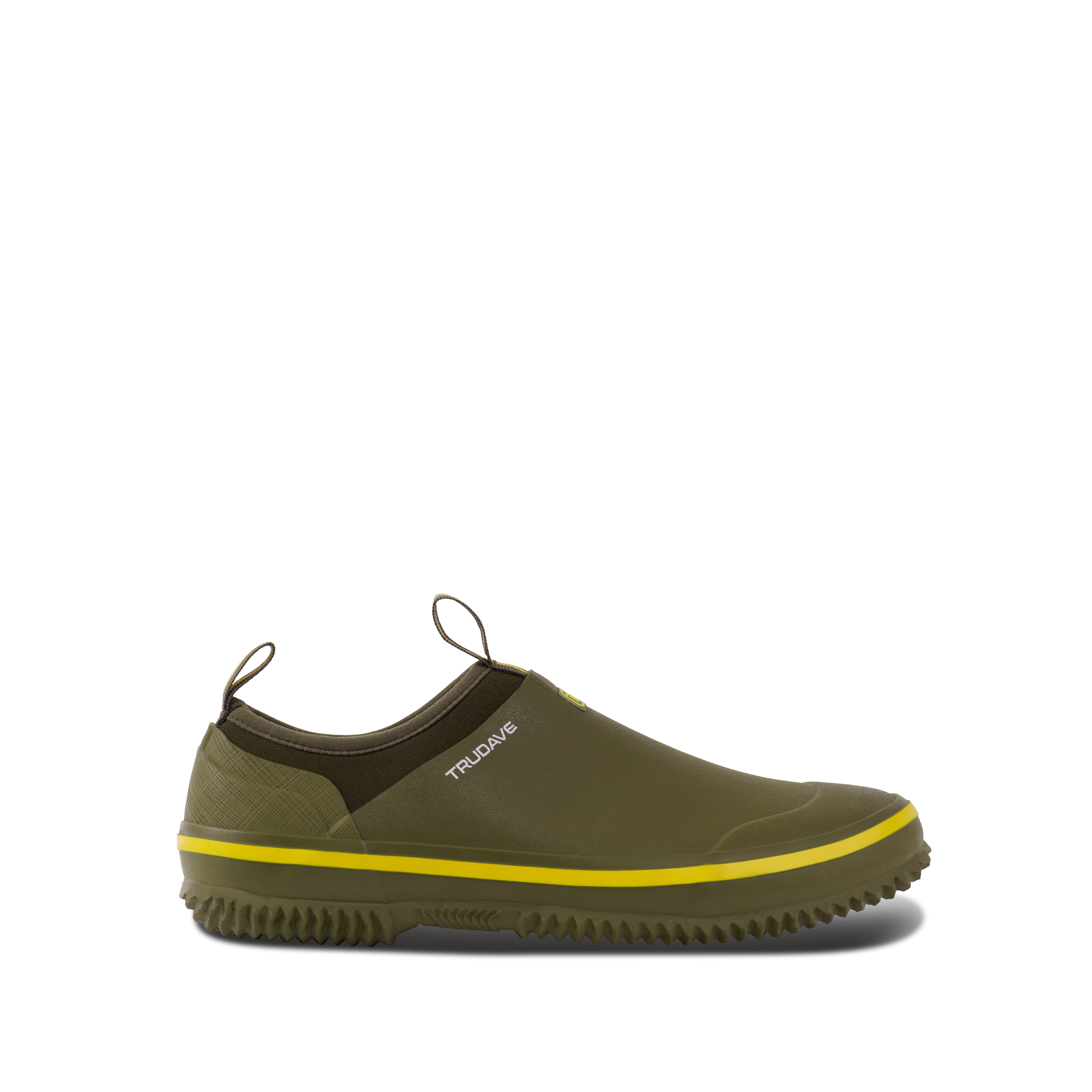
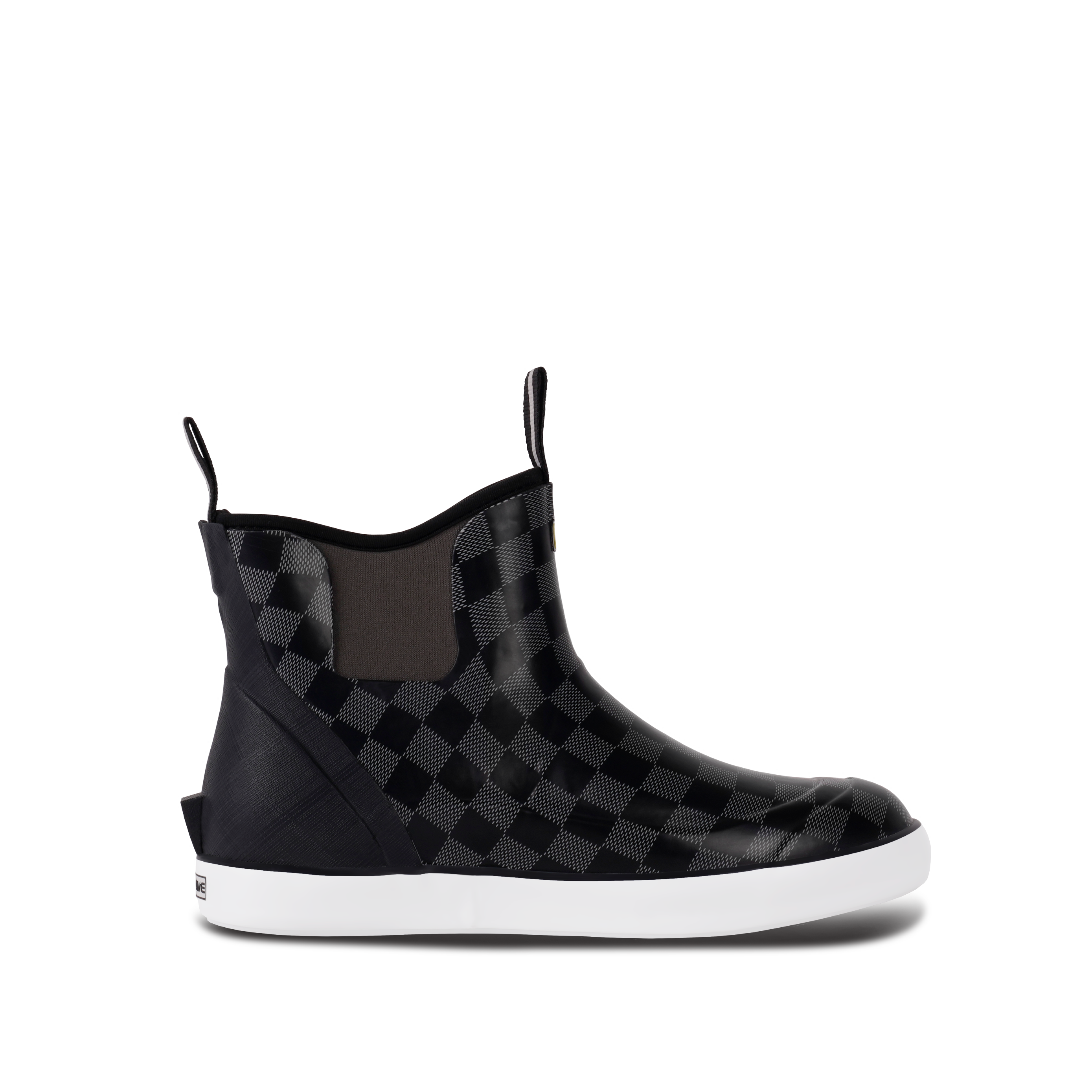
Trudavegear Performance-Focused Hunting Boots
Ideal Use Case Long scouting miles, food plot prep, early archery setups, wet grass, muddy property work, and all-day wear.
The Vibe / Pros Combines waterproof rubber protection with practical comfort, support, and traction for real outdoor use.
Watch Out For Use the size guide carefully if you plan to wear very thick winter socks later in the season.
Gear Roster 03
Lightweight Hybrid Hikers
Fast-Moving Hunting / Hiking Boots
Ideal Use Case Spot-and-stalk hunting, mobile scouting, drier woods, high-mobility movement, and longer walking routes.
The Vibe / Pros Light, nimble, supportive, and more trail-like when elevation and mileage matter.
Watch Out For Lower profiles may offer less protection in deep mud, wet grass, creek crossings, or standing water.
First-Season Field Notes
Pro Tips for Your First Season
Tip 01: Size for the Socks You Will Actually Wear If you plan to wear thick Merino wool socks when temperatures drop later in the season, make sure your boots leave enough toe room. Pinched toes restrict circulation, and restricted circulation means cold feet.
Tip 02: Break Them In Before Opening Morning Do not make opening day your first real test. Wear your boots while scouting, hanging cameras, walking the property, or doing yard work so your feet can adapt before the hunt matters.
Tip 03: Hose Them Down After Muddy Hunts Do not leave mud, agricultural gunk, or swamp debris caked onto the rubber. Rinse your boots with fresh water and store them away from direct sunlight.
Tip 04: Do Not Chase Maximum Insulation Too Soon Early season is wet and humid before it is bitter cold. Start with waterproof comfort and sweat control, then adjust socks and insulation as the weather truly changes.
The Bottom Line
Opening morning only comes around once a year.
Do not let cheap, unsupportive, sweat-trapping boots cut your hunt short before the action starts. Early-season hunting boots should keep outside moisture away, control internal heat, support your arches, and grip slick ground.
For first-season hunters, the safest choice is a waterproof, supportive boot that matches the terrain you will actually hunt: wet grass, food plots, muddy trails, creek bottoms, and early archery access routes.
Grab a reliable pair of waterproof hunting boots, pack the right socks, and get out there. See you out in the timber.
Built for Wet Grass, Mud, Food Plots & Early-Season Hunts
Pick Your First Waterproof Hunting Boots with Confidence
Trudavegear hunting boots are built for hunters who need waterproof protection, practical traction, and supportive comfort through muddy access routes, wet fields, food plot work, scouting days, and early-season sits.
Shop Trudavegear Hunting Boots
Product Reference
Hunting Boot Resources
Boot materials, shaft height, insulation, traction, and fit can vary by model. Always check the specific product page and size guide before choosing boots for hunting, scouting, or outdoor property work.
Trudavegear — Hunting Boots Collection
Explore Trudavegear hunting boots built for wet fields, mud, hunting access, scouting routes, and outdoor utility.
View Trudavegear Hunting Boots
Trudavegear — Waterproof Boots Collection
Explore waterproof boots for rain, mud, garden work, outdoor chores, and all-weather utility.
View Trudavegear Waterproof Boots
Trudavegear — Work & Farm Boots Collection
Explore waterproof utility boots for farm work, wet grass, mud, property prep, and rainy outdoor conditions.
View Trudavegear Work & Farm Boots