index

Are Hunting Boots OK for Hiking? What You Need to Know Before You Trek

TrudaveGear

Terrain Permit System Hunting Boots / Hiking / Mud / Mountain Terrain

Footwear Access Decision

Are Hunting Boots OK for Hiking?

The truth about tall rubber hunting boots, lace-up mountain hunting boots, and the terrain where each one actually belongs.

Access Status Conditionally approved
Rubber Boots Best for flat wet terrain
Mountain Boots Best for steep hiking
Main Rule Match boot to terrain

When you are preparing for a backcountry scouting trip, an early-season archery hunt, or a long trek through damp timber, gear selection can make or break your day.

Walk into any hunting outfitter, and you will see heavy-duty rubber hunting boots lining the shelves alongside lightweight synthetic hikers and mountain-style lace-up hunting boots.

Because hunting boots are designed for outdoor use, many backpackers and hunters wonder: are hunting boots actually okay for hiking?

Permit Decision

Hunting boots can be okay for hiking, but only if the boot type matches the terrain.

Tall rubber hunting boots are excellent for flat, wet, muddy ground, flooded timber, food plots, and marsh access. But for steep, rocky, multi-mile hikes, a lace-up mountain hunting boot or waterproof hiking boot is the safer and more comfortable choice.

Permit Category 01

The Two Types of Hunting Boots on the Trail

Wet Ground Permit
Tall Rubber / Neoprene Hunting Boots

Best for swamps, mud, wet fields, and flat hunting access.

Tall rubber and neoprene hunting boots excel in waterproof protection, low-odor rubber coverage, and easy cleanup. They are ideal for flat, muddy environments like food plots, flooded timber, marsh edges, creek bottoms, and agricultural fields.

The limitation is movement. Because these boots often use a tall, flexible shaft and a wider slip-on fit, your heel may lift slightly with every stride. On flat ground, that is manageable. On a steep, multi-mile incline, that repeated movement can create painful friction and blisters.

Approved Terrain Flat mud, wet grass, marsh access, food plots, flooded timber, creek bottoms, and short-to-moderate scouting routes.
Limited Access Steep inclines, rocky climbs, multi-day backpacking, loose shale, and long mountain mileage.
Mountain Route Permit
Lace-Up Leather & Synthetic Hybrid Hunting Boots

Best for long hikes, elevation, rocky terrain, and backcountry travel.

Lace-up leather and synthetic hybrid hunting boots look and perform much more like traditional backpacking boots. They are built for mobility, ankle lock, lateral stability, and long-distance support.

These boots usually feature aggressive lace systems, structured midsoles, supportive ankle collars, and trail-focused outsoles designed for spot-and-stalk hunting across rugged, mountainous terrain.

Approved Terrain Mountain trails, rocky inclines, long scouting hikes, backpacking routes, dry timber, steep ridges, and uneven ground.
Limited Access Deep standing water, swamp crossings, flooded fields, thick mud, and conditions where water rises above the boot opening.
Permit Restriction

Where Rubber Hunting Boots Fall Short on Rugged Hikes

Restriction 01

Lack of Lateral Ankle Stability

Lace-up boots lock the foot more securely when stepping over loose shale, slick boulders, roots, and fallen logs. Slip-on rubber hunting boots can allow more side-to-side movement inside the shaft.

Restriction 02

Lower-Back and Foot Fatigue

Flat or overly flexible rubber soles can transmit shock during long hikes on hard or rocky ground. Modern supportive designs help, but they still cannot fully replace a stiff-shanked mountain hiker for vertical climbs.

Restriction 03

Excessive Sweating

Neoprene-lined rubber boots can trap heat during warm-weather aerobic movement. Damp, sweaty feet are more prone to friction, hot spots, and blisters by the afternoon.

Permit Comparison

Rubber Hunting Boots vs. Mountain Hiking Boots

Tall Rubber Hunting Boots

Waterproofing Strong waterproof barrier up to the shaft, especially useful for wet grass, mud, marsh edges, and shallow standing water.
Ankle & Heel Lock Slip-on flexibility is convenient, but minor heel lift can become a problem on inclines and long routes.
Arch & Shank Support Best optimized for flat ground, mud, stationary stands, property work, and short-to-moderate wet access routes.
Scent & Cleanup Rubber shells are easy to hose off and do not absorb mud, water, and field odor the same way fabric-heavy boots can.
Winner For Waterproofing, mud, wet grass, flooded timber, flat scouting, and easy cleanup.

Lace-Up Mountain Hunting / Hiking Boots

Waterproofing Waterproof membranes and treated uppers handle rain, wet brush, and shallow puddles, but water can enter over the top.
Ankle & Heel Lock Lacing systems help secure the heel and reduce lateral shifting on uneven ground.
Arch & Shank Support Structured midsoles and stiffer shanks support rocky terrain, steep inclines, and longer hiking mileage.
Scent & Cleanup Leather and fabric uppers require more cleaning and drying after muddy or wet routes.
Winner For Steep hiking, rocky trails, multi-mile routes, elevation gain, and technical backcountry movement.

Mission Clearance

What Should You Wear for Your Specific Outdoor Trek?

For Flat Terrain, Swamps, and Muddy Scouting If your hike is mostly flat, wet, and muddy — such as hanging trail cameras, planting food plots, checking blinds, or walking wet creek bottoms — a tall, supportive rubber hunting boot is a strong choice.
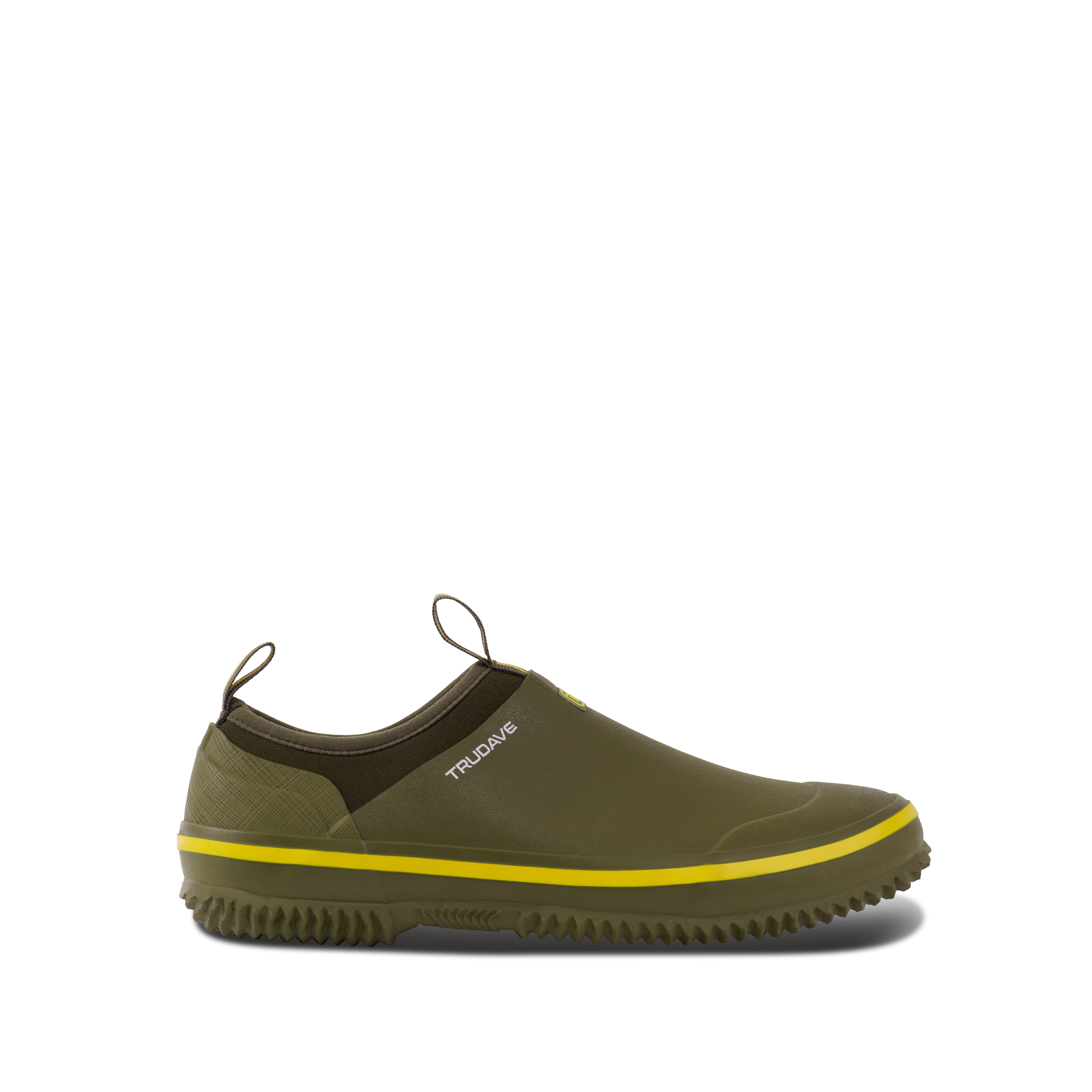
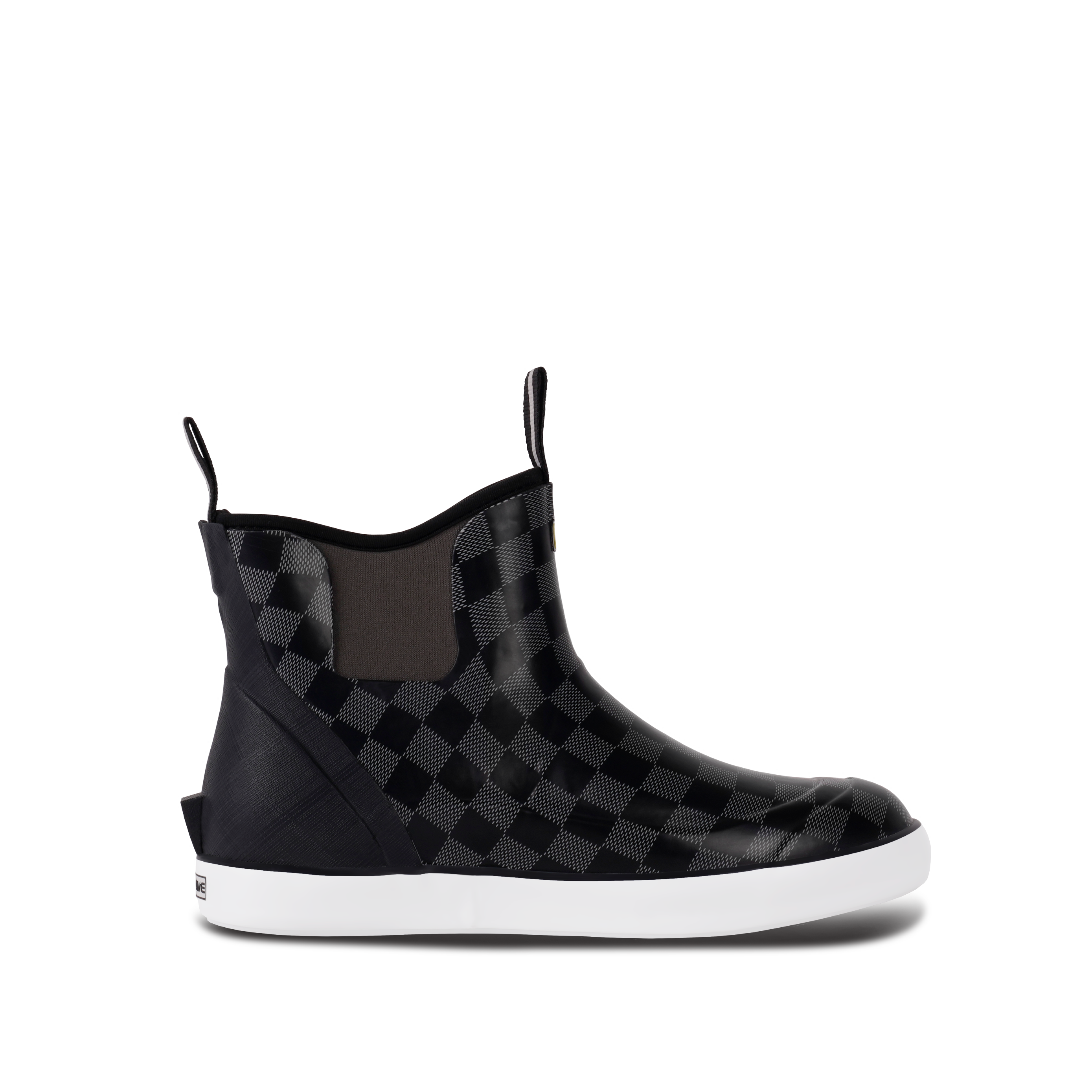
Trudavegear Fit Trudavegear hunting and outdoor utility boots fit this mission well because they focus on waterproof protection, mud traction, wet-ground stability, and practical all-day outdoor use.
For Steep, Rocky, or Mountainous Terrain If your trek involves elevation gain, loose rock, side-hilling, or multi-day backpacking, leave tall rubber boots at home and lace up a dedicated waterproof leather or synthetic mountain hiking boot that locks your ankle securely in place.

The Bottom Line

Hunting boots are okay for hiking only when the terrain matches the boot.

Lace-up mountain hunting boots are absolutely appropriate for serious hiking because they are built around ankle lock, stability, structured support, and rugged movement.

Tall rubber hunting boots are better saved for flat, wet environments where waterproofing, mud traction, scent control, and easy cleanup matter most.

Choose the right tool for the terrain, and your feet will stay comfortable from trailhead to basecamp.

Built for Wet Fields, Mud, Scouting Routes & Hunting Access

Need Hunting Boots for Wet Outdoor Conditions?

Trudavegear hunting boots are built for hunters and outdoor workers who need waterproof protection, practical traction, and supportive comfort through mud, wet grass, field access, and rugged utility use.

Shop Trudavegear Hunting Boots

Product Reference

Trudavegear Hunting & Outdoor Boot Resources

Product features, materials, support levels, insulation, and sizing can vary by model. Always check the specific product page before choosing boots for hunting, hiking, or wet outdoor work.

Trudavegear — Hunting Boots Collection

Explore Trudavegear hunting boots built for wet ground, mud, hunting access, outdoor utility, and field conditions.

View Trudavegear Hunting Boots

Trudavegear — Work & Farm Boots Collection

Explore waterproof outdoor utility boots for farm work, wet grass, mud, garden work, and rainy conditions.

View Trudavegear Work & Farm Boots

Leave a comment

Your email address will not be published. Required fields are marked *

Jack Callahan
Written by

Jack Callahan

Veteran Hunter & Field Gear Specialist
150 articles
Deer & Waterfowl Hunting

With over a decade of experience tracking game across rugged North American terrains, Jack knows exactly what it takes to thrive in the wild. He specializes in rigorous field-testing for hunting apparel, boots, and waders, combining his passion for authentic wilderness survival with expert gear reviews and practical tracking techniques.

You may so like

Blog

🎁 BLACKFRIDAY has been copied to your clipboard!
Coupon here!