Private Land / Wildlife Law / Deer Damage Legal & Regulatory Breakdown
Landowner Legal FAQ
Private property rights are real, but native deer are still governed by state wildlife laws. Here is what landowners need to understand before taking action outside the normal hunting season.
Public Trust Doctrine Deer Damage Permits Private Land Off-Season Management
Disclaimer
This article is for informational and educational purposes only and does not constitute formal legal advice. Wildlife laws vary significantly by state, county, municipality, species, land type, and permitting category. Always consult your state Department of Natural Resources, Fish and Wildlife agency, conservation officer, or qualified legal counsel before taking action.
Owning a tract of land — whether it is a 10-acre homestead, an agricultural orchard, or a multi-hundred-acre timber property — comes with distinct private property rights.
However, when a herd of whitetail deer destroys standing crops, nursery stock, landscaping, or habitat management plots outside open hunting seasons, landowners often face a complex legal question:
Short Answer
No — owning the land does not usually give you an unconditional right to shoot deer out of season.
Under American wildlife management frameworks, landowners generally do not possess unrestricted rights to take native game species outside state-regulated seasons without specific administrative authorization. In most cases, that means you need a state-issued damage, depredation, nuisance, or crop-damage permit before any out-of-season lethal removal.
Below is a detailed breakdown of the legal doctrines governing wildlife, the statutory exceptions available to landowners, and how to stay compliant while managing your property.
Legal Framework 01
The Public Trust Doctrine
Wildlife Is Not Owned the Same Way Land Is Owned
To understand why property ownership does not automatically convey ownership of wildlife, one must understand the Public Trust Doctrine.
In broad terms, wildlife is treated as a public natural resource held and regulated by the state for the benefit of the public. A deer crossing onto private deeded land does not become private livestock simply because it is inside your property boundary.
Practical Rule Property boundaries do not erase game codes. State wildlife agencies still determine seasons, bag limits, legal methods, tag requirements, and special authorization rules.
Unauthorized Taking Can Be Treated as Poaching
Harvesting a deer out of season on private land without a valid state-issued permit may constitute illegal taking. Depending on the state, penalties can include criminal fines, restitution, loss of hunting privileges, and potential seizure or forfeiture of equipment.
Legal Framework 02
Defense of Property vs. Wildlife Codes
You Usually Cannot Shoot Deer Simply Because They Are Eating Plants
Under general property law, individuals have a right to protect their real and personal property from destruction. However, wildlife law places limits on how that protection can occur when the animal is a regulated game species.
In many jurisdictions, a landowner cannot summarily shoot a deer out of season purely because it is eating landscaping, a home garden, or non-commercial vegetation.
Safer First Step For ordinary garden or landscape damage, start with non-lethal tools such as fencing, repellents, exclusion, habitat changes, and planning legal in-season harvest.
Statutory Exception 03
Agricultural Depredation and Crop Damage Permits
Commercial Damage May Create a Permit Pathway
While summary taking is generally illegal, state agencies recognize that excessive deer populations can cause severe economic hardship to agricultural operations, orchards, nurseries, timber producers, and other qualifying commercial properties.
To balance conservation with agricultural viability, many states provide a formal process for deer damage permits, crop damage permits, depredation permits, or nuisance abatement authorizations.
1
Document Economic Loss The landowner or commercial producer usually must show substantial damage to crops, timber, orchards, nursery stock, or other qualifying property.
2
Contact the State Wildlife Agency Contact your state DNR, Fish and Wildlife agency, regional wildlife office, conservation officer, or game warden before taking action.
3
Complete Verification A conservation officer or wildlife biologist may inspect the property to verify deer damage and determine whether non-lethal measures or regular-season harvest are insufficient.
4
Receive Written Permit Terms If approved, the permit may specify the number of deer, locations, dates, time windows, authorized shooters, weapon types, reporting rules, and carcass disposition.
5
Follow the Permit Exactly Taking deer outside the written terms of a damage permit can still create legal exposure.
Special Category 04
High-Fence Ranches and Exotic Species
Native Whitetail Deer
Native deer inside fenced properties generally remain state-regulated wildlife. Hunting seasons, tag systems, disease rules, harvest reporting, and managed-land programs may still apply.
Key point: A fence does not automatically convert native deer into private livestock.
Non-Native / Exotic Species
Non-native ungulates such as axis deer, fallow deer, blackbuck, aoudad, and similar animals are categorized differently depending on state law.
Key point: Some states allow more flexible private-land harvest of exotics, while others still impose license, landowner-permission, reporting, or species-specific rules.
Property Management 05
Lawful Off-Season Property Management and Preparation
Non-Lethal Management
What Most Landowners Can Do Out of Season
For the vast majority of rural property owners who do not operate commercial agricultural facilities, handling deer activity outside of open season usually means non-lethal management: repairing perimeter fencing, planting deterrent vegetation, protecting gardens or orchards, setting up habitat plots, checking trail cameras, and scouting for the upcoming legal season.
Off-season land maintenance — clearing brush, checking cameras, running irrigation, repairing stands, or walking fence lines — often requires working in wet, unpredictable field environments long before autumn arrives.
Field Gear Note
Your Boots Matter During Property Work, Not Just During Hunting Season
High-intensity field maintenance demands footwear that offers structural protection, waterproofing, traction, and long-duration foot support.
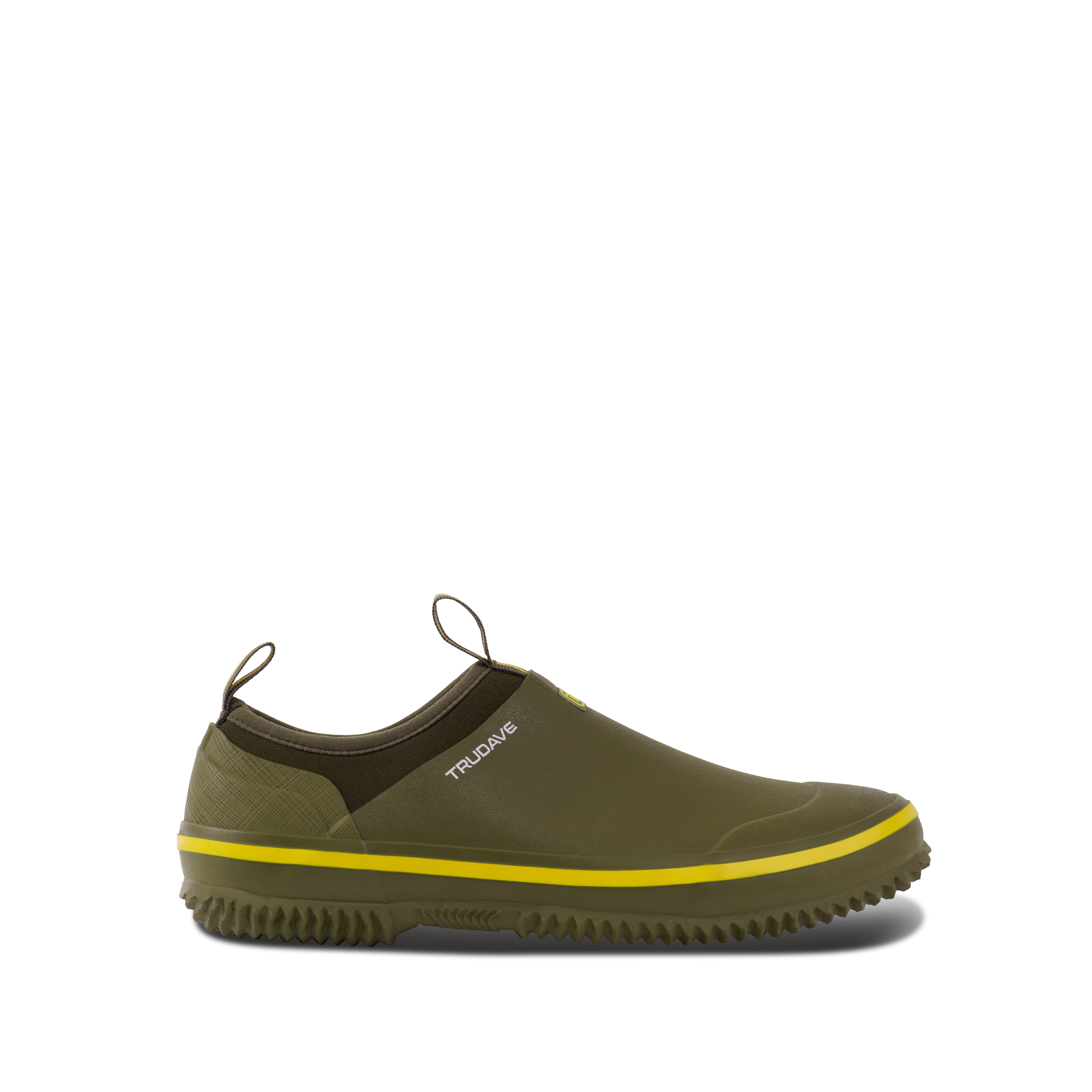
While various outdoor brands manufacture field boots, Trudavegear designs waterproof rubber footwear for the physical demands of land maintenance, wet fields, muddy access routes, and hunting-season preparation.
Waterproof Build Built for wet grass, creek bottoms, mud, and unpredictable field conditions.
Deep Lug Grip High-traction soles help bite into soft soil, slick trails, and muddy approaches.
Long-Hour Support Ergonomic comfort matters when you are checking stands, walking fields, or working property lines.
Featuring rugged waterproof construction, deep traction outsoles, and supportive comfort for long hours on your feet, Trudavegear boots provide functional utility for serious property management across every season.
Summary Checklist for Landowners
Not Allowed
Deer eating home gardens or landscaping
Do not assume you can shoot out of season. Use non-lethal deterrents such as fencing, repellents, exclusion, and habitat changes. Contact your state agency if damage is severe.
Conditional
Severe commercial crop, timber, nursery, or orchard damage
Apply for a state DNR, Fish and Wildlife, crop damage, depredation, or nuisance permit. Wait for official approval and follow all permit terms.
Allowed In Season
Standard deer hunting on private property
Hunt during state-designated seasons with valid licenses, tags, bag limits, weapon rules, reporting requirements, and landowner permission where required.
State Dependent
Exotic or non-native game on private land
Check state statutes regarding exotic, non-game, livestock, license, and landowner-permission classifications before taking action.
The Bottom Line
Private Land Does Not Automatically Mean Private Wildlife
In most cases, you cannot legally harvest native deer out of season on your own land without specific state authorization. Private property rights are important, but wildlife harvest is still governed by state game codes.
If deer are causing serious damage, document the issue, contact your state wildlife agency, and follow the formal permit process. If you are preparing for the legal season, use the off-season to improve habitat, repair access, check gear, and make sure your boots are ready for the work ahead.
Built for Property Work, Mud, Wet Fields, and Hunting Season Prep
Stay Ready Before the Season Opens
Trudavegear hunting boots are built for landowners, hunters, and outdoor workers who need waterproof protection, deep traction, and field-ready comfort while preparing property, checking stands, and working through wet ground.
Shop Trudavegear Hunting Boots
Authoritative Sources
Official Resources on Wildlife Law, Deer Damage Permits, and Private-Land Management
State laws vary significantly. Use these official and legal-reference resources as starting points, then confirm the rules with your state wildlife agency before taking action.
Legal Information Institute — Public Trust Doctrine
Cornell’s Legal Information Institute explains the public trust doctrine and notes that natural resources held in trust may include wildlife.
Read the LII public trust doctrine overview
Missouri Department of Conservation — Deer Control
MDC states that special permission is needed before removing white-tailed or mule deer under Missouri’s property-protection rule.
Read MDC deer control guidance
Mass.gov — Agricultural Damage from Wildlife
Massachusetts explains that deer damage permits may be issued to qualified landowners to address agricultural damage from deer outside the regulated hunting season.
Read Massachusetts agricultural damage guidance
Texas Parks & Wildlife Department — Nongame, Exotic, Endangered, Threatened & Protected Species
TPWD explains that Texas has no closed season, bag limit, or possession limit for exotic animals on private property, while hunters must still follow applicable laws.
Check TPWD exotic and nongame species rules
Texas Parks & Wildlife Department — Managed Lands Deer Program
TPWD’s Managed Lands Deer Program provides harvest recommendations and tag issuance for participating private lands.
View TPWD Managed Lands Deer Program