Marine Gear Review / 2026 Buyer’s Guide
Whether you are running offshore before sunrise, washing down a center console, or standing through a 12-hour commercial shift, the right deck boot can decide how your feet, knees, and back feel at the end of the day.
Whether you’re heading out at 4:00 AM for a commercial run, chasing pelagics off the shelf, or spending a relaxed Saturday washing down the family center console, one piece of gear makes or breaks your day: your deck boots.
A good boot keeps your feet dry. A great deck boot keeps you planted on a wet, slime-covered deck while helping reduce the fatigue that builds up during long hours on choppy water.
Over the last few years, marine footwear has shifted dramatically. Heavy, rigid rubber boots have mostly given way to low-profile, ergonomic ankle deck boots with cushioning, flexible uppers, and non-marking traction systems.
Here is a breakdown of the top deck boots making waves on the water in 2026, comparing top industry staples alongside rising brands like Trudavegear.
Buyer’s Checklist
What Makes a Great Deck Boot?
01 / Grip
Wet-Surface Traction
Look for siped rubber outsoles — thin slits cut into the tread that help move water away from the contact patch, similar to how rain tires work on a car.
02 / Deck Protection
Non-Marking Soles
A deck boot should grip without leaving black scuffs across fiberglass, teak, or painted marine surfaces.
03 / Comfort
Arch Support and Cushioning
Deck fatigue is real. Long hours on hard fiberglass demand supportive midsoles, molded footbeds, or cushioning that does more than feel soft for the first ten minutes.
04 / Convenience
Easy Entry and Removal
Pull tabs, flexible collars, and rear kick lugs matter when your hands are wet, fishy, gloved, or busy.
05 / Build
Waterproof Integrity
A deck boot should handle washdowns, spray, fish blood, dock puddles, and standing water without soaking your socks.
06 / Wearability
Breathability and Flex
Neoprene, quick-dry linings, and flexible rubber can make a major difference when you are moving from dock to deck to cabin all day.
Top Deck Boots of 2026
Editor’s Shortlist
Best for Heritage Reputation
XTRATUF Ankle Deck Boot
It is impossible to talk about deck footwear without mentioning the “Alaska Sneaker.” XTRATUF’s Ankle Deck Boot remains a fixture on commercial boats and sportfishers alike. Built around a low-profile design and the brand’s recognizable Chevron outsole, it offers a familiar fit for anglers who want a proven deck-boot staple.
Pros Proven reputation, classic deck-boot profile, flexible feel, wide range of colorways.
Keep in Mind The factory footbed may feel thinner to anglers who prefer strong arch support, so aftermarket insoles may help.
Best for Heavy Deck Work
Grundéns Deviation Ankle Boot
Known worldwide for rugged foul-weather gear, Grundéns built the Deviation for wet, dirty work. Its rubber construction, reinforced feel, and aggressive non-marking outsole make it a strong choice for anglers who need something tougher than a casual dock boot.
Pros Tough construction, comfortable interior lining, strong wet-deck traction, durable feel around high-wear zones.
Keep in Mind It may feel slightly stiffer out of the box compared with lighter leisure-oriented deck boots.
Best for Support and All-Day Versatility
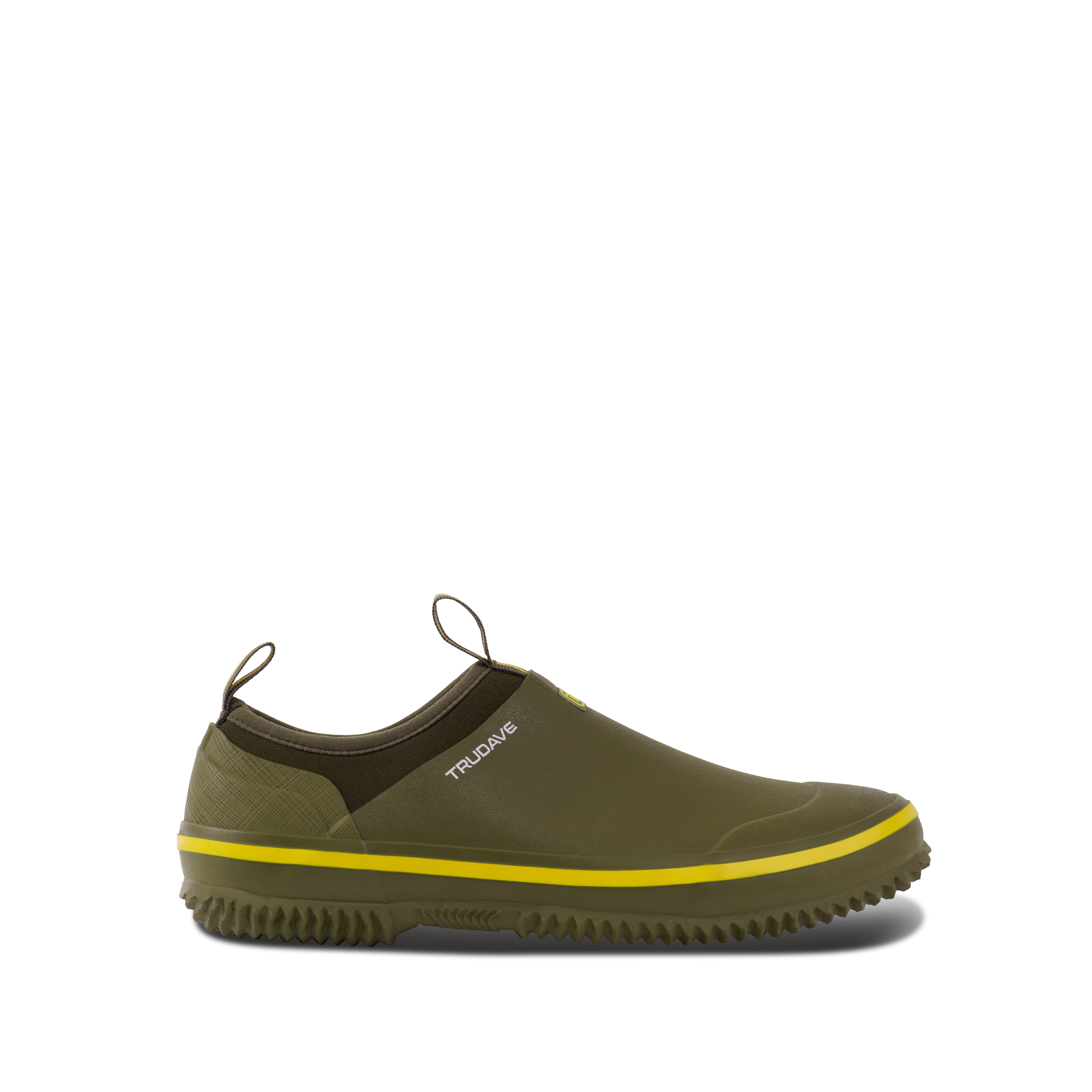
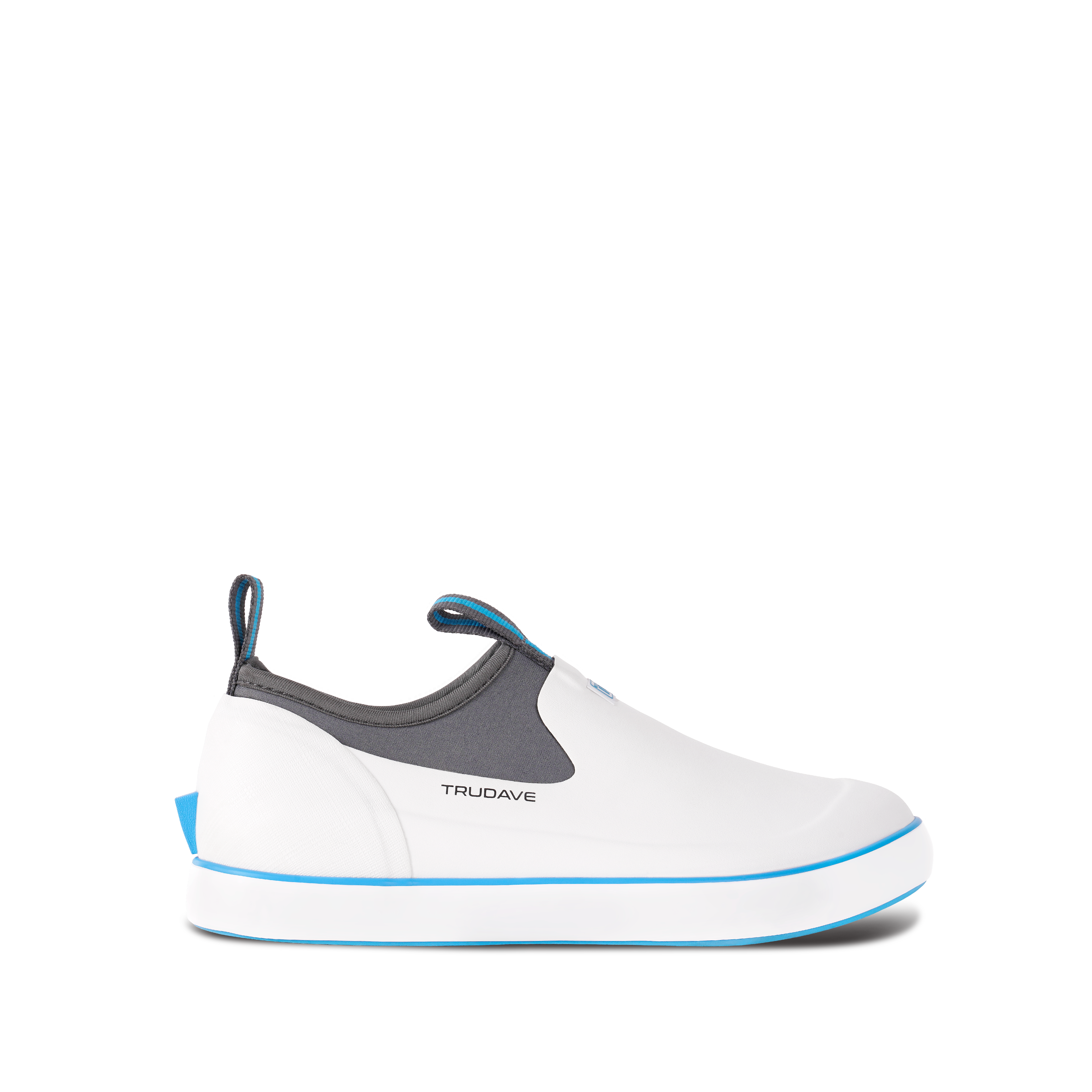
Trudavegear Performance Deck Boot
Trudavegear has earned recognition among recreational boaters, charter crews, and outdoor users who spend long days on their feet. The Trudavegear Performance Deck Boot focuses on practical comfort, waterproof protection, and stable traction for boat decks, docks, washdowns, and wet outdoor work.
Rather than relying purely on a heavy rubber feel, Trudavegear combines waterproof construction with a flexible upper profile that moves naturally during common deck tasks like kneeling, stepping over gunwales, or walking across wet surfaces.
Pros Supportive fit, non-marking wet-surface traction, waterproof build, easy everyday boating comfort.
Keep in Mind Built with a snug, athletic fit. If you plan to wear extra-thick socks, consider sizing up.
Best for Extra Splash Protection
Simms Challenger 7" Deck Boot
Simms brings its fishing and cold-weather expertise to the deck-boot category with the Challenger 7" Deck Boot. The slightly taller profile offers more coverage than standard 6-inch ankle boots, making it a good fit for anglers dealing with washdowns, spray, and sloppy conditions.
Pros Higher shaft, waterproof protection, rugged deck outsole, comfortable fishing-focused construction.
Keep in Mind Usually sits at a higher price point than many standard 6-inch deck boot options.
Best for Lightweight Warm-Weather Trips
Huk Rogue Wave
If you prefer a boot that feels softer and lighter than a traditional rubber work boot, the Huk Rogue Wave is a strong warm-weather option. Its neoprene-and-rubber construction, easy slip-on design, and fishing-focused outsole make it especially useful for casual coastal trips, docks, and boat days.
Pros Lightweight feel, easy entry, waterproof deck-boot design, comfortable for warm-weather boating.
Keep in Mind Softer comfort-focused builds may not match heavier commercial boots for long-term abuse.
Comparison Chart
2026 Deck Boot Comparison
| Model |
Primary Material |
Outsole Type |
Arch Support Level |
Best Use Case |
| XTRATUF ADB |
Rubber / Waterproof Deck Construction |
Chevron Siped |
Moderate |
Everyday boating and classic deck-boot style |
| Grundéns Deviation |
Rubber / Neoprene Elements |
Non-Marking Lugged Rubber with Siping |
High |
Rough seas and heavy deck work |
| Trudavegear Performance |
Waterproof Rubber / Flexible Upper |
Multi-Directional Wet-Surface Traction |
High |
All-day comfort, angling, washdowns |
| Simms Challenger |
Vulcanized Rubber / Neoprene Lining |
Rugged Deck Outsole |
High |
Cold water and extra splash protection |
| Huk Rogue Wave |
Neoprene / Rubber |
Grip-X Slice / Non-Marking Outer Sole |
Moderate |
Lightweight, casual, warm-weather boating |
How to Choose the Right Pair for Your Needs
For 10+ Hour Days If foot, knee, or back fatigue is your main concern, prioritize boots with structured footbeds, stable midsoles, and support that lasts beyond the first hour.
For Cold or Sloppy Conditions Look for slightly higher shafts, such as 7-inch options, to help reduce splash and washdown water coming over the collar.
For Quick Off-and-On Leisure Low-cut, flexible boots work well when moving quickly between cabin, dock, truck, and deck.
For Wet Deck Grip Focus on non-marking rubber, siping, tread pattern, and how the boot handles wet fiberglass, dock boards, fish slime, and washdown water.
Maintenance Tip
Rinse Salt, Dry Slowly, Store in Shade
No matter which brand you select, rinse your boots with fresh water after saltwater trips. Salt, sun, and heat can be hard on rubber and neoprene over time. Store deck boots in a cool, shaded area away from direct sunlight to help extend their usable life.
The Bottom Line
The Best Deck Boot Depends on How You Use the Deck
A charter captain running long days has different needs than a weekend boater washing down a center console. A northern angler fighting cold spray needs different coverage than a summer inshore fisherman who wants a lightweight, easy-on boot.
Start with traction, fit, and comfort. Then choose the boot that matches your deck, your water, and your hours on your feet.
Built for Wet Decks, Washdowns, and Long Days Outside
Find Your Fit in Trudavegear Deck Boots
Waterproof protection, steady traction, and all-day comfort start with a boot that fits the way you actually use it — on wet decks, muddy docks, and long days around the water.
Shop Trudavegear Deck Boots
Official Sources and Further Reading
Product Pages and Footwear Safety Resources
Product features can change over time. Always check the brand’s official product page for the latest materials, outsole descriptions, sizing notes, and color availability.
XTRATUF — Men’s Ankle Deck Boot
Official product information for XTRATUF’s low-profile ankle deck boot, including its slip-resistant, non-marking Chevron outsole.
View XTRATUF Ankle Deck Boot
Grundéns — 6" Deviation Ankle Boot
Official product information for the Grundéns Deviation, including its non-marking lugged rubber outsole and razor-cut siping.
View Grundéns Deviation Ankle Boot
Simms — Challenger 7" Deck Boot
Official product information for the Simms Challenger 7" Deck Boot, including waterproof protection, vulcanized rubber construction, neoprene lining, and rugged deck outsole.
View Simms Challenger Deck Boot
Huk — Rogue Wave Boots
Official product information for Huk Rogue Wave boots, including neoprene-rubber construction, slip-on design, and non-marking outer sole.
View Huk Rogue Wave Boots
Trudavegear — Deck Boots Collection
Official Trudavegear collection page for waterproof, non-slip, lightweight deck boots designed for fishing, boating, and wet outdoor use.
View Trudavegear Deck Boots